
What is the Aristotelian concept of Hellenizing?
The concept of Hellenizing, or ellinizein, represents the classical ideal of linguistic mastery and cultural identity through correct speech. According to the analysis by Vangelis Stergiopoulos, this idea is deeply rooted in the philosophical framework established by Aristotle, particularly regarding the relationship between thought and expression. To 'Hellenize' is not merely to speak the language, but to adhere to a rigorous standard of clarity, precision, and structural integrity that distinguishes sophisticated discourse from imprecise communication.
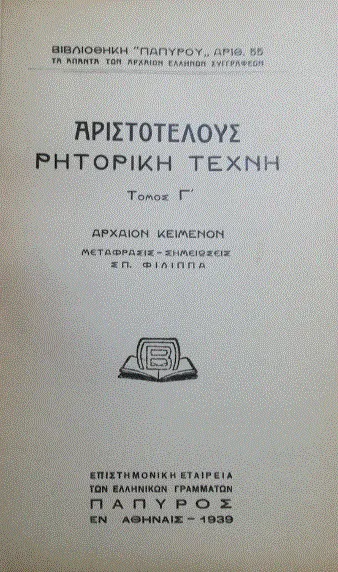
Aristotle’s approach to this concept is found in his seminal work, Rhetoric. In this text, the Stagiritian philosopher explores the dual pillars of effective communication: lexis (the linguistic formulation or style) and taxis (the correct arrangement of speech). For Aristotle, the essence of style is inseparable from the ability to use the Greek language according to its inherent logical and grammatical properties. This connection suggests that linguistic correctness is a foundational principle of Hellenism itself, where the preservation of language serves as a preservation of identity.
The source highlights that this linguistic dimension of Hellenism, which can be traced to the views of Herodianus, finds its primary philosophical justification in these Aristotelian theories. By defining ellinizein as a core principle of lexis (style), Aristotle elevates the act of speaking from a mere biological or social function to a disciplined intellectual practice. This means that the quality of one's speech is a direct measure of their adherence to the logical and structural laws of the Greek language.
How does Aristotle define the five rules of correct Greek?
Aristotle identifies five specific criteria in the fifth chapter of Rhetoric that constitute the essence of ellinizein. These rules serve as a checklist for evaluating the quality of expression and ensuring that the speaker or writer achieves maximum clarity. The source, citing the translation by Dimitrios Lypourlis, details these five pillars of Aristotelian linguistic precision as follows:
- The use of conjunctions: This first rule concerns the proper use of connective particles, ensuring they are placed in their natural and logical positions to facilitate the correct flow of thought.
- Specific vs. General terminology: A second essential precondition is the requirement to declare things using their specific, proper names (idion onoma) rather than relying on words of general content or vague application.
- Avoidance of ambiguity: The third rule mandates the avoidance of ambiguous words, ensuring that the intended meaning is not obscured by multiple or conflicting interpretations.
- Categorization of noun types: The fourth rule involves the clear distinction between different genera of nouns, a method Aristotle attributes to the philosopher Protagoras.
- Precision in quantity: The fifth rule consists of correctly naming and declaring the plurality or singularity of things—accurately stating what is many, what is few, and what is one.
By following these rules, a speaker moves beyond mere communication and enters the realm of true rhetoric, where language becomes a precise tool for conveying truth and persuasion. These rules provide a structured method for evaluating how well a speaker inhabits the language, ensuring that the expression matches the underlying reality of the subject matter.
The role of Protagoras in Aristotelian linguistics
It is noteworthy that Aristotle incorporates the intellectual tradition of his predecessors when defining these rules. Specifically, he references the method of Protagoras regarding the division of noun types (genē). This demonstrates that the Aristotelian concept of Hellenizing was not an isolated invention but a synthesis of established Greek intellectual rigor. By integrating Protagoras's taxonomic approach, Aristotle elevated the study of language from a simple craft to a structured science of classification.
The inclusion of Protagoras suggests that the definition of 'correct' Greek was already part of a broader philosophical conversation regarding how human beings categorize the world through speech. Aristotle takes this existing tradition of classification and embeds it within his broader framework of rhetorical effectiveness, making the categorization of names a fundamental requirement for anyone seeking to 'Hellenize' in the highest sense of the word.
What is the connection between Hellenism and linguistic style?
The relationship between the concept of Hellenism and linguistic precision is a multidimensional one, bridging the gap between grammar and cultural identity. As noted in the historical analysis, the dimension of 'linguistic Hellenism'—often associated with the views of Herodianus—finds its primary philosophical justification in Aristotle’s theories of rhetoric. This implies that to be 'Greek' in a cultural and intellectual sense is to participate in a specific way of organizing thought through language.
This connection suggests that the 'style' (lexis) of a person is a direct reflection of their adherence to these classical standards. When a speaker employs the correct conjunctions or avoids ambiguous terms, they are not just following grammatical rules; they are performing an act of cultural continuity. The precision of the language acts as a vessel for the precision of the Hellenic mind. Consequently, the degradation of linguistic standards is often viewed not just as a loss of grammar, but as a dilution of the cultural essence that Hellenism represents.
The source indicates that this relationship is rooted in the very definition of lexis. If the essence of style is to speak Greek correctly, then the mastery of these five rules becomes a hallmark of the Hellenic intellectual tradition. This links the technical aspects of linguistics—such as the placement of conjunctions or the use of specific nouns—directly to the broader concept of Hellenism as a way of being and communicating.
How does the concept of 'ellinizein' impact modern understanding of the language?
Understanding the Aristotelian rules provides a historical benchmark for evaluating the evolution of the Greek language. While modern Greek has undergone significant phonetic and morphological changes, the underlying requirement for clarity and specificity remains a constant in the pursuit of effective communication. The classical emphasis on avoiding ambiguity and using specific terminology continues to be the standard for academic, legal, and formal discourse.
The study of ellinizein reminds us that language is a structured system where the relationship between a word and its meaning must be maintained with discipline. In the context of Hellenism, these rules provide a framework for how a language can maintain its character across centuries. By looking back at the requirements set forth in Rhetoric, scholars can better understand how the Greek language has historically balanced the need for expressive flexibility with the necessity of logical rigor.
Furthermore, the source suggests that these rules allow for a systematic evaluation of expression. By breaking down 'correctness' into five distinct categories—conjunctions, specific names, lack of ambiguity, noun types, and quantity—Aristotle provides a way to move beyond subjective impressions of 'good' or 'bad' speech toward an objective, analytical understanding of linguistic quality.
FAQ: Frequently asked questions
What does 'ellinizein' mean in a classical context?
'Ellinizein' refers to the act of speaking or writing Greek in a manner that is correct, precise, and stylistically sophisticated. According to Aristotle, it involves mastering the nuances of the language to ensure that expression is both logical and clear, reflecting the high standards of Greek rhetoric.
What are the five Aristotelian rules of language?
The five rules consist of: using conjunctions correctly, choosing specific terms over general ones, avoiding ambiguous words, distinguishing between different types of nouns, and accurately expressing the quantity or number of things. These rules ensure that the speaker achieves linguistic precision and clarity.
How does Aristotle link rhetoric to language?
Aristotle links rhetoric to language through the concepts of lexis (style) and taxis (arrangement). He argues that effective rhetoric requires not just the right words, but the correct grammatical and logical structure, making linguistic precision a fundamental component of the art of persuasion.
Why is Protagoras mentioned in relation to these rules?
Aristotle references Protagoras because the latter's method of dividing and classifying the different types of nouns was a crucial component of the fourth rule of Hellenizing. This shows that Aristotle built upon existing philosophical traditions to define his linguistic standards.
Is Hellenism strictly about speaking the Greek language?
While language is a central pillar, the concept of Hellenism involves a deeper connection between thought and expression. Through the lens of Aristotle, participating in the linguistic standards of 'ellinizein' is a way of embodying the intellectual and cultural identity of the Hellenic tradition.
Key takeaways
- Aristotle's 'Rhetoric' defines 'ellinizein' as the standard for correct and precise Greek usage.
- The five rules focus on conjunctions, specific terminology, clarity, noun classification, and numerical accuracy.
- Linguistic precision is considered a fundamental component of Hellenic cultural identity.
- The concept integrates the philosophical traditions of thinkers like Protagoras into a formal system of rhetoric.
The enduring legacy of Aristotelian precision
The Aristotelian concept of Hellenizing offers more than a set of grammatical instructions; it provides a philosophical foundation for the relationship between language, thought, and identity. By establishing rigorous criteria for clarity and specificity, Aristotle ensured that the Greek language would be viewed as a precise instrument for intellectual inquiry. Even in a modern context, these classical principles remind us that the integrity of our communication is inextricably linked to the precision of our expression, serving as a bridge between the ancient pursuit of truth and the contemporary need for clear discourse.







