
What is the core objective of the Athens dialogues conference?
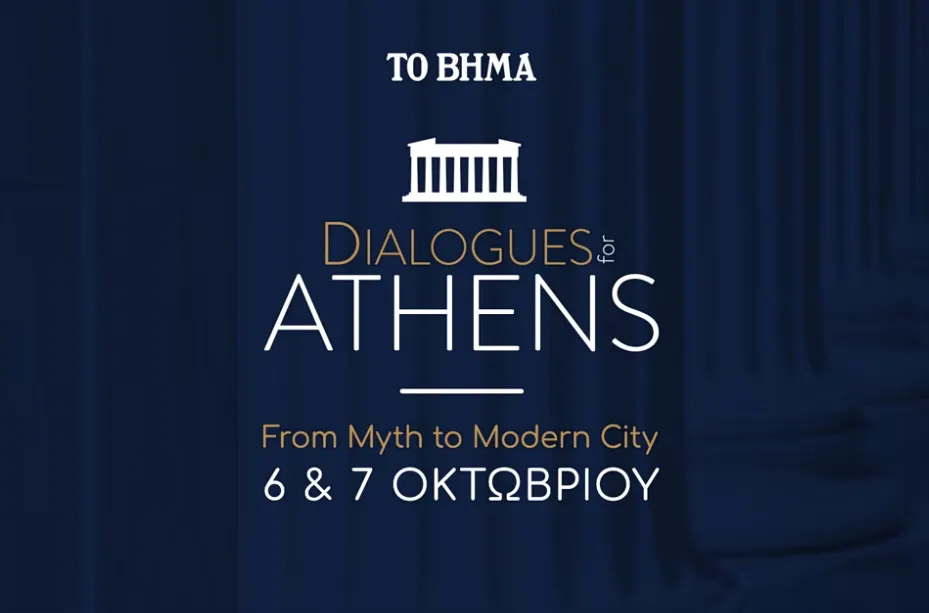
The Athens dialogues conference aims to facilitate a multidisciplinary conversation regarding the evolution of the Greek capital from its mythological foundations to its current status as a modern metropolis. Organized by To Vima under the auspices of the National and Kapodistrian University of Athens (NKUA) and the Municipality of Athens, the event seeks to bridge the gap between historical heritage and contemporary urban management.
The symposium is structured around three distinct temporal axes:
- The Past: Examining the ancient legacy and historical identity of the city.
- The Present: Addressing immediate socio-economic challenges and current political realities.
- The Future: Proposing visions for urban development, mobility, and sustainability.
By bringing together diverse voices—from historians to economists—the conference intends to analyze how the city's historical weight influences its modern challenges, such as social cohesion, public space management, and economic resilience.
How does the conference address Athens' ancient heritage?
The first day of the conference focuses heavily on the continuity of Athenian identity, linking the city's classical roots to its modern global influence. This segment is closely tied to the upcoming publication "The Great History of Athens," scheduled for release on October 25 via To Vima.
Key discussions in this thematic area include:
- The Living History: Academic contributors Vangelis Karamanolakis, Katerina Nikolaou, and Selene Psoma, coordinated by Markos Karasarinis, will discuss the narrative of the city's history.
- Global Legacy: British historian Bettany Hughes will engage in a dialogue with Odint Linardatou to trace the traces of Athenian heritage across the world.
- Myth vs. Democracy: Prime Minister Kyriakos Mitsotakis is scheduled to meet with author and classicist Daniel Mendelsohn to discuss the opportunities and challenges of the Greek Republic, moving from myth to the modern city.
The intersection of culture and economy
The dialogue extends beyond pure history into the cultural conflicts between East and West, featuring academics Aristidis Chatzi, Giannis Voulgaris, and author Soti Triantafyllou. Furthermore, the economic dimension of this heritage is highlighted by Yannis Stournaras, who will present the contribution of Athens to broader economic development.
What are the pressing socio-economic challenges discussed?
The conference places significant emphasis on the lived reality of Athenians, tackling the systemic issues that define the city's current state. This involves examining economic stability, housing accessibility, and the social fabric of the capital.
The agenda includes several high-level discussions on urban governance and social equity:
- Economic Policy: Kyriakos Pierrakakis, Minister of National Economy and Finance and President of the Eurogroup, will discuss the creation of a city of equal opportunities alongside Dimitra Kroustalli.
- Urban Resilience: The Mayor of Athens, Haris Doukas, and author Christos Chomenidis will discuss the "living cells" and the resilience of the capital.
- Public Opinion: Metron Analysis will present exclusive research conducted by Stratos Fanaridis and Giannis Balabanidis, capturing the anxieties, expectations, and emotional priorities of Athens' citizens.
The economic outlook for the city is also a priority, with Spiros Theodoropoulos (SEV) and Agapi Smpoukou (SETE) outlining the financial future of the capital, supported by insights from Nikos Vetta of IOBE and Christos Kambolis of IMD.
Who are the key political figures participating?
The conference serves as a significant gathering for Greece's political leadership, featuring a wide spectrum of current and former high-ranking officials. This ensures that the dialogue between historical identity and urban planning is grounded in real-world political discourse.
The list of participants includes several notable figures:
- State Leadership: The event will be inaugurated with a greeting from President Konstantinos Tasoulas. Other participants include Speaker of the Parliament Nikitas Kaklamanis and Minister of Culture Lina Mendoni.
- Former Prime Ministers and Leaders: High-profile speakers include former Prime Minister Antonis Samaras, former Prime Minister Alexis Tsipras, and former Vice President Evangelos Venizelos.
- Political Dialogue: Nikos Androulakis, President of PASOK, will engage in a conversation with Pavlos Tsimas, while Alexis Tsipras will participate in a dialogue with Niki Lymperaki.
This concentration of political power allows the conference to move beyond academic theory into the realm of actionable policy regarding the city's management and its role within the Greek state.
What role does urban planning and mobility play in the agenda?
Recognizing that the future of Athens depends on its physical and logistical evolution, the conference dedicates specific sessions to urban mobility and the changing nature of city life. This is essential for addressing the modern needs of a growing metropolitan population.
Specific topics under discussion include:
- New Forms of Mobility: Emeritus Professor Panagiotis Tournikiotis and MIT Professor Kent Larson will debate the future of transportation and the controversial role of the automobile in the city, coordinated by former Mayor Kostas Bakoyannis.
- Urban Hospitality and Family Life: A diverse panel including comedian Katerina Vrana, actor Michalis Afolagianis, and Astylab founder Adam Markakis will discuss whether Athens remains a hospitable city. Additionally, a session focused on the parent-child dynamic in the capital will feature Minister Domna Michailidou and former Minister Efis Achtsioglou.
- International Expertise: The involvement of international architects and researchers, such as Massimiliano Fuksas and Carlos Moreno (Sorbonne), highlights the global perspective required to solve local urban problems.
Frequently asked questions
When and where is the conference taking place?
The Athens dialogues conference is held on October 6 and 7, 2026. The venue is the Ceremonial Hall of the National and Kapodistrian University of Athens (NKUA). The event is organized by the newspaper To Vima.
What are the main themes of the symposium?
The conference is organized into three pillars: the past (history and heritage), the present (socio-economic challenges and current politics), and the future (urban development, mobility, and sustainability). It aims to provide a holistic view of Athens.
Who are the international speakers attending?
International experts include historian Bettany Hughes, author Daniel Mendelsohn, architect Massimiliano Fuksas, researcher Carlos Moreno from the Sorbonne, and MIT Professor Kent Larson. Their presence brings a global academic and professional perspective to the local issues.
Will there be data presented on the citizens' views of Athens?
Yes, Metron Analysis will present exclusive public opinion research. This study, led by Stratos Fanaridis and Giannis Balabanidis, aims to reflect the concerns, expectations, and emotional state of the people living in Athens.
Does the conference cover economic issues?
Yes, economic development is a major component. Topics include the city's contribution to national growth, the economic future of the capital through the lens of SEV and SETE, and discussions on equal economic opportunities led by the Eurogroup President.
Key takeaways
- The conference explores Athens through the lenses of history, current socio-economics, and future urban planning.
- High-level political participation includes the President of the Republic and multiple former Prime Ministers.
- International experts from institutions like MIT and the Sorbonne will contribute to urban mobility debates.
- Exclusive public opinion research by Metron Analysis will be unveiled to represent citizen perspectives.
The evolution of a capital
The Athens dialogues conference represents a rare intersection of academic rigor, political influence, and urban necessity. By spanning the timeline from ancient myth to the digital age, the event acknowledges that Athens cannot solve its modern crises—such as housing and mobility—without understanding its historical identity. The participation of both domestic leaders and international specialists suggests a recognition that the challenges facing the Greek capital are part of a broader global urban evolution. Ultimately, the symposium serves as a platform to define how the city will balance its monumental past with the functional requirements of a 21st-century metropolis.







