
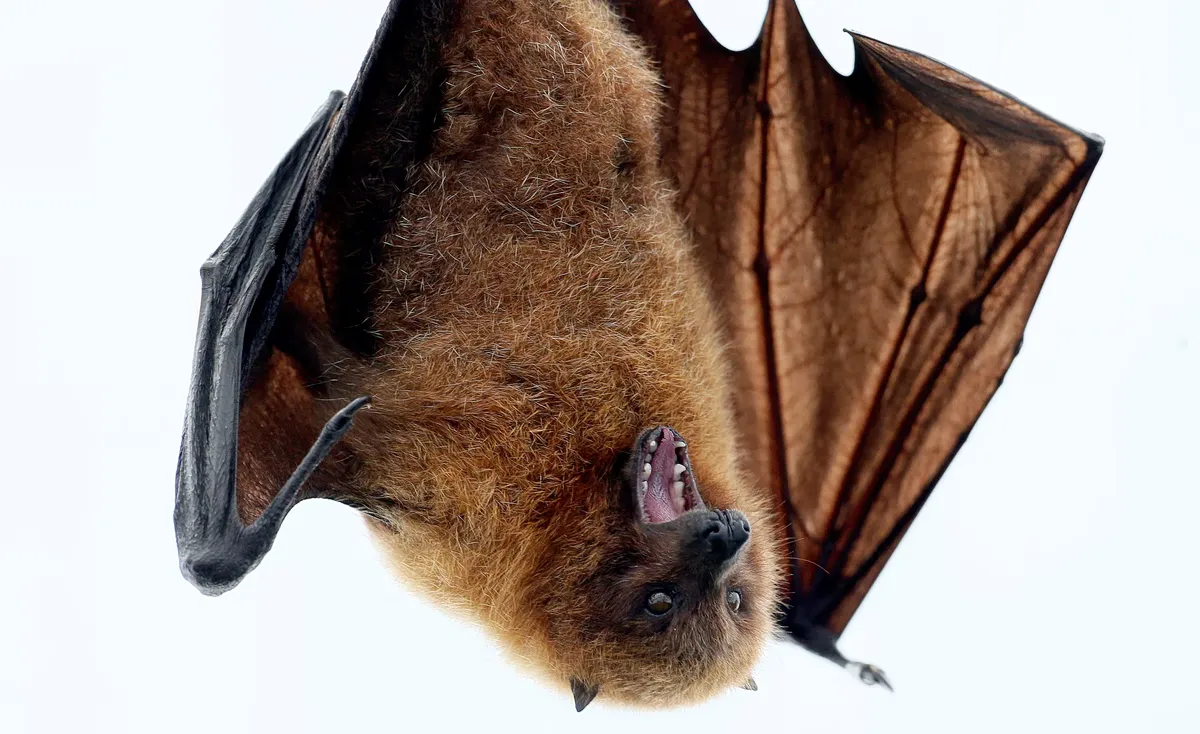
Where did bats first originate according to recent research?
Bats likely emerged in Europe roughly 65 million years ago, according to a comprehensive study published in Nature. This timeline places their rise in the immediate aftermath of the Cretaceous-Paleogene extinction event, the catastrophic period when dinosaurs vanished from the Earth. This finding is significant because it contradicts earlier scientific consensus which suggested that bats may have originated in Africa, Asia, or North America.
The researchers achieved these results by conducting the largest study of flying mammals to date. The methodology involved a massive synthesis of biological data, including:
- A genomic collection covering 103 different species.
- Data representing all 21 known families of bats.
- The analysis of 44 distinct bat fossils.
By combining modern genetic sequencing with the physical evidence provided by the fossil record, the team was able to construct a highly detailed evolutionary tree. This multidisciplinary approach allowed them to trace the lineage of bats back to a specific geographic and temporal window that had previously been obscured by incomplete data.
How did echolocation and flight drive bat success?
The ability to both fly and use echolocation likely appeared simultaneously during the early stages of bat evolution. This dual capability provided a massive competitive advantage, allowing bats to occupy ecological niches that were unavailable to other creatures. Echolocation acts as a biological sonar, enabling bats to navigate and hunt in total darkness by emitting ultrasonic pulses and listening to the reflections.
According to Sonia Vernes, a biology professor at the University of St Andrews and co-leader of the study, the combination of flight and sonar opened doors to new environments. Specifically, it allowed them to hunt during the night, a period characterized by significantly lower competition and fewer predators.
The ecological advantage of nocturnal life
The transition to a nocturnal lifestyle was a strategic masterstroke in the history of mammalian evolution. Emma Tingling, a zoology professor at University College Dublin and co-leader of the study, noted that echolocation allowed bats to avoid direct competition with birds. Furthermore, by operating under the cover of darkness, they were less likely to become prey for diurnal (daytime) avian predators. This separation of temporal niches ensured that bats could thrive in the vacuum left by the extinction of pterosaurs and other flying reptiles.
What do fossils reveal about the physical appearance of early bats?
While the genomic data provides a roadmap of descent, the physical appearance of the very first bat ancestors remains a subject of scientific speculation. Current fossil evidence shows that early bats already possessed the specialized traits of modern species, such as wings formed from modified forelimbs with elongated fingers supporting a skin membrane. However, the transitional forms that existed before these features were fully developed are missing from the fossil record.
Emma Tingling suggests that the ancestors of bats may have resembled small, shrew-like creatures that gradually developed longer digits. This hypothesis attempts to bridge the gap between non-flying insectivores and the highly specialized flying mammals we see today. Despite this theory, the lack of "pre-bat" transitional fossils makes it difficult to confirm exactly how the skeletal structure shifted to support powered flight.
What remains unknown about the evolution of flight and sonar?
A central mystery in bat evolution history is whether the ability to fly or the ability to use echolocation evolved first. While the oldest known fossils show that bats possessed both traits, researchers cannot yet determine which capability was the primary driver of their diversification. To solve this, scientists need to locate even older, transitional fossils—often referred to as "pre-bats"—that might show anatomical evidence of one trait without the other.
Anatomical indicators of echolocation can be identified in fossils through specific structures, such as:
- An enlarged cochlea (the part of the inner ear related to hearing).
- Specialized structures within the middle ear designed for ultrasonic frequencies.
Until these transitional species are discovered, the exact sequence of these two revolutionary biological adaptations remains one of the most intriguing questions in mammalian paleontology.
Why is studying bat genetics important for human science?
Beyond understanding the past, the study of bat genomes offers profound insights into modern biological challenges. Bats exhibit remarkable physiological traits, including extreme longevity relative to their body size and a notable resilience to various diseases. These characteristics suggest unique evolutionary mechanisms for managing cellular stress and immune responses.
According to Emma Tingling, the research into these genetic foundations could eventually contribute to human medical science. Specifically, the study of how bats maintain health and resist pathogens may provide breakthroughs in the fields of aging, immunology, and general disease resistance. This connection transforms bat research from a study of ancient history into a vital component of contemporary biomedical exploration.
Key takeaways
- Bats likely originated in Europe approximately 65 million years ago following the dinosaur extinction.
- The study utilized a massive dataset of 103 species and 44 fossils to map bat evolution.
- Echolocation and flight likely emerged together, allowing bats to dominate nocturnal ecological niches.
- Research into bat genetics may provide insights into human aging and disease resistance.
FAQ: Bat evolution history
Where did bats first evolve?
Recent research suggests that bats first emerged in Europe about 65 million years ago. This discovery challenges previous theories that suggested their origins were in Africa, Asia, or North America, placing their rise shortly after the extinction of the dinosaurs.
Did bats evolve flight and echolocation at the same time?
The earliest known fossils indicate that bats already possessed both flight and echolocation. Because these traits appear together in the fossil record, scientists are still investigating whether one evolved before the other or if they emerged as a combined evolutionary package.
How do bats use echolocation to survive?
Bats use echolocation as a biological sonar by emitting ultrasonic sounds and listening to the echoes that bounce off objects. This allows them to navigate in total darkness, hunt insects, and avoid predators, giving them a distinct advantage over daytime animals.
What is the significance of bat genetics for humans?
Studying bat genetics is significant because bats show high resistance to diseases and live longer than expected for their size. Researchers believe these genetic traits could offer valuable information for studying human immunity, aging, and how to combat various diseases.
How diverse are bats today?
Bats are incredibly diverse, making up about one-fifth of all living mammal species. They range from the tiny Thai bumblebee bat with a 13-centimeter wingspan to the giant Philippine flying fox, which can have a wingspan of 1.7 meters.
Key takeaways
- Bats likely originated in Europe approximately 65 million years ago following the dinosaur extinction.
- The study utilized a massive dataset of 103 species and 44 fossils to map bat evolution.
- Echolocation and flight likely emerged together, allowing bats to dominate nocturnal ecological niches.
- Research into bat genetics may provide insights into human aging and disease resistance.
Conclusion
The evolution of bats represents one of nature's most successful biological experiments. By emerging in the wake of the dinosaur extinction, these mammals utilized the dual advantages of flight and echolocation to claim the night. While the specific sequence of their evolutionary milestones remains a subject of intense study, the recent findings in Europe provide a clearer picture of their origins. As scientists continue to decode their complex genomes, the lessons learned from these nocturnal navigators may extend far beyond paleontology, offering potential new frontiers in human medical research and our understanding of biological resilience.







