
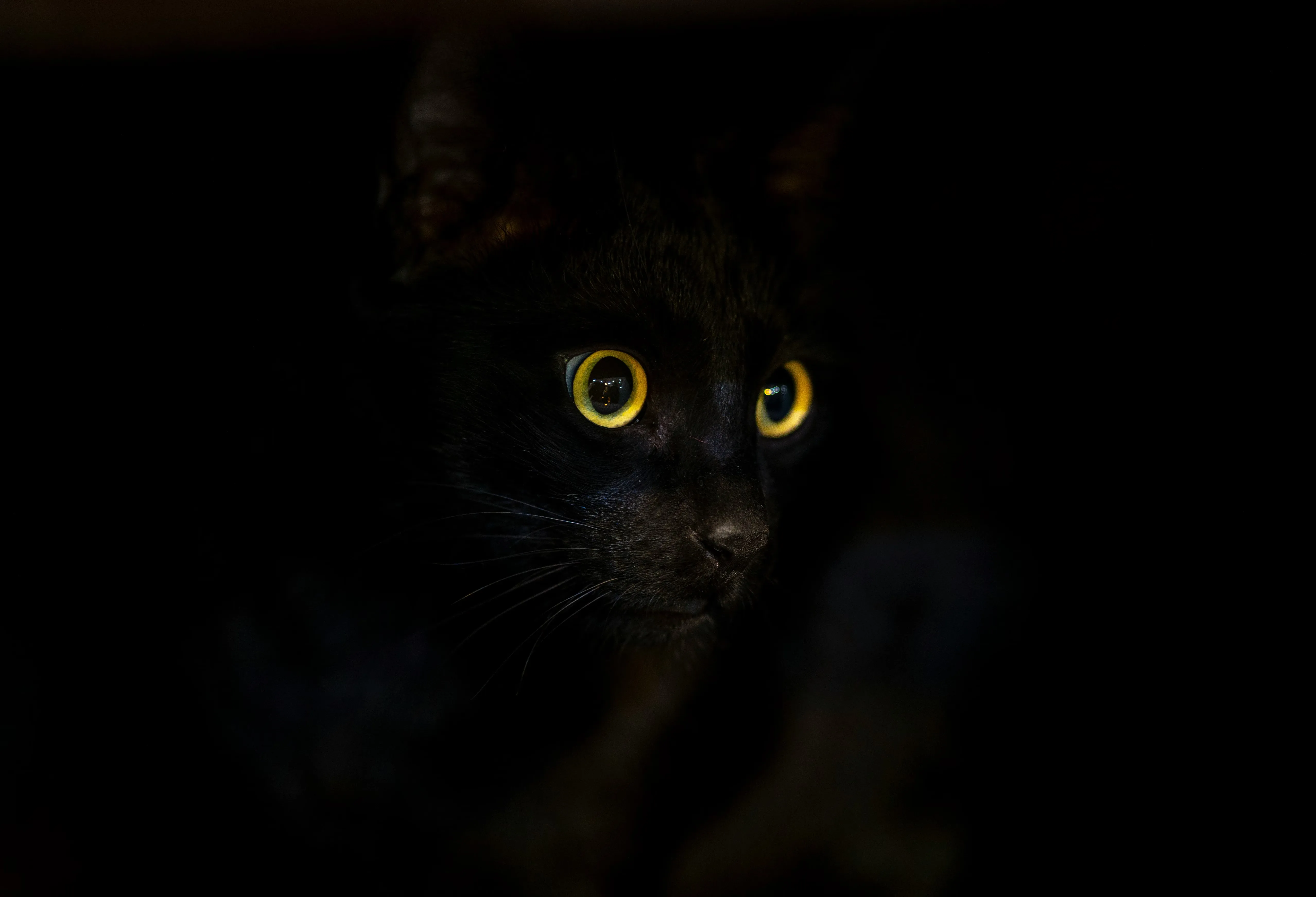
Why do black cats face lower adoption rates?
Black cats are significantly less likely to be adopted within a two-week window compared to cats with white, orange tabby, or brown tabby coats. A study published in PubMed investigated the specific drivers behind this disparity, utilizing data from Petfinder, an online adoption database. The research involved 1,004 participants from the United States who evaluated 40 different adoption advertisements.
The study design required participants to assess 10 photos from each of the four color categories: black, white, orange tabby, and brown tabby. Participants were asked to identify one of six core emotions, rate their certainty, and estimate the likelihood of the cat being adopted quickly. The results were conclusive: black cats were perceived as significantly less adoptable than their lighter-colored peers. This disparity highlights a systemic issue within the adoption process where visual presentation heavily influences the speed of placement.
The role of emotional interpretation
A critical finding of the PubMed study is that participants frequently attributed negative emotions, such as fear and anger, to black cats more often than to other colors. This does not necessarily mean the cats themselves were expressing these emotions, but rather that the observers struggled to interpret them. This difficulty in reading facial expressions and emotional cues from dark-furred animals creates a barrier to connection between potential adopters and the pets.
The research suggests that the inability to clearly discern a cat's intentions in a photograph leads to an increase in perceived uncertainty, which negatively affects the decision-making process during the adoption phase. In essence, the cats are not necessarily viewed as "scary" due to myth, but rather as "unreadable" due to their appearance in digital media. When the visual cues of an animal's temperament are obscured by dark fur, potential owners may feel a lack of confidence in the animal's personality, leading to hesitation or avoidance.
How does the 'Black Cat Syndrome' affect shelter survival?
The phenomenon of disproportionate risks for dark-furred animals is formally referred to as 'Black Cat Syndrome.' This term encompasses the cultural and visual preferences that favor cats with lighter coat colors, leading to a cycle where dark-furred cats remain in shelters longer and face higher euthanasia rates. Robert Carini, an associate professor of sociology at the University of Louisville, has highlighted this systemic issue.
Carini's research, which analyzed a sample of 7,983 cats from an urban shelter in Kentucky, provides a sobering look at the consequences of these biases. His findings suggest that coat color is a decisive factor in shelter outcomes. While the study noted that various colors face different challenges, the trend toward lighter-colored cats being preferred for both adoption and survival was evident. The data showed a clear hierarchy of outcomes based on coat color, where the darkness of the fur appeared to correlate with lower rates of successful placement and higher rates of euthanasia.
| Coat Color Category | Adoption & Euthanasia Outcomes |
|---|---|
| White | Most favorable outcomes |
| Brown/Grey | Intermediate outcomes |
| Black | Least favorable outcomes |
Is superstition the primary cause of adoption bias?
Contrary to popular belief, superstition and direct racial-style prejudice regarding coat color do not appear to be the main drivers of adoption difficulties. While the PubMed study explicitly measured how much superstition and color-based prejudice influenced participants, these factors did not significantly impact the overall assessment of adoptability or emotional perception. This suggests that the "scary" reputation of black cats may be more a product of visual perception than ancient folklore.
Instead, the research suggests that the primary barrier is a matter of visual clarity and psychological uncertainty. When a potential adopter looks at a photograph of a black cat, the lack of contrast makes it harder to discern the animal's intentions or emotional state. This ambiguity leads to an increase in perceived uncertainty, which negatively affects the decision-making process during the adoption phase. The difficulty in interpreting emotional cues in photos creates a psychological distance that lighter-colored cats do not face. Rather than being driven by a conscious belief in bad luck, adopters may be reacting to a subconscious inability to 'read' the animal's face.
What other factors influence pet adoption decisions?
While coat color is a measurable factor in shelter statistics, it is not the sole determinant in the decision to bring a pet home. Many adopters prioritize functional and compatibility factors over aesthetic ones. According to Robert Carini, several practical considerations often outweigh the impact of a cat's color for many potential owners.
Prioritizing compatibility and health
For many experienced pet owners and families, the following factors are considered more critical than the shade of the cat's fur:
- Health Status: Pre-existing medical conditions and general vitality are often top priorities.
- Temperament: The individual personality and energy level of the cat.
- Household Compatibility: How well the cat will interact with existing children or dogs.
Interestingly, Carini notes that black cats may possess a unique appeal for certain demographics. Some adopters are specifically drawn to black cats because they perceive them as "bold," "different," or "lovable outsiders," suggesting that while a general bias exists, a niche market of dedicated adopters also exists for these animals. This indicates that while the statistical trend favors lighter cats, the personal connection formed through temperament and compatibility can overcome the visual bias. For these adopters, the very traits that make a black cat stand out become a point of attraction rather than a deterrent.
Frequently asked questions
Why are black cats harder to adopt?
Black cats are harder to adopt primarily because their dark fur makes it difficult for humans to read their facial expressions in photographs. This visual ambiguity leads to increased uncertainty and the misinterpretation of their emotions, often resulting in people perceiving them as less friendly or more intimidating than lighter cats.
What is the Black Cat Syndrome?
Black Cat Syndrome refers to the cultural and visual biases that favor lighter-colored cats in animal shelters. This preference results in a disproportionate number of dark-furred cats remaining in shelters for longer periods, which subsequently increases their risk of euthanasia compared to cats with lighter coats.
Does superstition affect black cat adoption?
While superstition is a common cultural belief, scientific research suggests it is not the main driver of adoption difficulties. Studies show that the inability to clearly interpret a black cat's emotional cues in photos is a much more significant factor in lower adoption rates than traditional myths or superstitions.
Which cat colors have the best survival rates?
According to research conducted by Robert Carini, white cats tend to have the most favorable outcomes regarding both adoption rates and survival in shelters. Brown and grey cats typically fall in the middle, while black cats face the most significant challenges in both categories.
Are there any advantages to adopting a black cat?
Yes, some adopters find black cats particularly appealing due to their unique aesthetic. Some people view black cats as being "bold" or "different," seeing them as lovable outsiders that offer a distinct personality compared to more common coat colors.
Key takeaways
- Black cats face higher euthanasia risks due to lower adoption rates in shelters.
- Visual ambiguity in photos makes it harder to read black cats' emotions.
- The 'Black Cat Syndrome' describes the bias favoring lighter-colored cats.
- Practical factors like health and temperament often outweigh color for many adopters.
Conclusion
The challenges faced by black cats in shelters are a complex intersection of visual perception and systemic bias. While the 'Black Cat Syndrome' highlights a clear disparity in adoption and survival rates, the root cause appears to be less about superstition and more about the difficulty of interpreting emotional cues through dark fur. Understanding that this is a matter of visual clarity can help shelters and adopters work toward more equitable outcomes. By focusing on temperament, health, and compatibility, the pet community can help ensure that a cat's coat color does not determine its chance at a forever home.







