How did the weather impact the Brazil Grand Prix 2026 qualifying?
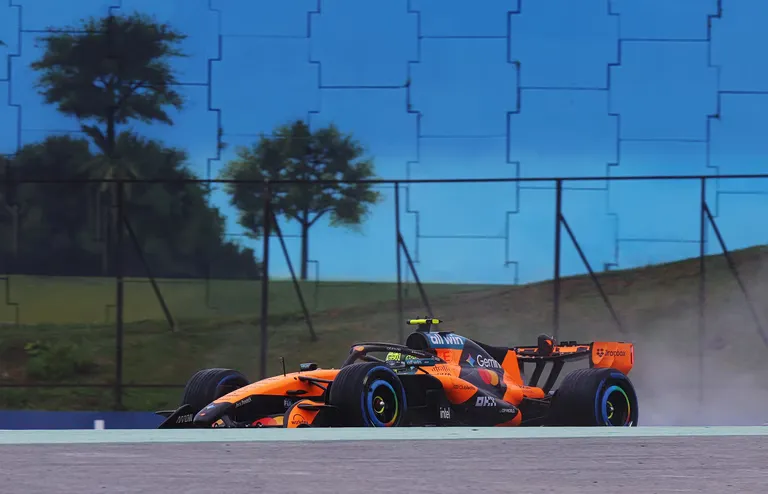
Torrential rain dominated the qualifying proceedings at the Interlagos circuit, leading to massive disruptions and safety concerns. The sessions faced a significant delay of roughly two hours as heavy downpours made the track conditions unsafe for high-speed competition. Reports of severe hydroplaning forced officials to deploy a red flag, halting the session to ensure driver safety.
The weather conditions intensified during the final stages of the qualifying process. As the rain became heavier, the window for improving lap times closed, leaving no opportunity for drivers to set faster benchmarks in the closing minutes. Consequently, the final five minutes of the session saw no cars on the track as the red flag conditions persisted. This pattern of unpredictable weather has become a hallmark of the Sao Paulo Grand Prix, often facilitating dramatic shifts in race outcomes.
Historical context of Interlagos weather
The Brazilian circuit is historically known for producing high-stakes drama under wet conditions. For instance, in 2024, Max Verstappen secured a victory despite starting from 17th on the grid. Similarly, in 2022, Kevin Magnussen achieved a surprise pole position with Haas, demonstrating how rain can level the playing field and reward driver skill over pure car performance.
What is the starting grid for the Sao Paulo Grand Prix?
Lando Norris will lead the pack from pole position, followed by the newly crowned world champion Kimi Antonelli. Despite George Russell recording the second-fastest time with Mercedes, a five-position penalty relegates him to seventh on the grid. The combination of driver performance and technical penalties has created a highly unconventional starting lineup for the race.
The technical regulations and engine changes have significantly altered the front of the grid. Charles Leclerc, who originally qualified fourth for Ferrari, will drop ten places due to power unit changes. This reshuffle allows Liam Lawson of Racing Bulls to start third and Nico Hulkenberg of Audi to take the fourth spot. The top ten will be completed by Isaac Hajjar in fifth, Oliver Bearman in sixth, George Russell in seventh, Fernando Alonso in eighth, Alex Albon in ninth, and Oscar Piastri in tenth.
| Position | Driver | Team | Notes |
|---|---|---|---|
| 1 | Lando Norris | McLaren | Pole Position |
| 2 | Kimi Antonelli | [Team Not Specified] | Front Row |
| 3 | Liam Lawson | Racing Bulls | Promoted via penalties |
| 4 | Nico Hulkenberg | Audi | Promoted via penalties |
| 5 | Isaac Hajjar | Red Bull | - |
| 6 | Oliver Bearman | Haas | - |
| 7 | George Russell | Mercedes | 5-place penalty |
| 8 | Fernando Alonso | Aston Martin | - |
Why are Max Verstappen and Lewis Hamilton starting at the back?
Massive engine-related penalties have pushed both Max Verstappen and Lewis Hamilton to the rear of the grid. The technical changes required for their respective power units have resulted in penalties so severe that they will effectively start from the very back of the field, significantly impacting their chances for a podium finish.
Max Verstappen, the four-time world champion, failed to progress past the Q2 stage. His exit from the third qualifying phase was compounded by a 30-position grid penalty stemming from power unit modifications. Meanwhile, Lewis Hamilton’s situation with Ferrari is even more critical. Due to a series of engine-related penalties totaling 65 positions, the British driver will also struggle to make an impact from the back of the grid.
The Q2 disruption and Raphael Camara's accident
The qualifying session was further complicated by an accident involving Raphael Camara during the Q2 phase. Camara, making his debut with Haas, lost control on a corner that offers little margin for error. The resulting red flag halted the session to allow for debris removal. Camara noted that the incident served as a learning experience regarding the limits of the intermediate tires on a challenging circuit.
How did the drivers react to the qualifying conditions?
The drivers expressed a mixture of satisfaction, frustration, and uncertainty following the rain-soaked sessions. Lando Norris expressed contentment with his performance, noting that achieving pole position was the primary objective regardless of the specific circumstances. In contrast, George Russell voiced significant frustration regarding his inability to secure the top spot, particularly after being hindered by slower traffic.
Kimi Antonelli highlighted the difficulty of navigating the Interlagos circuit in the wet for the first time. He admitted to a near-miss at Turn 5 but was relieved to have secured a strong starting position. On the other end of the spectrum, Gabriel Bortoleto faced a difficult day, losing control of his car and suffering extensive damage that prevented him from continuing, ultimately finishing last.
Frequently asked questions
Who took pole position in the 2026 Brazil Grand Prix qualifying?
Lando Norris of McLaren secured pole position for the third consecutive year in Sao Paulo. Despite the heavy rain and significant delays to the qualifying sessions, the British driver recorded the fastest time to lead the grid for the upcoming race.
Why is Max Verstappen starting at the back of the grid?
Max Verstappen is starting from the rear of the grid due to a 30-position penalty. This penalty was issued because of necessary changes made to his Red Bull power unit, preventing him from progressing past the Q2 qualifying stage.
How many positions will Lewis Hamilton drop?
Lewis Hamilton will drop 65 positions on the starting grid. This massive penalty is the result of multiple engine-related changes required by his Ferrari, effectively placing him at the very back of the field for the Sao Paulo Grand Prix.
What caused the delay in the qualifying sessions?
The qualifying sessions were delayed by approximately 2.5 hours due to torrential rainfall. The intense weather led to dangerous hydroplaning conditions, necessitating red flags to ensure the safety of the drivers and track marshals at the Interlagos circuit.
Did George Russell achieve a top qualifying time?
Yes, George Russell recorded the second-fastest time during the qualifying session with his Mercedes. However, he will not start second because a five-position grid penalty will force him to begin the race from seventh place.
Key takeaways
- Lando Norris secured his third consecutive pole position at the Interlagos circuit.
- Max Verstappen faces a 30-position penalty due to power unit changes.
- Lewis Hamilton will start from the back following a 65-position engine penalty.
- Heavy rain caused a 2.5-hour delay during the qualifying sessions.
- Charles Leclerc will drop ten places on the grid due to technical upgrades.
The path forward for Interlagos
The 2026 Brazil Grand Prix qualifying has set the stage for a highly unpredictable race. With the heavyweights like Verstappen and Hamilton relegated to the back, the front of the grid offers a unique opportunity for drivers like Norris and Antonelli to capitalize. The combination of high-performance machinery and the volatile weather patterns at Interlagos suggests that the race will be defined by strategic tire management and driver adaptability in changing conditions.