
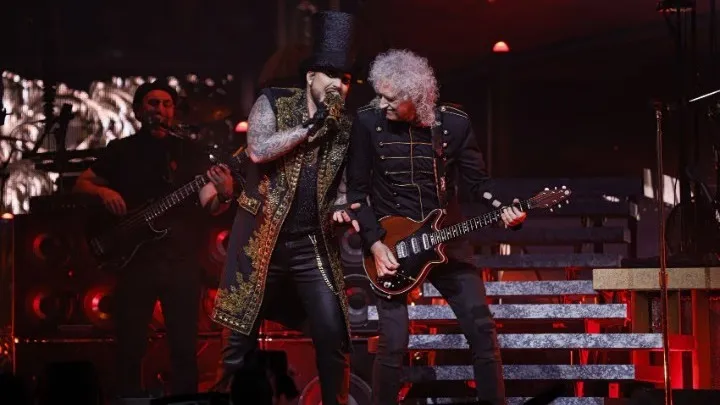
Why has Brian May decided to end Queen's touring era?
Brian May's decision to step away from the rigors of global touring stems from a profound personal realization regarding the cost of a life on the road. The legendary guitarist stated in an interview with The Times that he reached this conclusion approximately 18 months prior to the announcement. While he maintains a deep love for performing and traveling, the logistical and emotional toll of the industry became unsustainable.
A pivotal moment occurred during a series of performances in the United States. During this period, May experienced the tragic loss of a close family friend. This event highlighted the rigid and often unforgiving nature of professional touring schedules. When May attempted to communicate his need to return home urgently to deal with the situation, he was informed by the tour manager that such a departure was practically impossible due to the complexities of the production.
This incident served as a catalyst for May to re-evaluate his priorities. He noted that the profession requires a significant sacrifice of personal freedom. For a musician who has spent five decades in the spotlight, the desire to reclaim time for family and personal interests has become paramount. He specifically mentioned his wife, Anita Dobson, and his grandchildren as central reasons for wanting to prioritize a more stable domestic life.
The personal cost of the touring lifestyle
The tension between the demands of a global rock production and the needs of an individual is a recurring theme in May's reflections. The inability to respond to personal emergencies during a tour underscores the lack of autonomy performers often face. For May, the trade-off between musical expression and personal liberty reached a breaking point following his experience in the US.
How will Brian May balance music with his other passions?
Beyond his identity as a rock icon, Brian May is deeply committed to his academic and personal pursuits, which he intends to prioritize in his post-touring life. The guitarist explicitly mentioned his interest in astrophysics, a field he has been involved with for many years. He expressed a desire to dedicate more time to this scientific endeavor, suggesting that after 50 years in the music industry, he has achieved sufficient professional milestones.
This transition represents a shift from the high-octane environment of stadium rock to a more contemplative and intellectually driven lifestyle. May's ability to balance these two seemingly disparate worlds—rock stardom and scientific research—has been a hallmark of his career. By stepping back from the road, he aims to foster a more harmonious relationship between his creative output and his intellectual curiosities.
What are the future plans for Queen's musical legacy?
Despite the end of traditional touring, Brian May is not abandoning the concept of presenting Queen's music to large audiences. Instead, he is exploring revolutionary methods to bring the band's catalog to life in new, immersive environments. He envisions a format that moves beyond the standard concert experience, drawing inspiration from recent technological advancements in the entertainment industry.
May's vision is inspired by his visit to the Sphere in Las Vegas. He described the experience as a catalyst for a new creative direction, leading him to design a concept for a complete Queen concert experience. This would not be a traditional tour but rather a high-tech, immersive event designed to capture the essence of the band's music through cutting-edge spatial and visual technology.
He compared this potential direction to the approach taken by ABBA, implying a move toward a more controlled, technologically enhanced presentation rather than a standard live band setup. This approach would allow the music to reach massive audiences in a way that feels fresh and technologically advanced, ensuring the band's legacy remains relevant in a changing digital landscape.
The evolution of live music experiences
The shift toward immersive venues like the Sphere suggests a broader trend in the music industry. As traditional touring becomes more taxing for veteran artists, technology offers a way to maintain a live presence without the physical demands of constant travel. May's interest lies in finding a middle ground where the spectacle of Queen can be preserved through innovation.
What is Brian May's stance on Artificial Intelligence in music?
While Brian May is enthusiastic about immersive technology, he maintains a cautious and critical stance regarding the use of Artificial Intelligence (AI) in the creative process. He believes that while technology can enhance the experience of music, the reliance on AI presents significant ethical and environmental concerns that cannot be ignored.
May noted that a truly immersive experience capable of conquering time and space currently requires the use of AI, but he expressed "serious reservations" about this path. His skepticism is not merely artistic but also environmental. He pointed to the massive energy requirements of data centers, describing them as a "huge evil" that must be addressed and combated.
This perspective highlights a growing tension in the music industry between the drive for technological perfection and the necessity of environmental sustainability. For May, the future of music must not only be immersive and revolutionary but also ethically and ecologically responsible. He refuses to embrace technological solutions that come at too high a cost to the planet.
Frequently asked questions
Why is Queen stopping their world tours?
Brian May decided to end touring due to the personal sacrifices required by the lifestyle. A tragic loss of a close friend during a US tour highlighted the inability to prioritize family emergencies, leading him to seek more freedom for his personal and scientific interests.
Will Brian May continue to play music?
Yes, May remains passionate about music. While he is retiring from the rigors of traditional touring, he is actively designing new, immersive ways to present Queen's music, potentially using advanced technology to create large-scale arena experiences similar to the concept used by ABBA.
Is Brian May involved in science?
Yes, Brian May is a dedicated astrophysicist. He has expressed a strong desire to dedicate more time to his scientific research and studies, noting that after 50 years in music, he wishes to balance his life with his academic passions.
What inspired the new Queen concert concept?
The concept was inspired by May's visit to the Sphere in Las Vegas. He aims to create a revolutionary, immersive experience that uses technology to transport the audience, though he remains wary of the environmental impact of the necessary AI and data centers.
Does Brian May support the use of AI in music?
No, Brian May has expressed serious reservations about Artificial Intelligence. While he sees its potential for immersive experiences, he is concerned about the ethical implications and the significant environmental damage caused by the massive data centers required to power such technology.
Key takeaways
- Brian May ended Queen's touring era to regain personal freedom and prioritize family.
- A tragic personal loss during a US tour influenced his decision to stop traveling.
- May intends to focus more on his passion for astrophysics and scientific research.
- New immersive concert concepts are being designed, inspired by the Las Vegas Sphere.
- May remains highly critical of the environmental impact caused by AI data centers.
The future of a rock legend
The conclusion of Queen's touring era marks a significant transition for Brian May, moving from the relentless cycle of global travel to a more balanced existence. By prioritizing his family and his scientific interests, May is redefining what it means to be a legendary musician in the modern age. While the traditional stage may be behind him, his vision for the future of music—one that is technologically immersive yet environmentally conscious—suggests that his influence on the cultural landscape will continue to evolve in profound and unexpected ways.







