
How did Celia Birtwell and Ossie Clark shape the 1960s aesthetic?
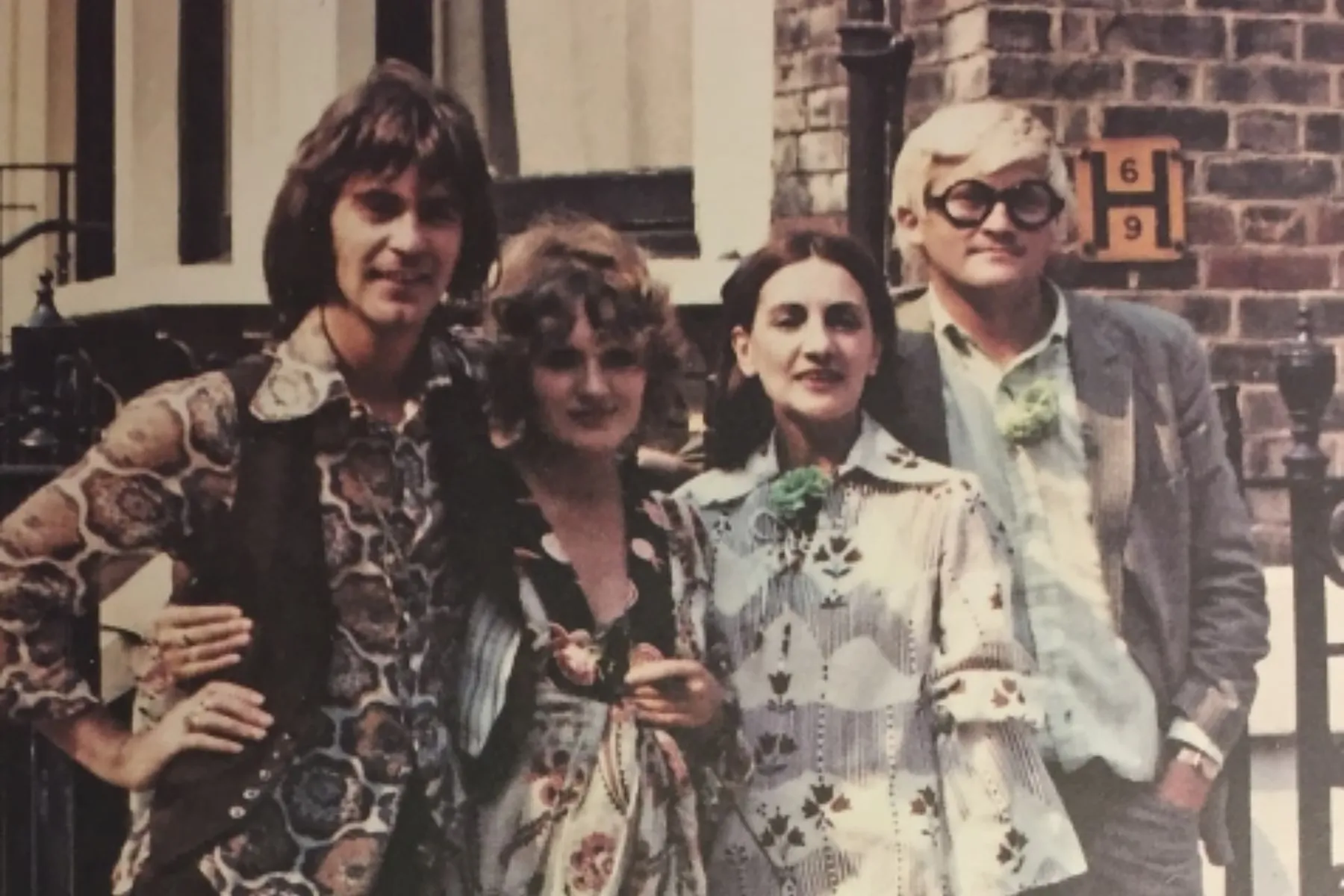
Celia Birtwell and Ossie Clark functioned as the definitive fashion power couple of London's most bohemian decade. While the era is often remembered for the mini-skirts of Mary Quant, Birtwell and Clark provided a more romantic, ethereal alternative that bridged the gap between Hollywood glamour and rock 'n' roll anarchy. Their creative process was a seamless fusion of textile artistry and structural tailoring.
Birtwell was responsible for the visual soul of their brand, producing whimsical, botanical sketches that were translated into intricate prints on fine chiffon. Clark, in turn, utilized these fabrics to create sensual, bias-cut dresses that flowed with an effortless elegance. Together, they didn't just design clothes; they curated a lifestyle that resonated with the most influential figures of the time. This partnership allowed Birtwell to maintain a level of creative autonomy that was rare for textile designers; she recalls that Ossie would often tell her, "Do whatever you feel," giving her absolute control over her work. She would print her own fabrics at home and bring the rolls to his studio to be transformed into garments.
The Quorum and the Chelsea Scene
The duo's influence was anchored in their Chelsea boutique, Quorum, which served as a cultural hub for the era's elite. The boutique was a frequent haunt for icons such as Talitha Getty, Marianne Faithfull, and Anita Pallenberg. Their reach extended into the heart of the music industry; Clark eventually designed for Mick Jagger, and the couple even accompanied the Rolling Stones on tour. This proximity to rock royalty ensured that their aesthetic was not merely a fashion statement, but a core component of the decade's cultural identity.
The social life surrounding their work was as vibrant as their prints. While Birtwell admits she did not care for parties that lasted all night, she loved the company of the beautiful people who frequented Quorum. She specifically recalls admiring the "adorable" Pat Booyd, noting how elegant she looked in Ossie's designs. This era was one of intense social connectivity, where fashion, music, and art merged in the boutiques and clubs of London.
What was the relationship between Birtwell and David Hockney?
David Hockney played a pivotal role in both the professional and personal lives of the Birtwell-Clark partnership. The legendary artist captured the couple at the height of their fame in his 1971 painting, "Mr. and Mrs. Clark and Percy," which was created during Birtwell's second pregnancy. This portrait solidified their status as mythological figures of the London art and fashion worlds. In the painting, Hockney depicted the couple with a precision that captured their unique standing in the cultural zeitgeist.
Beyond his art, Hockney maintained a profound and enduring friendship with Birtwell that lasted for six decades. He served as one of the few guests at their intimate wedding in 1969, which was attended only by Clark's sister, Kay, and Hockney himself. Birtwell notes that their bond was strengthened by a shared northern English heritage—she hailing from Lancashire and he from Yorkshire—and a mutual understanding of the complexities of life and loss. The two often found common ground in their origins, which helped foster a deep, easy communication.
Hockney was also a critical voice in their lives, often urging Clark to maintain a more disciplined work ethic. He famously told Clark, "You must work harder, you must improve, you should be working constantly!" However, Clark often ignored this advice. Despite these critiques, Hockney remained a close confidant to Birtwell, especially following the dissolution of her marriage and the eventual death of Hockney's own partner, Peter Schlesinger. Birtwell recalls spending significant time with Hockney in Normandy, where his studio—a beautiful small house with two barns, one of which was a stunning atelier—became a sanctuary of creativity and shared history.
How did the partnership of Birtwell and Clark evolve and end?
The intense, high-octane lifestyle of the 1960s eventually led to the dissolution of the Birtwell-Clark union. While the early years of their marriage were characterized by musical discovery and creative synergy, the pressures of fame and personal struggles began to take a toll. The couple separated in 1974 after five years of marriage. Birtwell remembers the early years as "wonderful," noting how Ossie would return from Portobello with beautiful jars or pieces of fabric he thought she would love, and how they would spend evenings listening to new music.
The aftermath of their separation was marked by tragedy for Ossie Clark. He struggled with addiction and faced increasing instability, culminating in his violent death at age 54 in his West London apartment, where he was murdered by a former partner, Diego Colagolato. Birtwell, however, managed to navigate the transition from a partner in a legendary duo to a respected individual designer in her own right. She maintained her creative agency, proving that her talent was a driving force in their collective success. Even as she ages, she remains a significant figure, recently contributing to high-profile collections for major luxury brands.
What is Celia Birtwell's lasting impact on modern fashion?
Celia Birtwell's career has extended far beyond the psychedelic era, proving her relevance to contemporary luxury houses. While many textile designers remain anonymous, Birtwell has achieved significant individual recognition, including being awarded a CBE in 2011. Her ability to translate botanical inspiration into wearable art has made her a sought-after collaborator for major brands.
Her professional portfolio includes notable achievements such as:
Birtwell's legacy is defined by her refusal to be "boring" with her patterns. Her lifelong commitment to mixing motifs and embracing the unconventional has ensured that her aesthetic remains a cornerstone of fashion history. Whether working on high-fashion runway pieces or accessible commercial lines, her eye for detail and botanical whimsy continues to influence the industry.
Frequently asked questions
Who were the most famous people in Celia Birtwell's social circle?
Birtwell moved in highly influential circles during the 1960s. Her social and professional life included icons like Marianne Faithfull, Talitha Getty, and Anita Pallenberg. She also had close ties to the music industry, including members of the Beatles and the Rolling Stones, as well as artist David Hockney.
What was the significance of the painting by David Hockney?
David Hockney's painting, "Mr. and Mrs. Clark and Percy," painted in 1971, is a landmark piece of art history. It immortalized Celia Birtwell and Ossie Clark at the peak of their cultural influence, capturing the essence of the era's bohemian elegance and their status as fashion icons.
Did Celia Birtwell design her own wedding dress?
Birtwell designed a unique dress for her wedding to Ossie Clark, though she does not categorize it strictly as a "wedding dress." It was a diaphanous piece featuring a mix of floral and graphic patterns—a design choice that reflected her lifelong philosophy of avoiding repetitive or boring motifs.
How did Celia Birtwell collaborate with major fashion houses?
Birtwell has worked with several prestigious brands throughout her career. Most notably, she co-designed a collection for Burberry with Daniel Lee and provided botanical prints for Valentino's runway collections. She also brought her aesthetic to more accessible markets through collaborations with Topshop and Uniqlo.
What happened to Ossie Clark?
Ossie Clark, Birtwell's husband and creative partner, faced a difficult period following their separation in 1974. He struggled with addiction and financial instability. Tragically, he was murdered in his West London apartment at the age of 54 by a former partner.
Key takeaways
- Celia Birtwell was a defining textile designer of the 1960s London fashion scene.
- She collaborated extensively with Ossie Clark to create a unique bohemian aesthetic.
- Her friendship with artist David Hockney spanned over sixty years.
- Birtwell has maintained professional relevance through collaborations with Burberry and Valentino.
- She was awarded a CBE in 2011 for her contributions to fashion.
Conclusion
Celia Birtwell's journey from a young art student in Manchester to a CBE-awarded icon is a testament to her enduring creative vision. While her life was deeply intertwined with the tumultuous and often tragic story of Ossie Clark, she emerged as a formidable force in her own right. By bridging the gap between high-concept textile design and commercial success, she has ensured that her signature botanical elegance remains a permanent fixture in the fashion lexicon. Her legacy continues to inspire, proving that true style is as much about artistic integrity as it is about the era in which it was born.







