
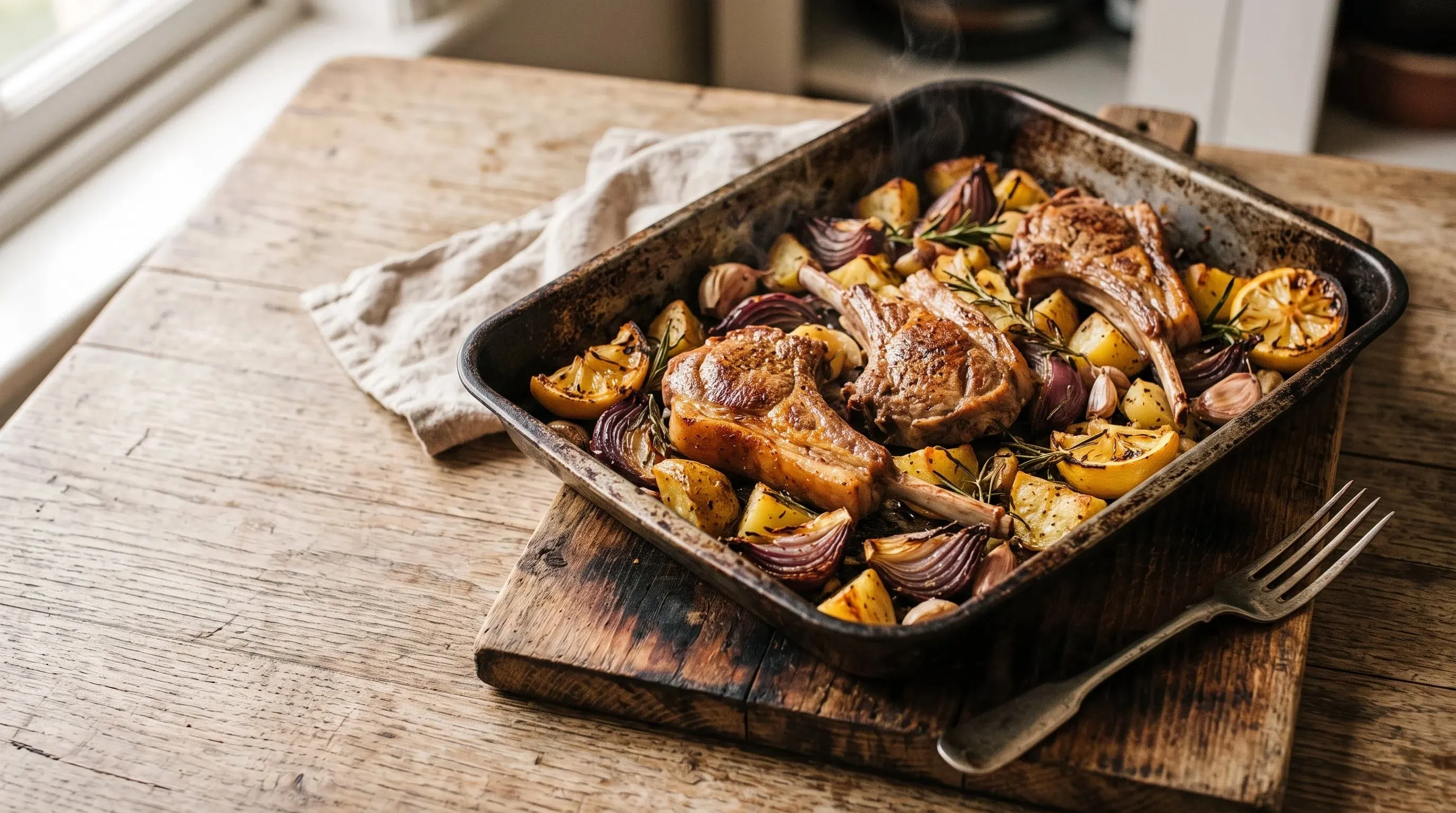
Why are oven-baked meat and potato dishes considered weekend staples?
Oven-baked meat and potato dishes are frequently chosen for weekend meals because they allow for extended cooking times that accommodate busy schedules while producing high-quality results. The process of slow roasting allows connective tissues in meats like pork neck or lamb leg to break down, resulting in a much more tender eating experience than quick pan-frying can provide.
Furthermore, the method of cooking meat alongside vegetables allows the starch from the potatoes to absorb the juices and fats released by the meat. This creates a cohesive flavor profile where every component of the dish is seasoned by the cooking process itself. Preparing these dishes often involves a period of hands-off cooking, making them ideal for hosting guests or enjoying a relaxed family lunch.
How do you prepare pork neck chops with vegetables in the oven?
Preparing pork neck chops with vegetables requires a two-stage cooking process to ensure the meat is juicy while the vegetables become tender and flavorful. The use of aromatics like garlic, mustard, and white wine creates a complex marinade that penetrates the meat during the roasting period.
Detailed steps for pork neck chops
To begin, preheat your oven to 180°C (or 200°C for fan-assisted ovens). Prepare the base by cutting approximately 1 kg of potatoes into quarters and chopping your vegetables, such as green and Florina peppers, into manageable pieces. Place these in a deep baking tray (approximately 30x24 cm) and season them with salt, pepper, oregano, mustard, garlic, white wine, and olive oil. Mix these well to ensure even coating.
Once the vegetables are prepared, place four thick pork neck chops on top of the mixture. Season the meat specifically with salt and pepper, and drizzle with a small amount of olive oil. To add depth to the sauce, create a mixture of water and tomato paste in a separate bowl, then pour this over the tray. The most critical step for moisture retention is sealing the tray: cover the food with parchment paper first, then seal it hermetically with aluminum foil. Bake for 45 minutes. After this initial period, uncover the tray, stir the ingredients gently to avoid breaking the potatoes, and flip the chops. Lower the temperature to 170°C and continue roasting for roughly 20 minutes.
What is the secret to a perfect slow-roasted lamb leg?
The secret to a perfect lamb leg lies in the combination of high-acid ingredients, such as lemon juice, and a long, slow roasting period at a lower temperature. This method ensures the meat remains moist despite the long duration in the oven.
For this recipe, you will need 2 kg of lamb leg (cut into three pieces), 2 kg of potatoes cut into wedges, and a blend of dried herbs including oregano, thyme, and rosemary. The marinade consists of olive oil, lemon juice, and the dried herbs. A unique technique used in this preparation involves making small, deep incisions in the meat and inserting garlic cloves directly into the flesh to infuse flavor from the inside out.
The slow-roasting process for lamb
Start by preheating the oven to a low 100°C. In a large bowl, combine the olive oil, lemon juice, oregano, thyme, salt, and pepper. Toss the potato wedges in this mixture and spread them evenly across a baking tray. Prepare the meat by rubbing it with a mixture of salt, pepper, and crushed rosemary, then place the garlic-stuffed pieces onto the tray. Add 200 ml of water to the tray for moisture.
Similar to the pork recipe, cover the tray with parchment paper followed by aluminum foil to trap the steam. Bake at this low temperature for 1 hour. Afterward, increase the heat to between 170°C and 180°C and continue roasting for another hour. This second stage allows the exterior to develop color and the potatoes to reach a creamy, soft consistency. It is highly recommended to let the meat rest for 10 to 15 minutes before serving to allow the juices to redistribute.
Which ingredients are essential for Mediterranean-style oven roasting?
Mediterranean-style oven roasting relies on a specific pantry of aromatics and fats that enhance the natural flavors of meat and tubers. Based on these classic recipes, the essential components can be categorized into fats, acids, and herbs.
- Fats and Liquids: Extra virgin olive oil serves as the primary cooking fat, while white wine and water provide the necessary moisture for the roasting environment.
- Acids: Lemon juice is vital for lamb dishes to cut through the richness of the fat, while tomato paste adds acidity and body to pork-based sauces.
- Aromatics and Herbs: Garlic (often used whole or crushed), oregano, thyme, and rosemary are the foundational herbs that define the flavor profile of these traditional dishes.
Frequently asked questions
Can I substitute different types of meat in these recipes?
Yes, you can adapt these methods for other meats, but cooking times will change. For example, beef chuck can be used for a similar slow-roasting effect, but it may require a longer period at a lower temperature to break down the tougher connective tissues effectively.
Why is it necessary to cover the tray with parchment paper and foil?
Covering the tray with parchment paper first prevents the food from reacting directly with the aluminum foil, which can sometimes affect the taste. The subsequent layer of foil creates a hermetic seal that traps steam, ensuring the meat stays moist during the initial cooking phase.
How do I prevent the potatoes from becoming mushy?
To prevent mushy potatoes, avoid over-stirring the tray once the meat has been cooked. When uncovering the dish for the final roasting stage, stir the ingredients very gently so that the potatoes maintain their structural integrity while still absorbing the flavorful juices.
Is it better to use fan-assisted or conventional ovens?
Both work well, but if you use a fan-assisted oven, you should reduce the temperature by approximately 20°C compared to a conventional oven. For the pork recipe, this means setting the oven to 180°C for fan-assisted rather than 200°C for conventional heat.
Why should I let the meat rest before serving?
Resting the meat for 10 to 15 minutes is crucial because it allows the muscle fibers to relax and reabsorb the juices. If you cut the meat immediately after removing it from the oven, the juices will run out, leaving the meat dry.
Key takeaways
- Use a two-stage temperature approach to ensure meat is tender and vegetables are cooked.
- Seal trays with parchment paper and foil to retain moisture through steam.
- Infuse lamb with flavor by inserting garlic cloves directly into meat incisions.
- Allow meat to rest for 10-15 minutes to ensure maximum juiciness during service.
Conclusion
Mastering these classic oven recipes provides a foundation for creating impressive, comforting meals that define traditional weekend dining. Whether choosing the savory, tomato-infused pork neck chops or the herb-scented, slow-roasted lamb leg, the principles of moisture retention and temperature control remain consistent. By utilizing aromatics like garlic, rosemary, and oregano, and employing the technique of sealing the baking tray, you can transform simple ingredients into sophisticated dishes. These methods ensure that both the meat and the accompanying potatoes achieve optimal texture and flavor, making them perfect for any shared family occasion.







