
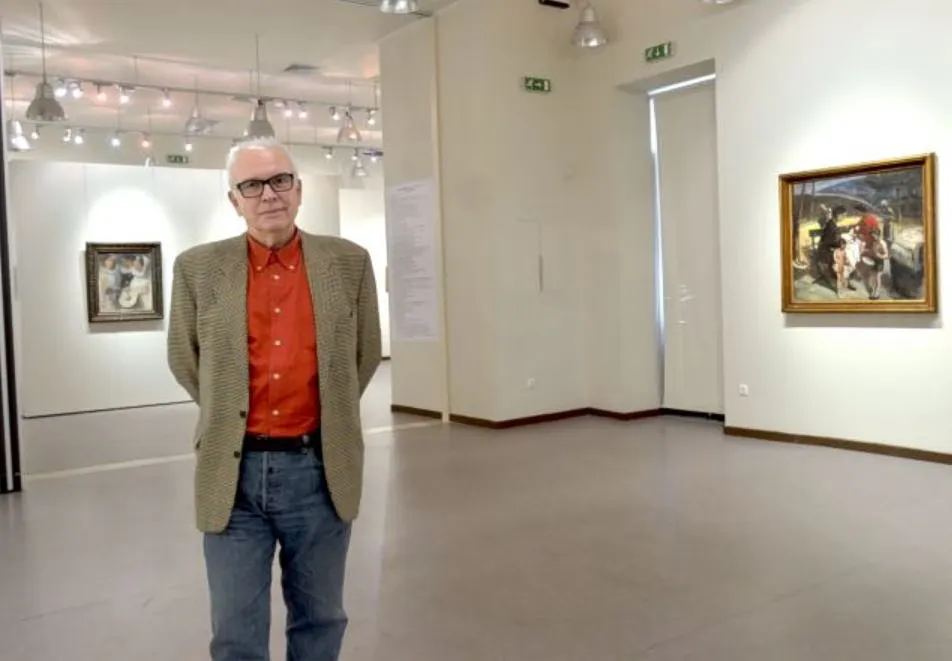
Who was Dénis Zacharopoulos and what was his legacy?
Dénis Zacharopoulos was a prominent figure in the international arts community, recognized for his profound expertise in art history and contemporary curation. Born in Athens in 1952, he developed a multi-disciplinary academic foundation that allowed him to bridge the gap between musicology, sociology, and fine arts. His influence extended far beyond Greece, as he became a central actor in the cultural landscapes of France, Switzerland, Germany, and the United States.
Throughout his career, Zacharopoulos acted as a vital link between academic theory and the practical world of museum management and exhibition design. He was not merely an observer of art but an active participant in its institutional evolution. His work helped define how contemporary art is presented, studied, and preserved in the late 20th and early 21st centuries.
How did his academic background shape his expertise?
The academic trajectory of Dénis Zacharopoulos was marked by a diverse and rigorous pursuit of knowledge across several European disciplines. He began his studies in Athens, focusing on music and music history at the Athens Conservatory, a foundation that likely informed his later interest in the intersection of sound and visual art.
He subsequently moved to France to deepen his intellectual reach, studying philology and aesthetics at the University of Aix-en-Provence. This was followed by specialized training in the sociology of art at the École des Hautes Études en Sciences Sociales (EHESS) in Paris. Between 1980 and 1985, he focused his postgraduate research on the complex fields of art history and theory, creating a scholarly framework that would underpin his future roles as an educator and critic.
A multidisciplinary approach to art theory
By combining philology, sociology, and aesthetics, Zacharopoulos approached art not as an isolated phenomenon but as a social and linguistic construct. This holistic perspective allowed him to tackle diverse subjects ranging from Arte Povera and muralism to the relationship between architecture and landscape. His ability to synthesize these varied disciplines made him a sought-after lecturer and researcher in prestigious institutions worldwide.
What were the most significant milestones in his professional career?
Zacharopoulos held several high-profile leadership positions that cemented his status as a global authority in the arts. His career was characterized by a seamless movement between academic teaching and high-level institutional directorships.
During the 1980s and 1990s, he held teaching positions at several of Europe's most esteemed institutions, including the Geneva School of Fine Arts, Le Magasin – Centre National d’Art Contemporain in Grenoble, the Rijksacademie van Beeldende Kunsten in Amsterdam, and the Hochschule für Kunst und Gestaltung in Bern. His academic excellence led to his appointment as an honorary professor at the Academy of Fine Arts in Vienna, where he also served as the director of the Institute of Contemporary Art.
In the realm of museum leadership, his roles were equally impactful:
- Macedonian Museum of Contemporary Art: Served as Artistic Director in Thessaloniki.
- Domaine de Kerguehennec: Directed this Contemporary Art and Culture Center and Sculpture Park in Brittany from 1992 to 1999.
- Documenta IX: Served as co-director of this prestigious international exhibition in Kassel in 1992.
- Venice Biennale: Acted as the curator for the French Pavilion during the 48th edition in 1999.
How did he influence international cultural policy and institutions?
Beyond his direct work with exhibitions and museums, Zacharopoulos was a key advisor to various governmental and international bodies, influencing how culture is managed at a state level. His expertise was frequently sought by ministries of culture to guide policy and recognition standards.
In France, he served as a member of the committee for international cultural policy for the Ministry of Foreign Affairs and acted as the General Inspector of Fine Arts for the Ministry of Culture. He was also a member of the advisory board for the National Collection of Contemporary Art in France. His influence extended to Spain, where he served on the Exhibition Committee for the Spanish Ministry of Culture, and to Switzerland, where he advised the Commission for the Recognition of Higher Degrees in Fine Arts within the Swiss Federal Department of Public Education.
His role as a coordinator for the "Greek Month" at the Institute of Contemporary Arts in London (1975-1976) also highlights his early commitment to promoting Greek culture on the global stage, a mission he continued throughout his life through his international collaborations.
What was his contribution to art criticism and scholarship?
Dénis Zacharopoulos was a prolific writer and critic whose publications provided deep insights into the mechanics of contemporary art. His scholarly output was vast, encompassing books, articles, exhibition catalogues, essays, and extensive monographs on both contemporary and historical artists.
His research was notably broad, covering a wide spectrum of artistic expressions and theoretical concerns. He wrote extensively on:
- Contemporary art movements and specific styles such as Arte Povera.
- Technical and formal aspects including painting, sculpture, and muralism.
- The relationship between art and its environment, such as architecture, landscape, and sound.
- The history of art institutions and the methodologies used to study them.
Through his lectures and participation in international conferences, he shared these insights with students and professionals across Europe and the Americas, ensuring that his methodological rigor influenced new generations of art historians and curators.
Frequently asked questions
What was Dénis Zacharopoulos's most notable exhibition role?
One of his most prominent roles was serving as the co-director of Documenta IX in Kassel in 1992. Additionally, he curated the French Pavilion at the 48th Venice Biennale in 1999, marking him as a leading figure in the world's most significant contemporary art exhibitions.
Where did Zacharopoulos teach throughout his career?
He taught at several prestigious European institutions, including the Geneva School of Fine Arts, the Rijksacademie in Amsterdam, and the Academy of Fine Arts in Vienna, where he was also an honorary professor. Later, he taught at the University of the Aegean in Mytilene.
What subjects did his scholarly work cover?
His writing was exceptionally diverse, covering contemporary art, sculpture, painting, and Arte Povera. He also explored the intersections of art with architecture, landscape, sound, and the historical development of art institutions and methodologies.
How did he contribute to French cultural administration?
Zacharopoulos held several high-level positions in France, including General Inspector of Fine Arts for the Ministry of Culture and a member of the committee for international cultural policy for the Ministry of Foreign Affairs.
What was his academic background in France?
In France, he studied philology and aesthetics at the University of Aix-en-Provence and later specialized in the sociology of art at the École des Hautes Études en Sciences Sociales (EHESS) in Paris.
Key takeaways
- Dénis Zacharopoulos was a highly influential Greek art historian and curator who passed away at age 74.
- He held major leadership roles, including co-directing Documenta IX and curating the French Pavilion at the Venice Biennale.
- His academic career included prestigious teaching positions across Geneva, Amsterdam, and Vienna.
- He served as a high-level cultural advisor for the French and Spanish Ministries of Culture.
The lasting impact of a global art authority
The passing of Dénis Zacharopoulos marks the end of a remarkable era in art history and curation. His ability to traverse the boundaries between rigorous academic sociology and the dynamic, practical world of international exhibitions allowed him to leave an indelible mark on the global cultural landscape. From his early studies in Athens and Paris to his leadership in the world's most prestigious museums and biennials, Zacharopoulos remained a dedicated advocate for the deep understanding of art. His legacy lives on through the institutions he shaped, the students he mentored, and the extensive body of scholarship that continues to inform the study of contemporary art.







