
Laboratory confirmation of water safety in Dionyi
The Dionyi water analysis results have confirmed that the local water supply meets all necessary regulatory requirements for safety. According to an announcement from the Rafina-Pikermi Municipality on October 9, 2026, laboratory tests conducted on samples taken from the regional reservoir show that all examined parameters fall within the prescribed legal limits.
The testing process was carried out by accredited and certified laboratories to ensure the highest level of accuracy. The municipality specifically noted that the samples analyzed were collected on October 5, 2026. The subsequent laboratory report, issued on October 8, 2026, provided the technical basis for the safety assurance provided to the community. These findings are critical for maintaining public trust in the local utility services during a period of infrastructure instability.
Regulatory compliance and testing parameters
The safety of the water is measured against strict national standards. The municipality confirmed that both microbiological and physicochemical parameters are in compliance with the standards set by Ministerial Decision Δ1(δ)/ΓΠ οικ. 27829 (FEK 3525/B/25-5-2023), including all subsequent amendments. This compliance ensures that the water is free from harmful biological contaminants and meets the chemical balance required for human consumption.
Ongoing technical failures in the water supply network
Despite the positive water quality findings, the Dionyi water supply remains under significant strain due to unresolved mechanical issues. The municipality reported that the filling pumps for the Dionyi reservoir have suffered a failure that has not yet been repaired. This breakdown has directly impacted the ability of the system to maintain standard pressure and volume levels.
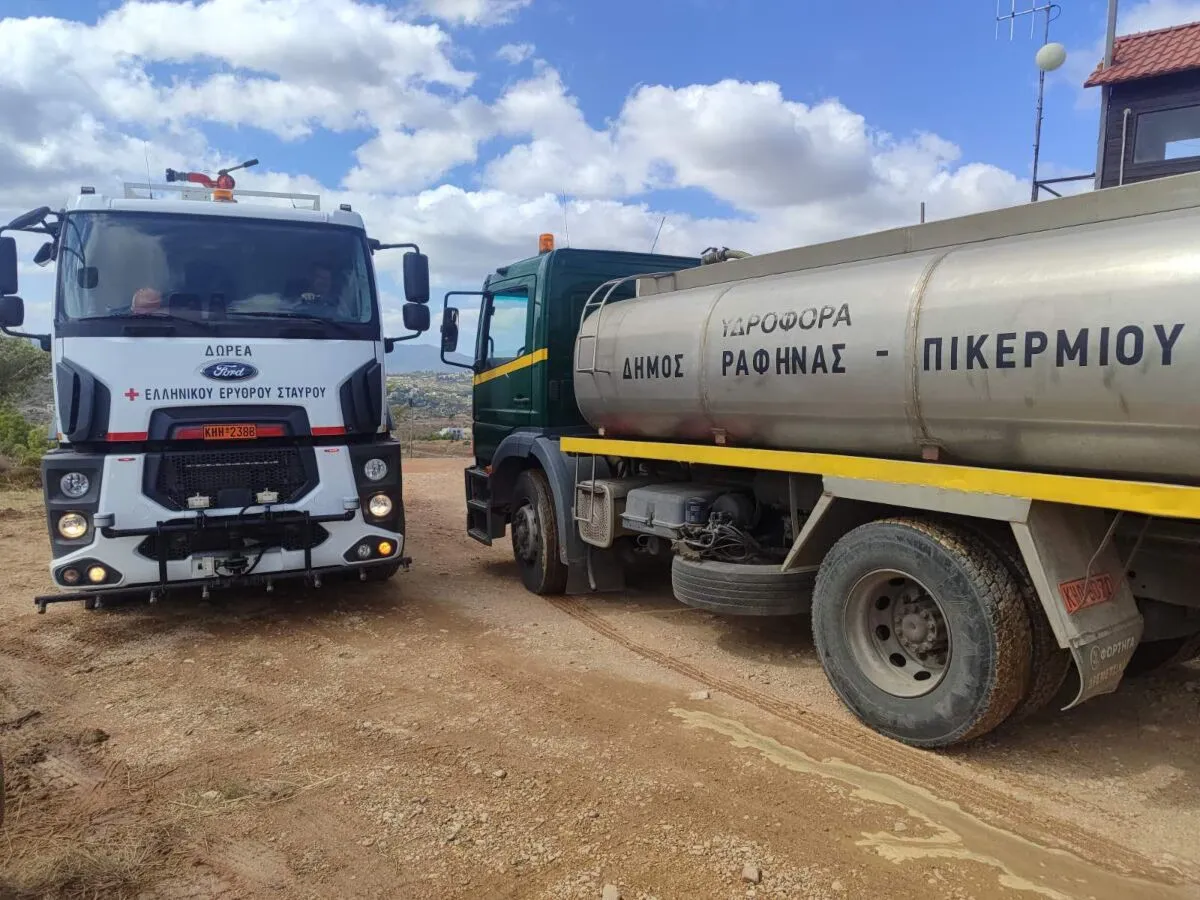
To mitigate the impact of the pump failure, the local government has implemented emergency measures. Currently, the water supply is being supplemented by water tanker vehicles to ensure that residents have access to necessary fluids. While these mobile units provide a temporary solution, the lack of a fully functioning automated pumping system means the network cannot operate at its intended capacity. The municipality is working toward a permanent fix, but the timeline for full restoration remains dependent on the repair of these critical components.
Conservation appeals and resource management
The combination of technical failures and the reliance on water tankers has prompted the Rafina-Pikermi Municipality to issue an urgent appeal to the local population. Residents who rely on the Dionyi reservoir are being asked to practice strict water conservation to prevent a total depletion of available resources. The goal is to manage the existing reserves effectively while the infrastructure is being stabilized.
The municipality's guidance focuses on several key areas of usage:
- Avoiding all non-essential water consumption during peak hours.
- Implementing limited use of water for gardening or cleaning.
- Ensuring that any water used for essential household tasks is managed carefully to prevent waste.
By reducing the daily load on the reservoir, the municipality hopes to facilitate a smoother normalization of the water supply once the pump repairs are completed. The current strategy is one of managed scarcity to ensure that even with the technical setbacks, the most vital needs of the community are met without interruption.
Frequently Asked Questions
Are the Dionyi water analysis results safe?
Yes, the Dionyi water analysis results show that the water is safe. According to the Rafina-Pikermi Municipality in October 2026, all microbiological and physicochemical parameters tested in the October 5 samples fall within the legal safety limits defined by national ministerial decisions.
Why is the water supply currently limited?
The water supply is limited because of a technical failure in the Dionyi reservoir's filling pumps. Because these pumps are not yet operational, the municipality is using water tankers to supplement the supply, which prevents the system from reaching full capacity.
What should residents do to help?
Residents should practice limited and calculated water usage. The municipality advises avoiding any unnecessary consumption to protect existing reserves. This conservation effort is necessary to ensure that the water supply remains stable while technicians work to repair the broken reservoir pumps.







