How widespread is the inability to afford leisure in the EU?
The inability to participate in regular recreational activities affects roughly 46 million people across the European Union. Based on Eurostat data from 2025, 12.1% of the population aged 16 and older reported that they could not afford systematic involvement in leisure pursuits. These activities, which include sports, cinema, and concerts, are considered vital components of quality of life and social integration.
The scope of this deprivation is not uniform across the continent. The financial barrier prevents a significant portion of the 381 million people in this age demographic from accessing cultural and physical activities that occur outside the home. This includes costs associated with tickets, transportation, equipment, or club memberships.
Which European countries face the highest levels of deprivation?
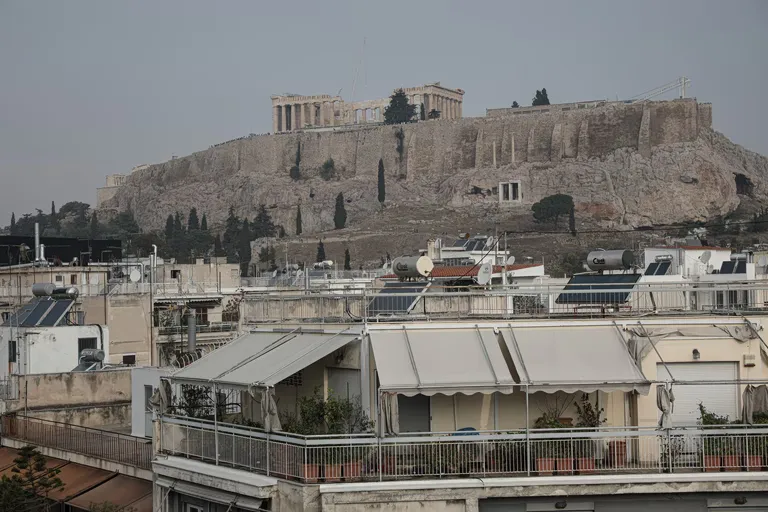
Greece and Romania lead the European Union in terms of the percentage of citizens unable to afford regular leisure activities. According to Eurostat and Euronews reports, Greece records the highest rate at 27.3%, meaning more than one in four citizens is economically excluded from regular recreation. Romania follows closely with a deprivation rate of 23.3%.
The geographical distribution of this economic barrier shows a clear trend in Eastern and Southern Europe. Other countries with significant deprivation levels include:
- Lithuania: 17.9%
- Latvia: 16.2%
- North Macedonia: 15.9%
- Hungary: 15.8%
In contrast, some nations show much higher levels of accessibility. The Czech Republic reports one of the lowest rates at 4.1%, followed by Luxembourg at 5.4%, and both Norway and Slovakia at 5.7%. Even within the Scandinavian bloc, there are notable differences; while Denmark (10.4%) and Sweden (9.7%) have higher deprivation rates than Croatia (7.9%), they remain significantly lower than the Mediterranean and Baltic leaders.
Comparative deprivation rates by country
| High Deprivation Countries | Rate (%) | Low Deprivation Countries | Rate (%) | |
|---|---|---|---|---|
| Greece | 27.3% | Czech Republic | 4.1% | |
| Romania | 23.3% | Luxembourg | 5.4% | |
| Lithuania | 17.9% | Slovakia | 5.7% | |
| Latvia | 16.2% | Netherlands | 6.7% | |
| North Macedonia | 15.9% | Cyprus | 6.3% |
Why does median income fail to explain the full picture?
Income levels alone account for less than one-fifth of the variations in leisure accessibility between European nations. An analysis by Euronews Business covering 33 countries demonstrates that while there is a moderate correlation between wealth and leisure, it is far from the sole determining factor. This is evidenced by striking discrepancies between countries with nearly identical median incomes.
For example, the Czech Republic, Estonia, Latvia, and Lithuania all share very similar median equivalent incomes, ranging between 17,097 and 17,190 Purchasing Power Standard (PPS) units. Despite this similarity, the deprivation rates vary wildly: from just 4.1% in the Czech Republic to 17.9% in Lithuania. Similarly, France and Cyprus have almost identical median incomes (23,792 and 23,782 PPS respectively), yet France faces a 13.9% deprivation rate compared to only 6.3% in Cyprus.
Greece presents a unique case where the lowest median income among the studied examples (13,612 PPS) coincides with the highest rate of leisure deprivation. However, the fact that Turkey (8.7%) and Serbia (9.9%) have lower deprivation rates despite having lower incomes further proves that cost of activities, availability of options, and broader social conditions are critical variables.
How do gender and poverty intensify social exclusion?
Gender inequality and absolute poverty act as significant multipliers for leisure deprivation. Across almost all surveyed nations, women face greater obstacles to accessing recreational activities than men. In the EU as a whole, 13% of women are unable to afford regular leisure, compared to 11.1% of men. This gender gap is most pronounced in Lithuania (5.1 percentage points), Romania (4.7 points), Denmark (3.9 points), and France (3.7 points).
Furthermore, there is a direct and severe link between absolute poverty and social exclusion. According to Eurostat, individuals living below the poverty line in the EU are three times more likely to be unable to afford regular leisure activities. For this specific demographic, the deprivation rate climbs to 29%.
The role of perceived necessity
Researchers suggest that the way citizens report their needs may also influence these statistics. In a Eurostat working paper, Anne-Catherine Guio and colleagues noted that low-income individuals might claim they do not "desire" certain goods or activities, when in reality, they simply lack the financial means to participate. Because leisure is often not categorized as a basic necessity, it is frequently the first area where citizens reduce spending, potentially masking the true extent of economic hardship.
FAQ: Economic deprivation in leisure activities
What activities are included in the Eurostat definition of leisure?
Eurostat defines recreational activities as those conducted outside the home. This specifically includes sports, cinema, concerts, swimming, cycling, or participation in organized social activities. The cost of these activities encompasses entrance fees, transportation, necessary equipment, or recurring memberships.
Is there a direct link between income and leisure access?
There is a moderate correlation, but income explains less than 20% of the differences between countries. Many nations with similar median incomes, such as France and Cyprus, show vastly different levels of leisure deprivation, suggesting that local costs and social structures play a larger role.
How does poverty affect the ability to participate in leisure?
Poverty significantly increases the risk of exclusion. Individuals living below the poverty line in the EU are three times more likely to be unable to afford regular recreational activities, with the deprivation rate reaching 29% for this group.
Are women more affected by this economic barrier?
Yes, women generally face higher barriers to leisure participation than men in nearly all studied countries. The EU average for women unable to afford leisure is 13%, while for men it is 11.1%, with significant gaps seen in Lithuania and Romania.
Why is Greece highlighted in these reports?
Greece is highlighted because it has the highest rate of leisure deprivation in the EU at 27.3%. This means more than one in four Greek citizens cannot afford regular participation in social and recreational activities due to financial constraints.
Key takeaways
- Approximately 46 million Europeans cannot afford regular recreational activities.
- Greece has the highest EU deprivation rate at 27.3%.
- Income explains less than 20% of the differences in leisure access between nations.
- Women in the EU face a higher rate of leisure exclusion (13%) than men (11.1%).
- People living below the poverty line are three times more likely to be excluded from leisure.
Conclusion
The data reveals a Europe divided not just by wealth, but by the ability to participate in the social fabric of life. While income is a factor, the massive disparities between countries with similar earnings suggest that the cost of living, local infrastructure, and social norms are equally decisive. As leisure becomes a luxury for millions, particularly in Greece and Eastern Europe, the resulting social exclusion poses a challenge to the concept of equal quality of life across the Union. Addressing this requires looking beyond mere income redistribution to the actual costs and accessibility of cultural and physical engagement.