
Viral footage reveals extreme speeds on Egnatia Odos
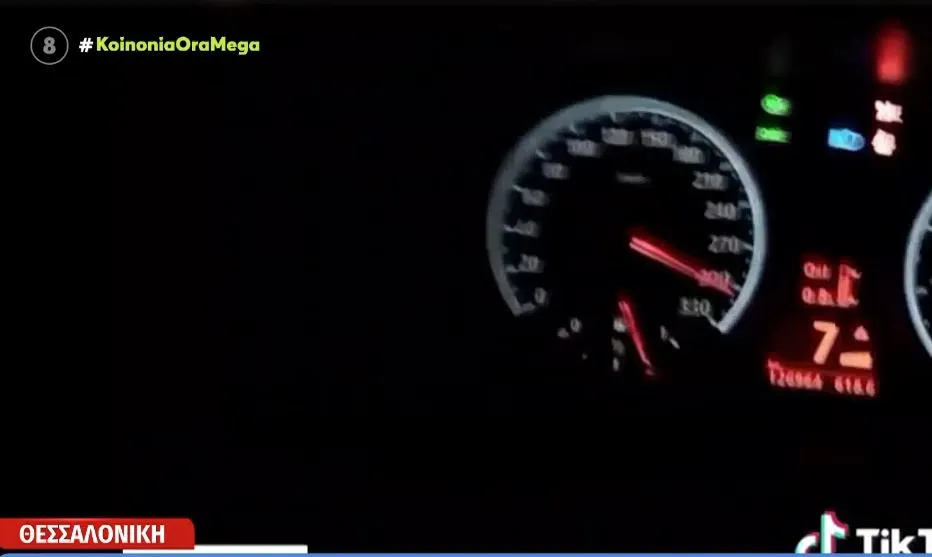
A video circulating on social media platforms has brought a dangerous driving incident into the spotlight, showing a vehicle reaching speeds of approximately 310 km/h. The footage provides a digital record of the car's speedometer as it climbs to this unprecedented level on a public highway. Such speeds represent a significant departure from legal limits and pose an extreme risk to all road users.
The recording has triggered widespread outrage across social media networks. Users have reacted to the display of recklessness, with many calling for immediate legal consequences. The digital nature of the evidence means the incident is being scrutinized not just by the public, but by specialized units within the Hellenic Police (EL.AS.).
Location and circumstances of the high-speed event
The incident is reported to have taken place near Oraiokastro, in the Thessaloniki region of Greece. This specific section of the Egnatia Odos is a major transit artery, making such high-speed maneuvers particularly hazardous due to the volume of traffic and the nature of the roadway.
While the video was uploaded to social media recently, the exact timing of the actual driving event remains unconfirmed. This temporal gap is a key factor in the ongoing investigation, as authorities work to determine if the footage is current or if it depicts an older occurrence. The lack of a confirmed timestamp adds a layer of complexity to the identification process.
Police investigation and identification efforts
The Hellenic Police (EL.AS.) have officially launched an investigation to identify the driver behind the wheel. Law enforcement agencies are currently examining the digital material provided by the social media upload to extract technical data and visual clues that could lead to the vehicle's owner or operator.
As of the current report, the driver has not yet been identified or located by the authorities. The investigation focuses on several key areas:
- Analyzing the video metadata to establish a precise timeline of the event.
- Using visual identification of the vehicle and surroundings to track the car's movements.
- Coordinating with digital platforms to trace the origin of the social media post.
The police are treating the matter with high priority due to the blatant disregard for road safety laws demonstrated in the footage.
Public reaction and social media implications
Social media has acted as a primary catalyst for this investigation, with the public demanding accountability for the displayed behavior. The speed at which the video spread has forced a rapid response from official channels, illustrating the power of citizen-recorded content in monitoring public safety.
Many commenters have expressed frustration that such extreme speeding can be recorded and shared online without immediate intervention. The case highlights a growing trend where dangerous driving is documented for social clout, creating a new challenge for law enforcement who must now navigate the intersection of digital content and criminal investigation.
FAQ
How fast was the car traveling in the video?
The vehicle in the video was recorded reaching a speed of 310 km/h. The footage shows the car's speedometer hitting this extreme figure, which is significantly higher than any legal limit on the Egnatia Odos highway in Greece.
Where did the speeding incident occur?
The incident took place on the Egnatia Odos, specifically near the area of Oraiokastro in the Thessaloniki region. This location is a major part of the Greek highway network, making the high-speed event particularly dangerous for other motorists.
Has the driver been caught by the police?
The driver has not been identified or caught at this time. The Hellenic Police (EL.AS.) are currently investigating the video and digital evidence to determine the identity of the person responsible for the high-speed driving recorded in the clip.
Is the video recent?
While the video was posted to social media very recently, the exact time the driving actually occurred is still under investigation. Authorities are working to verify whether the footage represents a recent event or an older recording that was only just shared.
Conclusion
The Egnatia Odos speeding incident serves as a stark reminder of the dangers posed by extreme driving behaviors on public infrastructure. The recording of a vehicle reaching 310 km/h near Oraiokastro has moved beyond a social media sensation to become a formal criminal investigation. As the Hellenic Police continue to analyze the digital evidence to identify the driver, the case highlights the increasing role of social media in both documenting reckless behavior and facilitating law enforcement responses. The outcome of this investigation will be closely watched as a test of how authorities handle high-speed violations captured via digital platforms.







