
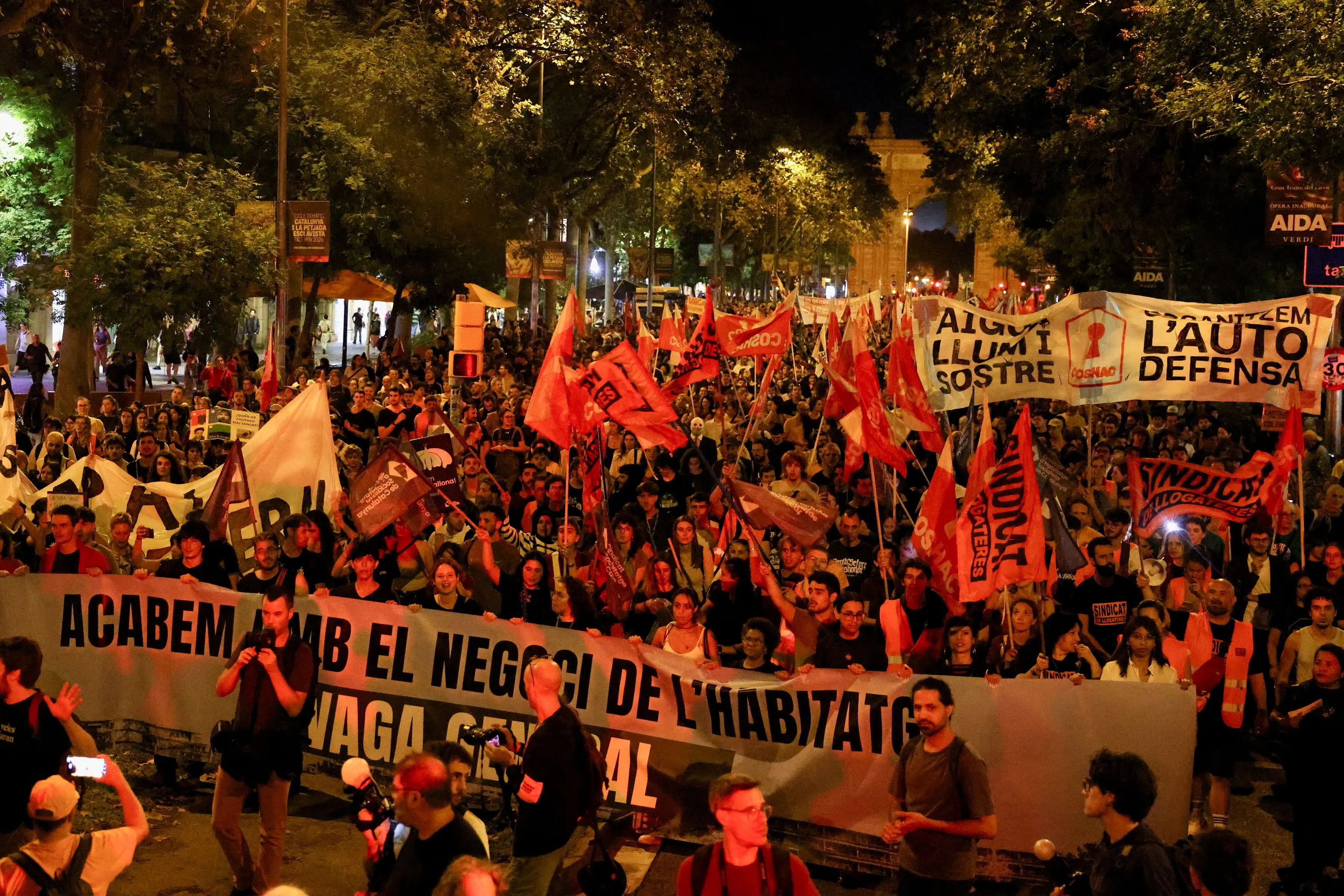
Why is Europe facing a wave of social explosions?
The current wave of social unrest in Europe is the result of accumulated systemic pressures that have reached a critical mass. Much like combustible materials gathering in a confined space, the socio-economic grievances of European citizens have been building for years, waiting for a catalyst to trigger widespread demonstrations. When these explosive elements are allowed to pile up without relief, an explosion becomes inevitable.
Several core factors are driving this volatility, creating a landscape of profound insecurity:
- The Cost of Living Crisis: Persistent increases in fuel prices and basic commodities have outpaced wage growth. This creates a widening gap where households see their incomes becoming increasingly inadequate against the explosion of prices, making daily survival a struggle.
- Housing Insecurity: The housing market has transitioned from a social necessity to a vehicle for extreme speculation. Large, profit-driven investment funds are increasingly driving up prices, leading to a form of social exhaustion where even the most vulnerable, such as 87-year-olds, face displacement and eviction.
- Youth Disenchantment: Younger generations are among the first to recognize the deepening insecurity. They face a precarious future characterized by underfunded education systems and a sense that their long-term prospects are being systematically undermined.
- Erosion of Public Services: Essential sectors, including healthcare and public education, are facing systemic strain. Public education is increasingly treated as an unnecessary cost, while healthcare systems appear on the brink of collapse.
What are the specific manifestations of unrest in France and Spain?
Recent events in France and Spain serve as primary case studies for how these underlying tensions translate into direct action on the streets, and how political responses can either mitigate or exacerbate the situation.
In France, the unrest has frequently taken the form of student-led movements within high schools. The government response has often centered on containment and suppression, leading to thousands of arrests among students. However, rather than extinguishing the flame, these repressive measures have had the opposite effect. The anger generated by this state suppression has fostered a massive movement of solidarity, which now acts as a protective shield for the student movement, preventing it from being easily dismissed or silenced.
In Spain, the focus has shifted toward the housing crisis and the impact of exports on local stability. The political response here has been marked by legislative deadlock and partisan resistance. Attempts by the government to find solutions that might offer relief to citizens have been blocked in parliament. The Spanish Right has largely prioritized the protection of large-scale speculative interests over the urgent need for affordable housing. This tension reached a peak when local authorities in Madrid, controlled by the Right, sought judicial intervention to declare protests in the Puerta del Sol illegal, effectively criminalizing the public's attempt to voice their grievances.
How is the European social model currently collapsing?
The fundamental pillars of the European social model—designed to ensure stability through redistribution and public services—are showing signs of severe structural failure. The model is not just fraying; it is undergoing a fundamental breakdown.
The collapse is visible through several key indicators that affect different demographics across the continent. As basic social goods become increasingly privatized, the mechanisms for wealth redistribution, such as social housing programs, are becoming relics of the past. This creates a vacuum where the state is no longer seen as a provider of security, but as an entity that treats essential services as a burden on the budget.
The impact on different social groups
The erosion of the social contract is not felt equally, but it touches every layer of society, creating a sense of marginalization across the board.
| Demographic Group | Primary Grievance | Systemic Cause |
|---|---|---|
| Working Class | Wage stagnation | Inflation and rising fuel costs outpacing income growth |
| Youth | Lack of future prospects | Underfunded education and diminishing social mobility |
| Elderly/Retirees | Social marginalization | Erosion of pension security and healthcare access |
| Urban Residents | Housing displacement | Speculative investment and privatization of housing |
This systemic failure means that while the working class struggles with the cost of living, the elderly find themselves pushed to the margins of a society that no longer prioritizes their security. Meanwhile, the youth see a future that is being actively downgraded by the state.
What is the danger of unchanneled social anger?
The direction that social unrest takes depends heavily on whether the anger is transformed into organized political demands or remains as isolated, individualized resentment.
When social explosions are channeled through democratic processes, they allow for the articulation of collective demands. These movements force political authorities to engage in discussions regarding the common social interest and seek solutions that restore justice and democracy. In this scenario, the unrest acts as a necessary mechanism for political evolution, forcing a conversation about how to make things better for the collective good.
However, there is a significant risk when this anger remains unchanneled. If grievances do not find an outlet through collective democratic action, they often morph into a deep-seated, individualized rage. This specific form of resentment is highly susceptible to exploitation by far-right and neo-fascist movements—those who harbor nostalgia for the era of Hitler. Instead of addressing the structural causes of poverty or housing shortages, these groups redirect public anger toward "the other"—migrants, refugees, or minority groups—offering a false sense of "patriotic identity" and a scapegoat for complex economic failures. It is important to note that many far-right groups, once they achieve power, implement the same policies as the "systemic" parties they claim to oppose.
FAQ: European Social Unrest
Why is the cost of living driving protests in Europe?
The cost of living is a primary driver because inflation, particularly in energy and food, has significantly outpaced wage growth. This creates a gap where households can no longer afford basic necessities, leading to widespread frustration and a sense of economic injustice that fuels street demonstrations.
How does the housing crisis contribute to social instability?
The housing crisis contributes to instability by turning a basic human need into a speculative asset. As large investment funds drive up prices, citizens face displacement and extreme financial pressure, which erodes trust in the state's ability to protect its people and maintain social order.
What is the relationship between social unrest and the far-right?
Far-right movements often exploit unchanneled social anger. When people feel abandoned by the political system, they may turn to extremist groups that offer simple scapegoats, such as immigrants, rather than addressing the complex economic and structural reasons for the public's discontent and suffering.
Are these protests considered mere criminality by governments?
Many center-right and right-wing political leaders tend to frame social unrest as simple delinquency or disorder. However, analysts suggest these movements are often highly motivated responses to systemic issues, representing a collective demand for political change rather than random acts of vandalism or lawlessness.
Can social unrest lead to positive political change?
Yes, if the unrest is successfully channeled into organized democratic demands. When protests lead to the articulation of clear social requirements and collective bargaining, they can force governments to implement necessary policy changes that restore social justice and strengthen democratic institutions.
Key takeaways
- Rising fuel and food costs are creating a massive gap between household incomes and essential living expenses.
- The housing market is increasingly dominated by speculative funds, causing widespread social displacement.
- The European social model is weakening as public services like healthcare and education face systemic underfunding.
- Unchanneled social anger provides a fertile ground for far-right and neo-fascist political exploitation.
- Effective social movements can act as a catalyst for necessary democratic and structural political reforms.
The necessity of democratic transformation
The current social explosions across Europe are not merely symptoms of disorder; they are indicators of a profound systemic crisis. While the erosion of the social welfare model and the rise of economic inequality create significant volatility, these moments of unrest also present a critical opportunity. For Europe to maintain stability, political forces must move beyond viewing protests as mere disturbances to be suppressed. Instead, they must engage with the underlying grievances, transforming collective anger into constructive policy alternatives that restore the principles of social justice and democratic accountability. The goal must be to turn this energy into a real alternative for governance, rather than allowing it to dissipate into a mere protest vote.







