
How do economic shifts dictate the direction of fashion?
Economic recessions and runway trends often move in tandem, creating a predictable cycle of consumer behavior. Historically, when purchasing power diminishes, fashion responds by either retreating into quiet, functional luxury or exploding into theatrical escapism to provide psychological relief. This phenomenon demonstrates that clothing is never just about aesthetics; it is a direct reaction to the socio-economic climate.
The industry operates on a pendulum. On one side, financial instability encourages 'investment dressing'—the purchase of high-quality, timeless pieces that offer long-term value. On the other, it triggers a desire for fantasy, where maximalist designs serve as a temporary distraction from the harsh realities of a struggling economy. This duality ensures that even during downturns, the fashion industry remains a vital indicator of human sentiment.
What was the impact of the 2008 financial collapse on style?
The 2008 global financial crisis ushered in an era of profound minimalism, characterized by the mantra 'less is more.' As consumers faced shrinking budgets, the ostentatious displays of wealth prevalent in the early 2000s were replaced by a preference for clean lines, subtle silhouettes, and an absence of loud logos.
A significant turning point occurred when Phoebe Philo took the helm at Celine, introducing a collection in Spring 2010 that redefined luxury. Her approach focused on 'wearable luxury'—discrete, sophisticated pieces that prioritized quality over flashiness. This shift was not merely a stylistic choice but a pragmatic response to a changed economic landscape.
The rise of investment dressing
According to a 2010 report by Bain & Company, there was a sharp decline in luxury spending during this period, but the nature of the spending changed. Consumers did not stop buying; they began buying more intelligently. This led to the rise of 'investment dressing,' where buyers prioritized versatile, durable staples that could withstand changing trends and provide lasting value for their money. The focus shifted from fast-moving trends to a curated wardrobe of high-quality essentials.
How did the 2020 pandemic trigger 'dopamine dressing'?
The COVID-19 pandemic created a unique psychological shift that moved fashion from the sobriety of lockdown loungewear to the vibrant intensity of 'dopamine dressing.' After months of isolation and visual monotony, the return to public life was met with a demand for clothing that elicited joy and emotional connection.
This movement was defined by bold colors, exaggerated shapes, and intense patterns. For example, the Spring 2022 Valentino collection, led by Pierpaolo Piccioli, utilized electric greens and fuchsia to create a sense of vitality. This trend was a form of emotional armor, allowing individuals to reclaim a sense of control and happiness through their outward appearance.
The search for emotional connection
A 2022 McKinsey report confirmed that consumers were seeking a deeper emotional connection through their clothing than ever before. In an era of global uncertainty, style became one of the few controllable aspects of daily life. The use of bright, 'high-energy' colors was not seen as loud or inappropriate, but as a necessary celebration of life and resilience following a period of collective fear.
What can we learn from historical fashion cycles?
The pattern of retreating into restraint or erupting into creativity is a recurring theme throughout fashion history. By looking at previous eras, we can see how different generations have used clothing to navigate hardship.
- The 1930s Great Depression: Amidst economic collapse, Hollywood glamour provided an escape. Satin dresses and faux fur became popular, and materials like rayon emerged as affordable alternatives to silk, allowing people to maintain a sense of elegance despite financial constraints.
- 1947 Post-War Era: Christian Dior’s 'New Look' revolutionized fashion after WWII. By introducing voluminous skirts and cinched waists, Dior offered a sense of unapologetic femininity and luxury that helped a weary world dream of a brighter, more prosperous future.
- The 1990s Grunge Movement: In the early 1990s, the Grunge aesthetic emerged as a rejection of excess. Characterized by flannel shirts and combat boots, it reflected the disillusionment of a generation that could not afford the polished luxury of previous decades.
What do current trends suggest about the 2026-2027 economy?
As we enter 2026, rising inflation and market volatility are once again reshaping consumer habits. We are currently seeing a hybrid era where both extreme functionality and intense maximalism coexist, reflecting a fragmented economic reality.
One prominent trend is the evolution of 'business casual.' This is not the rigid corporate attire of the past, but a flexible style designed to transition from professional environments to social settings. Oversized blazers, seen in collections from Victoria Beckham and Stella McCartney, exemplify this need for versatility. This 'laptop to lap dance' approach allows consumers to maximize the utility of their garments.
The return of unapologetic glamour
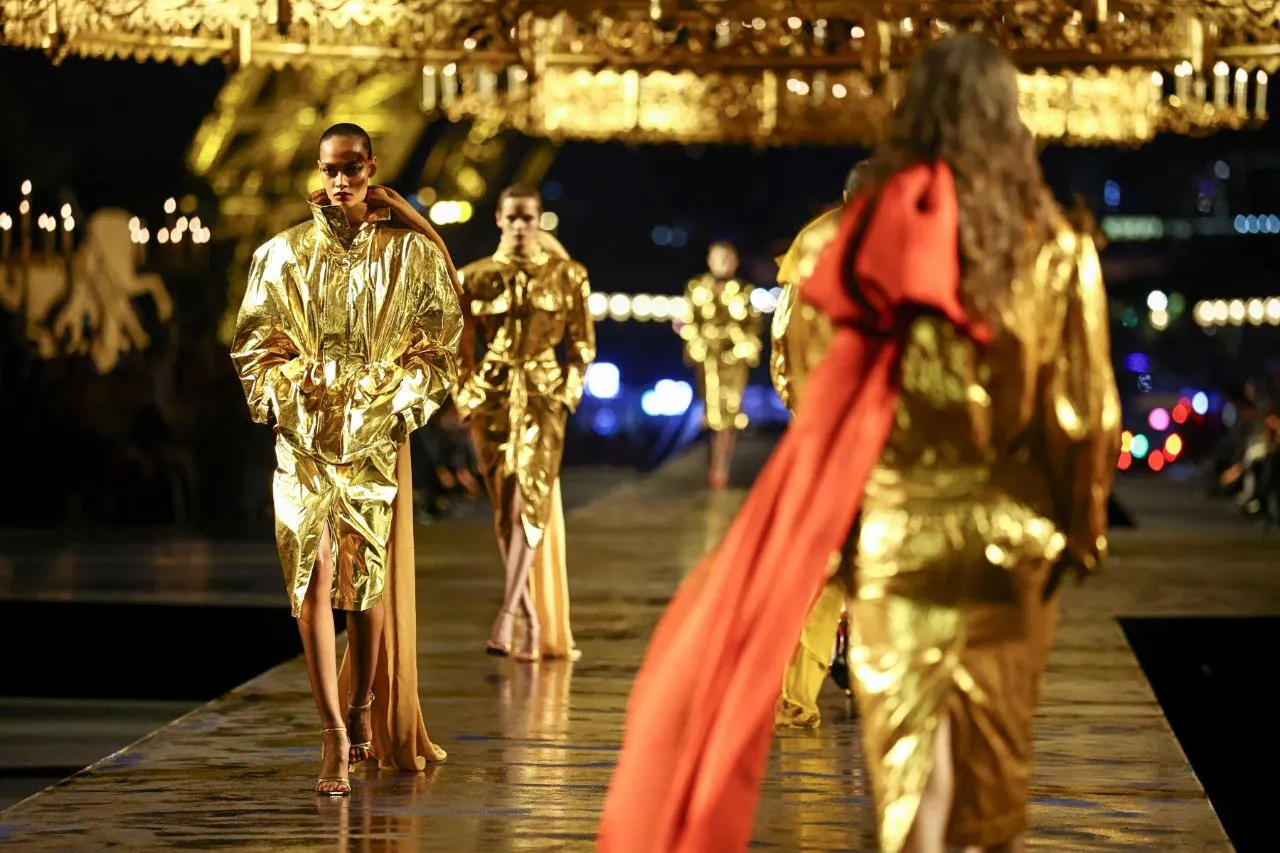
Simultaneously, there is a resurgence of high-octane glamour, as seen in Saint Laurent’s Spring/Summer 2027 collection. The use of 24K gold tones, velvet jackets, and 1980s-inspired silhouettes suggests a desire for escapism. Similarly, Dries Van Noten’s Spring/Summer 2027 show embraced a 'vintage Hollywood' aesthetic with heavy patterns and embellishments. This indicates that while people need functional clothing, they also crave the psychological boost provided by luxury and shine.
Frequently asked questions
How does inflation affect luxury fashion purchases?
Inflation typically shifts luxury spending from impulse buys to strategic investments. Consumers become more selective, opting for high-quality 'investment pieces' that offer longevity and resale value rather than following fleeting, low-quality trends. This behavior ensures that even in tight economies, the luxury sector remains active through more intentional consumption.
What is dopamine dressing?
Dopamine dressing is a fashion trend where individuals wear bright colors, bold patterns, and expressive silhouettes specifically to boost their mood. It gained massive popularity following the COVID-19 pandemic as a way to use clothing as an emotional tool to combat the psychological effects of isolation and uncertainty.
Why is minimalism associated with economic crises?
Minimalism is associated with crises because it reflects a period of financial restraint and a rejection of excess. During downturns, consumers often move away from conspicuous consumption toward more discrete, functional, and timeless styles that prioritize utility and long-term value over social signaling through loud branding.
How does the 'office siren' trend relate to current work culture?
The 'office siren' aesthetic reflects the modern blurring of professional and personal lives. It combines polished, sophisticated elements with a slightly more expressive or 'sexy' edge, catering to a workforce that requires clothing that is versatile enough for both remote work and social engagement.
Can fashion truly reflect the economy?
Yes, fashion serves as a visual barometer for economic health. Historical data shows that periods of prosperity often lead to experimental and maximalist trends, while economic contractions tend to trigger more conservative, minimalist, or highly functional styles as consumers adapt to changing financial realities.
Key takeaways
- Economic crises drive fashion toward either extreme minimalism or intense escapist maximalism.
- The 2008 crash popularized 'investment dressing' and the preference for quiet luxury.
- 'Dopamine dressing' emerged post-pandemic as a psychological tool for emotional resilience.
- Modern trends emphasize versatility, allowing garments to transition between work and social life.
- Fashion cycles consistently react to the tension between financial necessity and the desire for fantasy.
The intersection of sentiment and style
The relationship between the economy and the wardrobe is a testament to the human need to adapt. Whether through the strategic purchase of a single, perfect blazer or the exuberant embrace of gold-toned maximalism, our clothing choices are deeply influenced by our financial security. Fashion does not merely predict economic shifts; it processes them, turning the uncertainty of the market into a tangible expression of human resilience and desire. As the global economy continues to fluctuate, the runway will remain a vital space where we negotiate our identity against the backdrop of material reality.







