
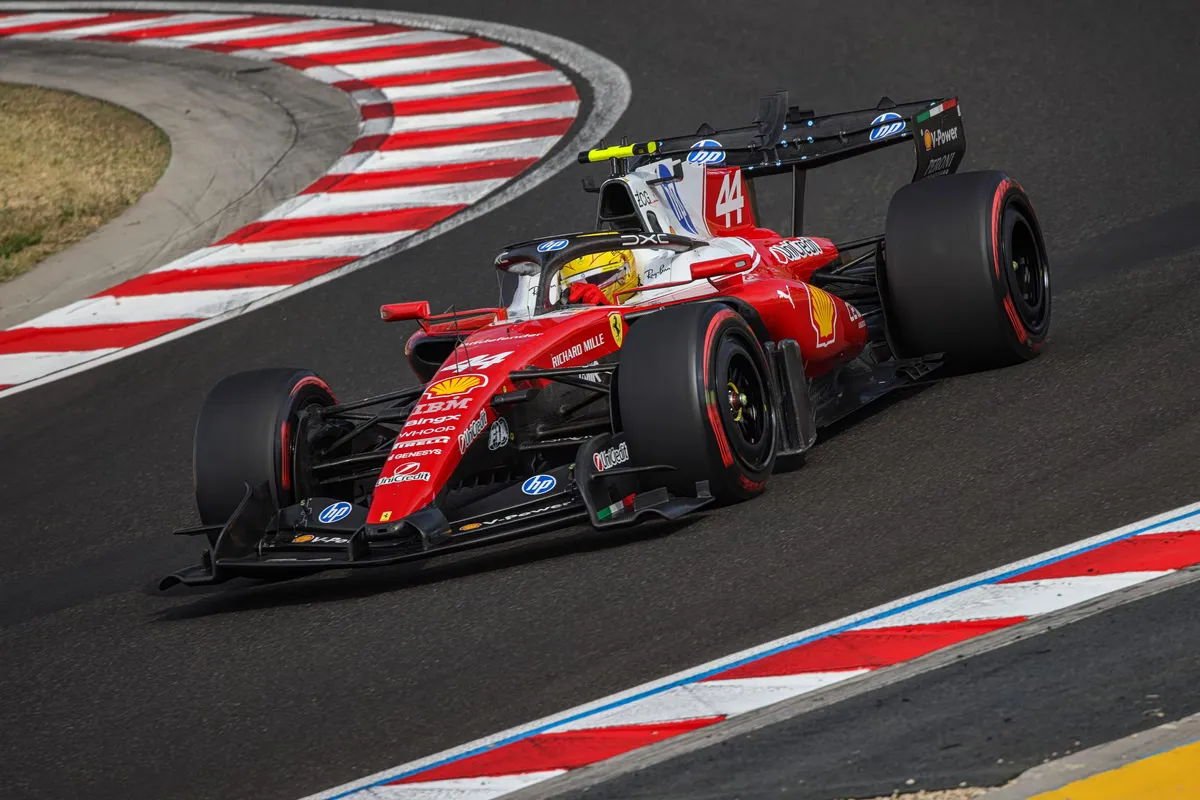
Why is the Ferrari crisis deepening despite technical potential?
The Ferrari crisis is driven by a disconnect between the team's chassis performance and its operational execution. While the current car features one of the most capable chassis on the grid, the Scuderia has struggled to translate this potential into consistent race wins due to engine limitations and frequent strategic errors. This gap between what the car can do and what the team achieves on Sunday has become the defining struggle of the current era.
The historical weight of the team exacerbates every setback. Ferrari remains the only constant participant in Formula 1 since the championship's inception in 1950, boasting 16 Constructors' titles and 15 Drivers' titles. However, the glory days are increasingly viewed as distant memories. The team has not secured a Constructors' Championship since 2008, and Kimi Räikkönen remains the last Ferrari driver to claim the Drivers' title in 2007. This long drought creates a heavy atmosphere where every missed opportunity feels magnified by the team's legendary status.
This prolonged absence from the top step of the podium creates a unique environment of intense scrutiny. As Lewis Hamilton noted, the atmosphere within the team can feel disproportionately heavy, stating that "for some reason, everything at Ferrari is ten times worse" when failures occur. This psychological pressure is a central component of the current instability facing the organization, where the expectation of excellence often meets the reality of operational struggle.
How is Fred Vasseur managing the pressure on his leadership?
Fred Vasseur is currently facing significant scrutiny regarding his ability to lead the Scuderia back to championship contention. Having taken the helm in January 2023, Vasseur was tasked with ending the team's long drought, a goal that remains unfulfilled as the 2026 season progresses. The mission to return the Scuderia to the top of the world championship remains the primary benchmark for his success.
According to reports from the German outlet Kicker, Mercedes is currently outperforming Ferrari in both the Drivers' and Constructors' standings, with Kimi Antonelli leading the championship. This performance gap has fueled speculation regarding Vasseur's future, despite the fact that he renewed his contract in the summer of 2025. The disparity between Ferrari's chassis strength and their overall championship standing highlights the difficulty of the task Vasseur inherited.
In response to the mounting pressure, Vasseur has focused on maintaining internal cohesion. "We are a team when we win and when we lose," he emphasized, attempting to prevent the internal questioning that often follows periods of poor performance. However, the gap in the standings suggests that unity alone may not be enough to bridge the technical and strategic divide between Ferrari and its rivals.
Potential leadership transitions
As internal and external doubts grow, several names have surfaced as potential successors to Vasseur. These include Christian Horner, the former Red Bull Team Principal, and Antonello Coletta, who currently oversees Ferrari's endurance racing programs. The mention of such high-profile names indicates the level of scrutiny the team is under, as the organization looks for any way to break its championship deadlock.
To mitigate these concerns, Ferrari's top management has taken the unusual step of making public declarations of support. Chairman John Elkann and CEO Benedetto Vigna have both expressed confidence in Vasseur's direction. This move is significant because it provides a shield for the Frenchman against the constant speculation in the paddock. Vasseur himself maintains that he enjoys excellent communication with both executives, conducting daily discussions to align the team's long-term goals and ensure that the leadership remains unified.
What role do strategic errors play in the team's struggles?
Strategic mismanagement has become a defining characteristic of the Ferrari crisis, often nullifying the advantages provided by their technical development. A primary example of this occurred during the recent Malaysian Grand Prix, where a critical decision regarding tire selection undermined a strong starting position. This error serves as a stark reminder that even the fastest car cannot win without correct tactical execution.
Lewis Hamilton began the race from second on the grid, a position that offered a genuine chance at victory. However, the team opted for slick tires on a wet track, whereas competitors like Max Verstappen and Kimi Antonelli utilized intermediate tires. This error caused Hamilton to slide down to 18th place. Although he staged an impressive recovery to finish third, the error highlighted a fundamental lack of situational awareness within the pit wall during critical race conditions.
Hamilton did not hide his frustration following the race, confirming that he had advocated for the intermediate tire strategy from the beginning. This incident serves as a microcosm of the broader issues facing the Scuderia: even when the driver provides the correct input and the car has the pace, the tactical execution fails to meet the required standard. Such mistakes turn potential podiums into recovery drives, further draining the team's momentum.
How has Lewis Hamilton influenced the internal team dynamic?
Lewis Hamilton has become a vocal critic of Ferrari's operational structure, moving beyond mere technical feedback to challenge the team's fundamental management style. His critiques have focused on two main areas: tactical decision-making and the lack of clear internal regulations regarding driver conduct.
At the Monza Grand Prix, Hamilton specifically addressed the absence of clear protocols governing how the two Ferrari drivers should interact and race against one another. He pointedly suggested that the responsibility for establishing these rules lies with Vasseur. Such public questioning of leadership is rare and adds a layer of complexity to the team's internal politics, signaling that the drivers themselves are feeling the effects of organizational ambiguity.
Despite these sharp critiques, Hamilton has also acted as a stabilizing force when the leadership is directly threatened. Following the public support from Elkann and Vigna, Hamilton offered his own endorsement of Vasseur, stating that the Frenchman is an "excellent leader" and the right person to guide the team in the correct direction. This duality—acting as both a critic of the process and a defender of the leader—reflects the complicated relationship Hamilton has with the historic Italian marque, balancing his need for operational excellence with a respect for the team's leadership.
Key takeaways
- Ferrari has not won a Constructors' Championship since 2008 and a Drivers' title since 2007.
- Fred Vasseur faces increasing pressure as Mercedes currently leads the championship standings.
- Strategic errors, such as the tire choice in Malaysia, have directly cost the team podium potential.
- Management, including John Elkann and Benedetto Vigna, has publicly reaffirmed their support for Vasseur.
- Lewis Hamilton has criticized the team's lack of driver protocols and tactical consistency.
FAQ: Ferrari crisis
Why is Ferrari struggling to win championships?
Ferrari's struggle stems from a combination of engine performance gaps and frequent strategic errors. While their chassis is among the best in the field, the team often fails to execute the correct tactical decisions during races, preventing them from converting technical potential into victories.
Is Fred Vasseur's job at risk?
While Vasseur's position is under intense scrutiny due to the team's lack of recent titles, Ferrari's top management has publicly supported him. However, speculation regarding potential replacements like Christian Horner suggests that his leadership remains a subject of debate within the paddock.
How has Lewis Hamilton impacted Ferrari's performance?
Hamilton has provided high-level performance but has also highlighted systemic issues through public criticism. He has specifically pointed out flaws in tire strategy and the lack of clear racing rules between teammates, which has increased the pressure on team leadership.
What was the significance of the Malaysian Grand Prix?
The Malaysian Grand Prix served as a major example of Ferrari's strategic failures. By choosing slick tires on a wet track, the team caused Hamilton to drop from second to 18th place, demonstrating how tactical errors can negate a driver's competitive advantage.
Who are the potential successors to Fred Vasseur?
In the event of a leadership change, names such as former Red Bull boss Christian Horner and Ferrari's endurance racing director Antonello Coletta have been mentioned in media reports as possible candidates to lead the Scuderia.
Conclusion
The Ferrari crisis is a multifaceted issue involving technical imbalances, strategic inconsistency, and intense psychological pressure. While the team possesses the foundational components for success—namely a high-quality chassis and strong executive support—the gap between potential and performance remains wide. As Mercedes continues to dominate the current standings, the margin for error for Fred Vasseur and his staff is disappearing. For a team defined by its historical triumphs, the current era of stagnation is increasingly difficult to sustain, leaving the Scuderia at a critical crossroads regarding its leadership and operational future.







