
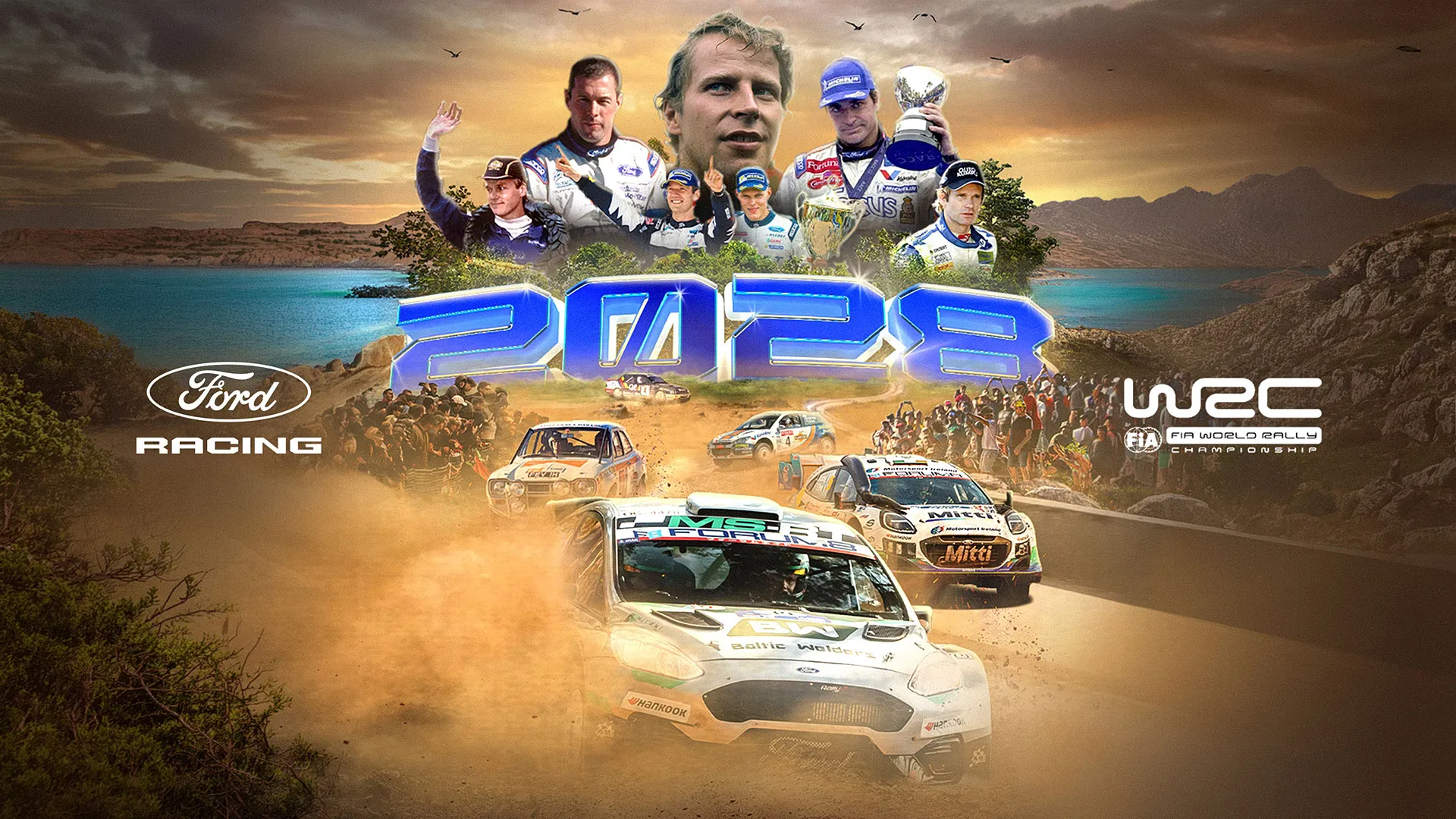
How is Ford planning its phased return to the WRC?
Ford is implementing a multi-stage strategy to reintegrate into the World Rally Championship, moving from indirect support to full manufacturer involvement. This transition is designed to align with evolving FIA technical regulations while ensuring a robust engineering foundation is in place before the launch of a new vehicle. The plan is divided into three distinct phases of increasing intensity and resource allocation.
The first phase begins in 2027, where Ford will focus on strengthening its existing relationship with M-Sport. During this year, the automaker will provide enhanced support to the team, which has historically acted as the primary custodian of Ford's rally presence. This period serves as a bridge, allowing the brand to stabilize its technical influence before taking the reins entirely.
The second phase, scheduled for 2028, marks the official transition to a full factory team. Unlike previous years where M-Sport operated with limited manufacturer backing, the 2028 entry will see Ford deploying its own dedicated engineering, aerodynamics, and testing departments. This level of involvement ensures that the manufacturer's internal resources are directly applied to competitive performance.
The timeline of Ford's WRC reintegration
The strategic timeline is structured to minimize risk and maximize technical readiness. By spreading the return over three years, Ford can ensure that its engineering departments are fully synchronized with the specific demands of the WRC technical framework. This graduated approach allows for a seamless transition from a partner-based model to a centralized manufacturer-led operation.
| Year | Status | Primary Focus |
|---|---|---|
| 2027 | Enhanced Partner Support | Strengthening ties with M-Sport |
| 2028 | Full Factory Entry | Deployment of engineering and aero departments |
| 2029 | New Model Debut | Launch of the next-generation rally car |
What role has M-Sport played in Ford's rally history?
M-Sport has been the vital link maintaining Ford's presence in top-tier rallying since the manufacturer's official departure in late 2012. While Ford's direct involvement was reduced, the racing team successfully kept the brand competitive on the global stage using models such as the Fiesta and the Puma.
Despite operating with restricted financial and technical resources from the manufacturer, M-Sport achieved notable milestones that kept Ford relevant in the eyes of fans and competitors. These successes include high-profile driver titles, most notably those achieved by Sébastien Ogier, and iconic victories such as Sébastien Loeb's triumph at the Rally Monte Carlo. These achievements proved that the Ford platform remained a potent force in the championship even without full factory backing.
The upcoming return signifies a move away from this reliance on a single privateer entity toward a more traditional manufacturer-led structure. While M-Sport's role has been foundational, the 2028 plan ensures that Ford's own global engineering capabilities will drive the competitive edge of the team.
What can we expect from the new 2029 rally model?
The 2029 season will see the debut of an entirely new competitive model designed to reflect Ford's future passenger vehicle direction. This vehicle will be built upon a specialized tubular chassis, a departure from previous iterations, and will be engineered to meet the latest FIA technical standards.
A key feature of this new era is the flexibility offered by current FIA regulations regarding powertrain choices. The rules allow manufacturers to select from various propulsion systems, a factor that aligns perfectly with Ford's broader commercial and environmental strategy. This flexibility means the 2029 model could potentially showcase hybrid or other advanced sustainable technologies that mirror the brand's road car roadmap.
Technical specifications and design philosophy
The design philosophy for the 2029 vehicle focuses on two main pillars: performance agility and technological relevance. By utilizing a tubular chassis, engineers can optimize weight distribution and safety, providing a more stable platform for the high-stress environments of WRC stages. Furthermore, by basing the design on the brand's future passenger car lineup, Ford aims to create a marketing synergy between its racing successes and its consumer products.
This integration of racing technology and commercial identity is a hallmark of modern motorsport. The ability to choose between different drive systems allows Ford to remain competitive in the rally arena while simultaneously testing and demonstrating technologies that will eventually appear in their global vehicle fleet.
How will this return impact the WRC ecosystem?
The re-entry of a major manufacturer like Ford is expected to revitalize interest in the World Rally Championship and shift the dynamics of the driver market. A full factory team brings not only technical expertise but also increased commercial visibility, which benefits the entire championship ecosystem.
The arrival of Ford's full resources will likely trigger a shift in the "driver market." With a well-funded factory team offering stability and top-tier machinery, elite drivers will be more inclined to seek contracts with Ford, potentially changing the competitive balance of the grid. This influx of talent and manufacturer competition often leads to higher broadcast interest and increased sponsorship opportunities across the sport.
Furthermore, Ford's presence complements its existing involvement in other disciplines, such as the Rally-Raid World Championship with the Raptor. This multi-disciplinary approach demonstrates a comprehensive commitment to off-road performance, reinforcing Ford's position as a leader in the global automotive and motorsport sectors.
Frequently asked questions
When will Ford officially become a full factory team?
Ford is scheduled to transition into a full factory team in 2028. This follows a preparatory year in 2027 where the company will increase its support for M-Sport, eventually deploying its own engineering, aerodynamics, and testing departments to lead the racing effort.
What is the significance of the 2029 model?
The 2029 model represents a complete technological leap for Ford in the WRC. It will feature a new tubular chassis and will be designed to align with Ford's future passenger car range, offering flexibility in powertrain choice according to FIA regulations.
How has Ford maintained its presence since 2012?
Since Ford's official departure in late 2012, its presence has been sustained primarily through M-Sport. The team utilized models like the Fiesta and Puma to achieve significant successes, including titles for Sébastien Ogier, despite having limited direct manufacturer support.
Will the new car be electric or hybrid?
While the specific powertrain has not been finalized, the FIA regulations allow for various propulsion systems. This allows Ford to align the rally car's technology with its broader commercial strategy, which includes various sustainable and advanced driving technologies.
How does this affect the driver market?
The return of a full factory team is expected to increase competition for top-tier drivers. The availability of robust manufacturer support and advanced technical resources makes Ford an attractive destination for elite rally talent in upcoming seasons.
Key takeaways
- Ford will transition to a full factory WRC entrant in 2028.
- The 2027 season will focus on enhanced technical support for M-Sport.
- A new rally model featuring a tubular chassis will debut in 2029.
- The new vehicle will align with Ford's future passenger car technology.
- FIA regulations allow for diverse powertrain options in the new model.
The strategic evolution of Ford in motorsport
Ford's return to the WRC is not merely a return to racing, but a calculated strategic move to integrate motorsport development with future commercial goals. By moving through a structured three-year roadmap—from enhanced partnership to full factory status and finally to a new technological platform—Ford is positioning itself to compete at the highest level of the sport. This approach ensures that the brand remains relevant to both racing enthusiasts and the broader consumer market, leveraging the WRC as a high-performance laboratory for the next generation of automotive technology.







