
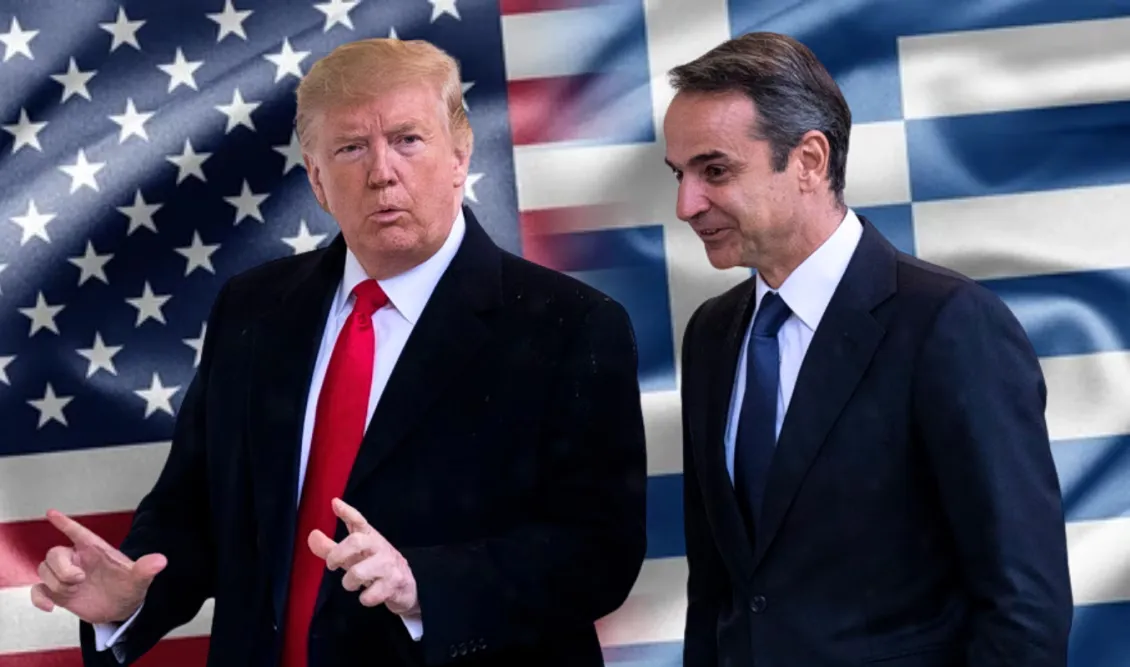
Why is the question of a protectorate status resurfacing in Greece?
The debate has been reignited by recent media reports, specifically from the Wall Street Journal, which suggested implications regarding the stance of the US Ambassador. This sparked immediate political friction, with opposition leaders questioning if the Greek government is conducting foreign policy under the shadow of external pressure or if the nation truly maintains its sovereignty.
The government has responded by denying that any threats have been made against the country, though it has largely declined to provide further detailed commentary on the specific journalistic allegations. This silence, however, leaves a vacuum where a deeper discussion on the nature of Greek independence and its relationship with global superpowers ought to exist.
The term "protectorate" is sensitive in the Greek context because the nation has historically navigated various levels of diminished autonomy. The current tension is not merely about diplomatic protocol but about the fundamental perception of how much control Athens retains over its own destiny in an increasingly complex global landscape.
How has Greek sovereignty evolved from the post-Civil War era to the present?
Greece has experienced several historical phases where its ability to act independently was significantly constrained by external actors. Understanding the current political climate requires a look at these historical precedents of influence and regained autonomy.
Historical shifts in Greek autonomy
The most significant period of external influence occurred during the post-Civil War era. During this time, the decisive contribution of US support to the Democratic Army's opponents created a powerful "American factor" that shaped Greek politics for decades. This era established a pattern of heavy reliance on US strategic interests.
It was not until the era of Metapolitefsi (the transition to democracy) that leaders like Konstantinos Karamanlis and Andreas Papandreou began to assert a more distinct national identity. They worked to clarify that while Greece is an integral part of the Western bloc, it possesses the inherent right to decide its own future and destiny independently.
The 21st century brought new challenges, particularly during the debt crisis and the subsequent era of Memoranda. During this period, the nation faced an objective reduction in sovereignty due to the strict conditions imposed by the European Union and international creditors. While the exit from these Memoranda in 2018 and the resolution of the Prespa Agreement suggested a return to greater agency, the current geopolitical environment presents a different set of complexities.
What are the criticisms of the current administration's foreign policy?
Critics argue that the administration of Kyriakos Mitsotakis, while projecting an image of a stronger regional power through increased defense spending, may be prioritizing alignment with major powers over multifaceted diplomacy.
There is a growing concern that the government's primary objective has become appearing to be on the "right side of history" in the eyes of global leaders. This approach is seen by some as a strategy of seeking favor through massive defense procurement programs, essentially hoping that allies will resolve regional tensions on Greece's behalf. This reliance on external mediation is viewed as a potential compromise of long-term strategic independence.
The administration's relationship with the United States has also come under scrutiny. Observers note an effort to ensure American goodwill, sometimes at the cost of domestic political nuance. Furthermore, the government's stance regarding Israel has been criticized; by providing overt support amidst global outcry, critics suggest the administration may be legitimizing certain practices, a move that some link to domestic controversies such as the use of Israeli spyware in surveillance scandals.
Is Greece at risk of behaving like a protectorate?
While Greece is not a protectorate in the formal, legal sense, there is a distinct risk that it may begin to behave as one through its strategic choices.
The danger lies in a policy driven by the desire to serve the interests of specific allies in the hope of receiving unilateral benefits or "generosity." Such a strategy is viewed by analysts as a recipe for disaster, as it replaces consistent national interest with a reactive pursuit of external approval. When a nation's primary criterion for action is the satisfaction of a superpower, it risks being sidelined when those same powers shift their priorities.
To avoid this trajectory, experts suggest that Greece must move toward a more multidimensional foreign policy. This involves recognizing that being a member of the EU and NATO does not necessitate a monolithic worldview. Instead, the country should leverage its position to act as an equal partner in international affairs, rather than a subordinate follower.
The requirements for a multidimensional policy
A robust foreign policy for Greece would require several key pillars:
- National Interest as a Compass: Re-evaluating all alliances and partnerships based on how they serve Greek interests at any given moment, rather than ideological alignment alone.
- Strategic Autonomy: Developing the confidence to navigate a non-monopolistic world where interests are often conflicting.
- Legal Integrity: Avoiding alignment with political actors or entities that violate international law, which can damage the nation's long-term credibility.
- Developmental Strength: Basing foreign policy on real economic and developmental dynamism rather than just military procurement.
FAQ: Greece's sovereignty and foreign policy
Is Greece currently a protectorate?
No, Greece is not a protectorate in a legal or formal sense. It is a sovereign state and a member of the EU and NATO. However, political debates arise regarding whether its current foreign policy decisions are sufficiently independent or too heavily influenced by major allies like the US.
How did the US influence Greece in the past?
The United States exerted significant influence during the post-Civil War period. US support was a decisive factor in the outcome of the conflict, leading to a long-standing "American factor" in Greek politics that lasted for many years before the democratic transition allowed for more autonomy.
What is the impact of the debt crisis on Greek sovereignty?
The era of the Memoranda significantly reduced Greece's practical sovereignty. Because the country was beholdly to international creditors and the EU to manage its debt, many domestic policy decisions were dictated by external requirements rather than internal democratic processes.
Why is defense spending linked to sovereignty discussions?
While increased defense spending can enhance a nation's strength, critics argue that if these programs are primarily designed to secure the favor of allies, they may actually decrease strategic independence by making the nation more dependent on external political approval.
What is a "multidimensional" foreign policy?
A multidimensional foreign policy is one that does not rely on a single superpower or bloc. It seeks to maintain diverse partnerships and re-evaluates every alliance based on the immediate national interest, ensuring the country acts as an equal player in the international arena.
Key takeaways
- Greece is a sovereign nation but faces ongoing debates regarding its level of independence from major allies.
- Historical precedents, such as the post-Civil War era, have shaped the perception of external influence in Greece.
- The debt crisis era marked a period of objectively diminished sovereignty due to international creditor requirements.
- Analysts warn against a policy that prioritizes seeking ally favor over consistent national strategic interests.
- A multidimensional policy is recommended to ensure Greece acts as an equal partner in global affairs.
Moving toward strategic equality
The tension between alliance loyalty and national autonomy is a defining challenge for modern Greek diplomacy. While the nation remains firmly rooted in the Western framework of the EU and NATO, the complexity of the modern world demands a more nuanced approach. Moving away from a strategy of seeking external favor toward one of genuine multidimensionality will be essential. By anchoring its foreign policy in national interest and developmental strength, Greece can ensure it remains a sovereign, equal participant in the international community, rather than a nation that voluntarily relinquishes its agency to the whims of global powers.







