
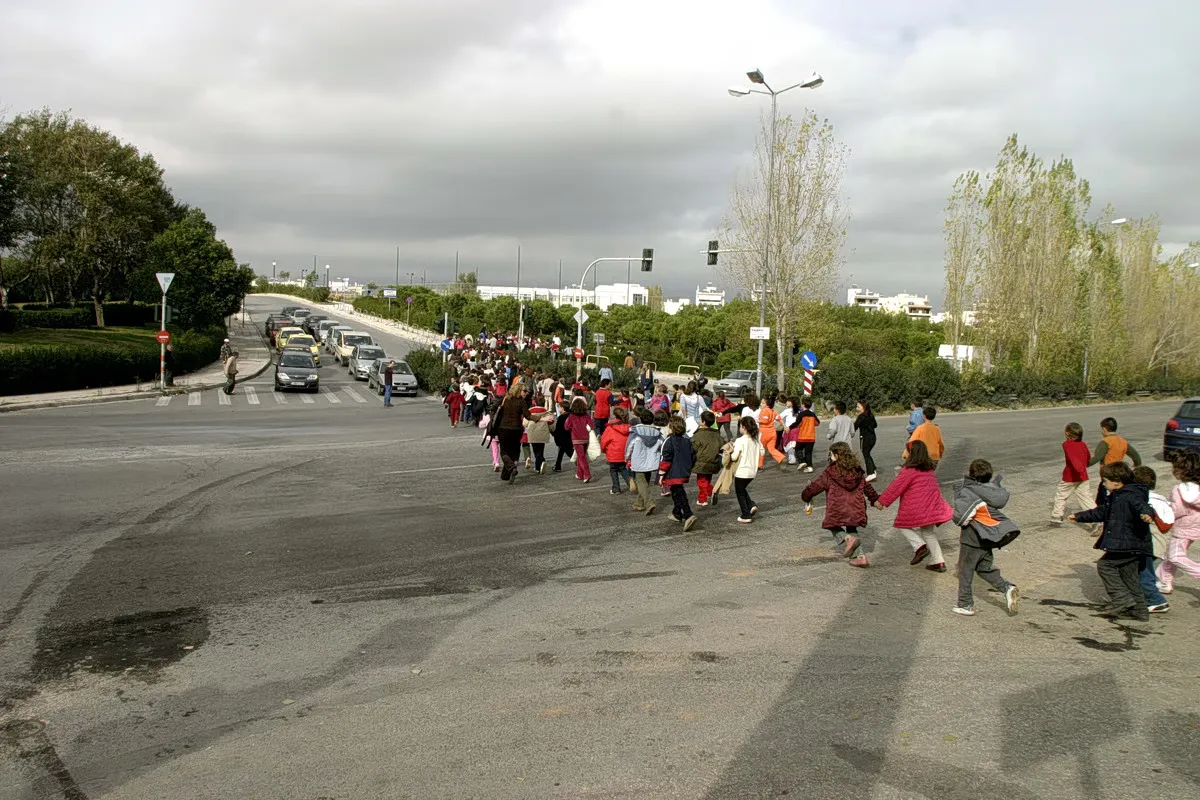
Why is there a conflict regarding school excursions in Greece?
The tension stems from a fundamental disagreement between the Ministry of Education and educational federations regarding the administrative burden and legal accountability of teachers. Although the Ministry recently issued a clarifying circular intended to streamline processes, major unions including the Teachers' Federation of Greece (DOE) and the Federation of Secondary Education Officials (OLME) claim the core issues remain unresolved.
The Ministry's position is that the new regulations are essential for establishing order in what they describe as a previously chaotic field of activity. According to Andreas Nigiannis, Director of Studies, Programs, and Secondary Education Organization, the decision aims to integrate transparency recommendations from the National Transparency Authority. The Ministry argues that these measures act as necessary safety nets, even if they require more formal documentation than in the past.
On the other side, the unions argue that the "great bureaucracy" persists. They contend that the new framework does not simplify the workload but rather formalizes the administrative hurdles that educators must navigate before any educational activity can take place. This disagreement suggests a disconnect between the legislative intent of the Ministry and the operational experience of those in the classroom. While the Ministry views these steps as progress, the unions see them as a failure to address the root causes of administrative fatigue.
What are the specific concerns raised by teacher unions?
Teacher unions are primarily concerned with the disproportionate weight of responsibility being transferred to individual educators. Nikos Vourdoumpas, President of DOE, has highlighted that the current framework holds teachers accountable for factors entirely outside of their control.
According to Mr. Vourdoumpas, educators are being made responsible for the safety and conduct of third-party service providers. This includes:
- The structural integrity and safety permits of private venues.
- The mechanical condition and safety of chartered buses.
- The professional conduct and driving behavior of bus drivers.
Furthermore, the unions point out a logistical impossibility in the current planning requirements. Mr. Vourdoumpas noted that schools cannot realistically plan their entire annual curriculum in October for activities that might occur as late as May. This lack of flexibility makes the rigid administrative requirements difficult to meet in a dynamic school environment. The unions argue that while these issues concern educators, they should not be the legal burden of the individual teacher, who cannot personally guarantee the behavior of a driver or the maintenance of a private facility.
The challenge of private vs. public venues
A significant hurdle for primary and nursery schools involves the availability of safe, accessible locations. Mr. Vourdoumpas observed that the vast majority of viable educational sites are privately owned. This necessitates a continuous and burdensome process of collecting and verifying documentation, such as operating licenses and fire safety certificates, for every potential destination.
Since public spaces suitable for excursions are limited, teachers are forced into a cycle of administrative verification that adds to their professional load. According to the Federation, while many nursery and primary schools focus on local destinations and walks that do not require buses, the broader necessity of excursions remains a vital part of school life that requires a more sustainable solution. The scarcity of public venues means that the administrative burden of vetting private entities is not a choice, but a requirement for any meaningful educational outing.
How does the Ministry of Education defend its regulations?
The Ministry of Education maintains that the priority of any regulatory framework must be the absolute safety of both students and staff. Andreas Nigiannis, speaking to the press, emphasized that while the new rules involve more paperwork, they are designed to provide essential legal and physical protections.
The Ministry's defense rests on several key arguments:
- Safety as a priority: Nigiannis stated that the more procedures are implemented, the more safety safeguards are established. He argued that increasing documentation is a direct response to the need for student protection.
- Formalizing existing practices: The Ministry argues that committees for excursions have always existed in schools; the new rules simply require these actions to be formally recorded in minutes to ensure accountability.
- Transparency: The regulations incorporate findings from the National Transparency Authority to ensure that all excursions are conducted with high levels of accountability and oversight.
The Ministry also acknowledged the personal and professional risks teachers face. Nigiannis noted that educators risk their jobs, their lives, and their mental well-being when managing unpredictable situations during trips. He credited the continued existence of school excursions to the professionalism and passion of teachers, rather than the efficiency of the administrative system, noting that without their dedication, excursions might not happen at all. Despite this recognition, the Ministry maintains that the increased procedural rigor is the only way to manage the inherent risks of such activities.
What is the outlook for future improvements to the framework?
The Ministry has left the door open for potential refinements to the current system based on real-world application. While the current circular is seen by some as a step in a "positive direction," the government acknowledges that the implementation phase will reveal practical difficulties. The Ministry has indicated that the framework is not static and can be adjusted as the reality of its application becomes clearer.
According to Mr. Nigiannis, the Ministry is prepared to listen to suggestions and observations coming directly from the educational community. This indicates that the current framework may not be the final version. However, some issues remain outside the Ministry's immediate jurisdiction. For instance, the request from unions to create a registry of certified transport providers is a matter that involves multiple government departments beyond just the Ministry of Education. Until inter-ministerial coordination occurs, this specific administrative burden is likely to remain a point of contention between the state and the teaching workforce.
FAQ: School excursions in Greece
What is the main cause of the dispute?
The dispute is caused by a gap between the Ministry of Education's focus on safety and transparency and the teachers' concerns regarding excessive bureaucracy and the legal liability they must assume for third-party services like transport and venues.
What are the unions' main complaints?
Unions like DOE and OLME complain that teachers are held responsible for things they cannot control, such as bus driver behavior or the fire safety of private venues, and that the planning requirements are too rigid for school schedules.
How does the Ministry justify the extra paperwork?
The Ministry argues that increased documentation acts as a vital safety net. They claim that formalizing procedures through written minutes and committees ensures greater transparency and protects both students and educators during excursions.
Will the regulations change in the future?
Yes, the Ministry has stated that they are open to making improvements. They intend to review the framework based on feedback and observations provided by educators during the actual implementation of the new rules.
Why is the transport issue difficult to resolve?
The creation of a certified registry of transport providers is a complex issue because it requires coordination between the Ministry of Education and other government ministries responsible for transportation and licensing.
Key takeaways
- Teacher unions argue that new excursion rules increase disproportionate legal liability for educators.
- The Ministry of Education maintains that more procedures provide essential safety safeguards for students.
- DOE and OLME claim the current framework fails to address systemic administrative bureaucracy.
- The Ministry remains open to future improvements based on feedback from the teaching community.
Conclusion
The debate over school excursions in Greece reflects a broader struggle to balance administrative oversight with the practicalities of the classroom. While the Ministry of Education seeks to mitigate risk and enhance transparency through stricter documentation, educators feel burdened by liabilities that extend far beyond their professional control. As the new framework is implemented, the ability of the Ministry to listen to the practical concerns of teachers—specifically regarding the management of private venues and transport—will determine whether these regulations provide true safety or merely add a layer of paralyzing bureaucracy.







