
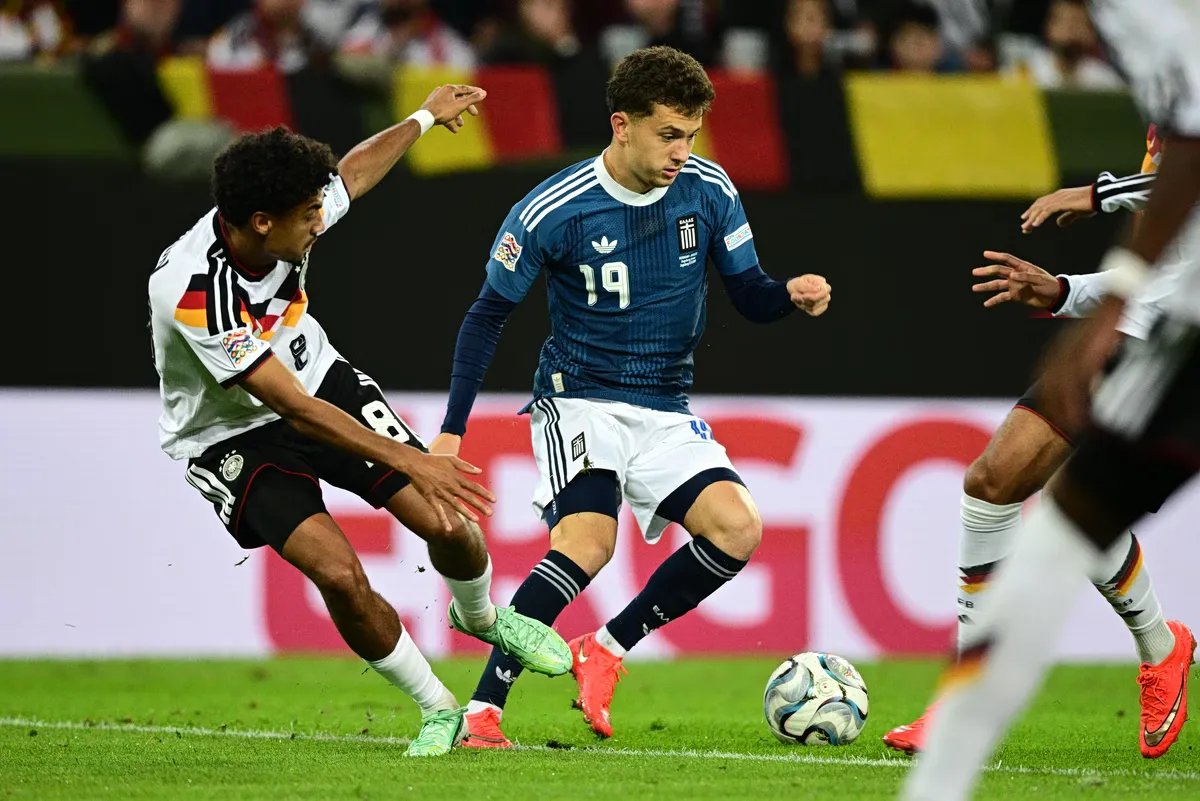
How did Greece achieve this historic victory in Germany?
Greece secured a landmark victory against Germany in Augsburg on the night of September 27, 2026, marking the first time the national team has defeated the German side in competition. This result has propelled Ivan Jovanovic's squad to the top of their Nations League group, maintaining a perfect record of two wins in two matches. The team continues to lead without facing any significant opposition in the standings.
The performance was characterized by a cohesive effort where no single player was left behind. The victory is seen not just as a statistical anomaly but as a confirmation of the current strength and rising potential of the Greek national team. By dominating key phases of the game, Greece proved they could compete with and overcome elite European opposition, reinforcing the idea that the squad possesses both a bright future and a formidable present.
Key defensive and midfield contributors
The victory was built on several individual career-defining performances that anchored the Greek side. In goal, Tzolakis provided essential stability, while Mavropanos anchored a resilient defense that successfully neutralized German attacking threats. These performances were central to maintaining the clean sheet required to secure such a significant result.
In the midfield, Androutsos provided immense work rate, effectively controlling the tempo and matching the intensity of the German midfielders. His ability to cover ground was a key component of the team's tactical discipline. Additionally, Kourbelis entered the fray as a substitute to provide a decisive tactical advantage, making a noticeable difference once he was on the pitch and ensuring Greece maintained control until the final whistle. This collective effort from both starters and substitutes allowed the team to sustain their momentum throughout the match.
Why did Konstantinos Karetsas go viral during the match?
Konstantinos Karetsas became the focal point of international social media attention following a spectacular dribbling sequence that left German midfielder Jonas Bückert visibly disoriented. The 19-year-old winger, who recently completed a high-profile transfer to Borussia Dortmund, demonstrated exceptional technical ability and agility during the match in Augsburg. His ability to change direction rapidly and manipulate the ball at high speeds became a defining moment of the encounter.
The specific interaction involved Karetsas executing an improbable dribble and a sudden change of direction, which forced Bückert, playing for Eintracht Frankfurt, to struggle with his footing and orientation. This moment was captured in videos that quickly spread across platforms, with fans labeling the young talent as a rising star. For many German observers, the match served as a formal introduction to the technical capabilities of a player who had previously been somewhat under the radar in the Bundesliga, despite his move to Dortmund.
Karetsas' performance was not just about a single moment of brilliance; it was about the way he challenged both opponents and teammates with his relentless efforts. His ability to navigate tight spaces and disrupt the defensive rhythm of the German side provided a glimpse into why he is considered one of the most talented prospects in Greek football today.
What is the impact of this performance on Greek football?
The success of the national team in the Nations League signals a significant shift in the landscape of Greek football, moving from a period of rebuilding to one of active competitiveness. The combination of veteran stability and youthful exuberance has created a squad capable of producing results against top-tier nations. This victory provides a psychological boost that extends beyond a single match, establishing a new standard for the national program.
The emergence of players like Karetsas, alongside established talents like Tzolakis and Pavlidis, suggests a deep well of talent available to the national team. This depth is crucial for sustaining success in long-term international tournaments. Furthermore, the international recognition of Greek players in major European leagues, such as Karetsas' move to Dortmund, creates a positive feedback loop that elevates the profile of the entire domestic footballing ecosystem.
The role of talent in international competition
The distinction between elite teams is increasingly being defined by individual players who can create something from nothing. As noted by former German international Schweinsteiger, while Germany may struggle to find players who consistently make a decisive difference, Greece possesses specific talents like Tzolakis, Karetsas, and Pavlidis who can shift the momentum of a game through individual brilliance. This qualitative difference was evident throughout the match in Augsburg, where the Greek side's ability to produce moments of magic set them apart from their opponents.
How did the German reaction shape the post-match narrative?
The German reaction to the defeat was a mix of tactical self-reflection and acknowledgement of Greek individual talent. Jürgen Klopp, reflecting on the loss, took responsibility for the team's performance, stating that he would prefer a poor start to a poor finish. This suggests a focus on the structural failings of the German side rather than mere bad luck, highlighting the deserved nature of the Greek victory.
The narrative in Germany has shifted toward recognizing the rising quality of the Greek squad. The contrast between the technical fluidity of the Greek attackers and the defensive struggles of the German side has become a central theme in sports media. This recognition serves to validate the Greek team's performance as a result of both tactical discipline and superior individual execution in critical moments.
Frequently asked questions
Who was the standout player in the Greece vs Germany match?
Konstantinos Karetsas was the standout player, particularly due to his viral dribbling sequence that disoriented German midfielder Jonas Bückert. His technical ability and agility at just 19 years old made him the most discussed player of the match across social media platforms.
What is Greece's current standing in the Nations League?
Following the victory in Augsburg, Greece sits at the top of their Nations League group. The team has secured two wins from their first two matches, demonstrating a highly successful start to the campaign under coach Ivan Jovanovic.
Where does Konstantinos Karetsas play his club football?
Konstantinos Karetsas plays for the German club Borussia Dortmund. His recent transfer to the Bundesliga has increased international interest in his performances, especially following his impressive displays for the Greek national team.
How significant was this victory for the Greek national team?
This victory is considered historic as it marks the first time Greece has defeated Germany in a competitive match. It confirms the team's ability to compete at the highest level of European football and establishes them as a rising force.
What did Jürgen Klopp say about the match result?
Jürgen Klopp took responsibility for the defeat, noting that he prefers the team to face a bad start rather than a bad finish. His comments reflected on the tactical challenges faced by the German side during the encounter with Greece.
Key takeaways
- Greece achieved a historic first-ever competitive win against Germany in Augsburg.
- Konstantinos Karetsas became a viral sensation due to his exceptional dribbling skills.
- The Greek national team currently leads their Nations League group with two wins.
- The victory highlights the rising technical quality of the Greek footballing talent pool.
Conclusion
The historic victory in Augsburg represents a turning point for Greek football, moving the national team into a position of genuine international relevance. By combining a disciplined defensive structure with the explosive individual talent of players like Konstantinos Karetsas, Greece has proven it can challenge the traditional hierarchies of European football. As the Nations League progresses, the momentum generated by this win and the global recognition of Greek talents will likely serve as a foundation for sustained success on the world stage.







