
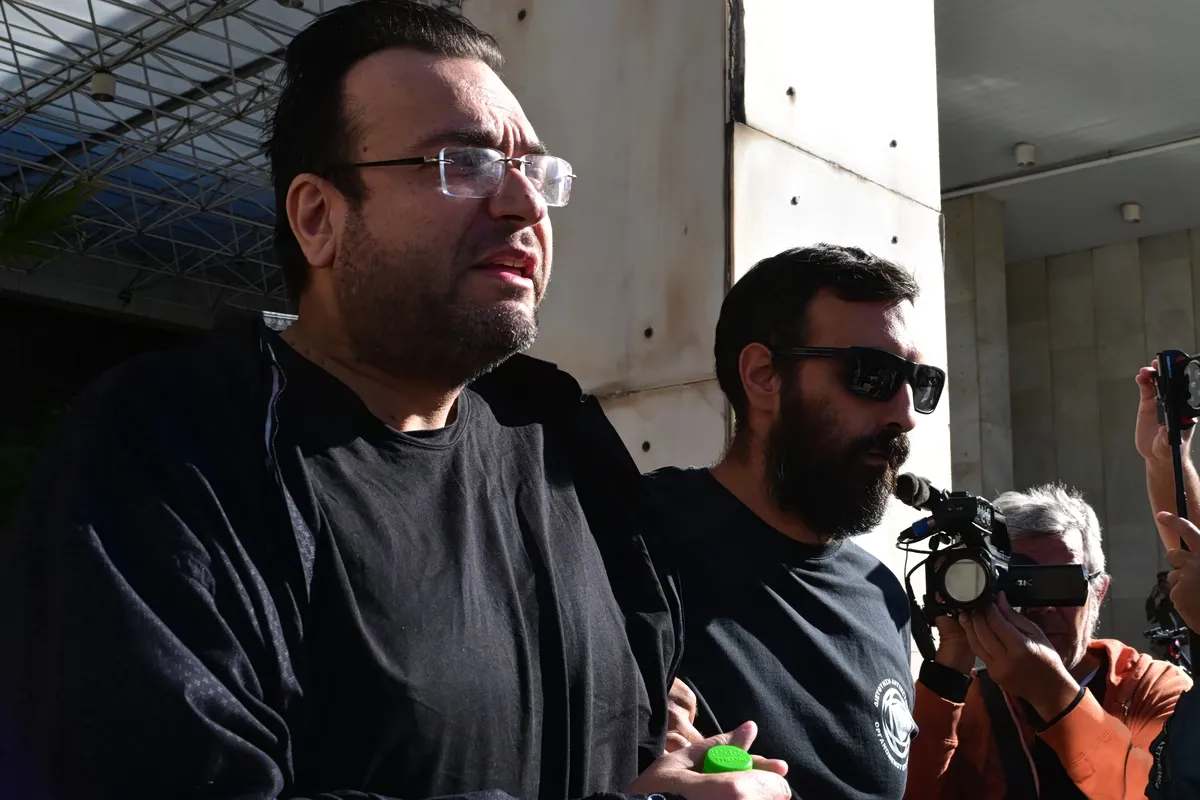
What are the key financial findings in the Kambouris investigation?
Investigative authorities are focusing on bank account withdrawals that reportedly exceed €2 million. According to reports from ERT, these transactions are being scrutinized to determine their origin and whether they correlate with the activities of the companies under investigation. The financial trail is a central pillar of the probe into how funds were moved and managed within the suspected criminal circuit.
Beyond the large-scale withdrawals, physical evidence recovered from bank safety deposit boxes has added weight to the investigation. Authorities have reportedly seized more than €50,000 in cash and 16 credit cards from boxes linked to the case. These assets are being evaluated to establish a clearer picture of the network's liquidity and the methods used for wealth concealment. Investigators are working to determine if these funds are directly connected to the commercial operations of the companies at the center of the dossier.
Discrepancies in declared income
A significant point of interest for investigators is the stark contrast between the lifestyle of the suspects and their official financial declarations. Records indicate that Philippos Kambouris declared an annual income of approximately €9,000, while his spouse reported roughly €21,000. Such low reported earnings are being weighed against the massive cash movements and the scale of the commercial operations involved in the case.
This discrepancy between reported earnings and the actual movement of millions of euros is a primary focus for the auditing authorities. The investigation seeks to understand how such a significant gap exists between the documented income of the individuals involved and the vast financial resources being moved through their associated bank accounts and safety deposit boxes.
How did the alleged shell company scheme operate?
The suspected network allegedly utilized shell companies to avoid paying social security contributions and to cause financial damage to EFKA and the Greek State. These entities were reportedly used to manage various hospitality venues and nightlife centers, creating a layer of separation between the actual decision-makers and the legal owners of the businesses. By using these 'front' companies, the circuit could manipulate the employment status of workers and artists.
The investigation aims to determine how many employees and performers were incorrectly registered. This method of operation allowed the network to benefit from the business operations of clubs and restaurants while circumventing the legal obligations that come with legitimate employment and social insurance coverage. The authorities are specifically looking at how these companies functioned as 'window-dressing' to mask the true nature of the business operations and the identities of those actually running them.
Why are testimonies from artists crucial to the case?
Testimonies from well-known singers and figures from the nightlife industry are providing direct insight into how the network functioned. These artists have already provided statements to the authorities regarding their professional collaborations with companies suspected of being mere window-dressing for the criminal circuit. Their accounts are helping investigators peel back the layers of corporate identity to find the true controllers of the businesses.
A critical element emerging from these testimonies is the direct involvement of Philippos Kambouris in business negotiations. While the companies were legally registered under the names of various other individuals, artists claim they dealt directly with Kambouris to finalize their performance agreements. This suggests a hierarchical structure where the nominal owners held no real decision-making power, acting instead as placeholders for the actual operators. This testimony is essential for proving that the legal owners were not the ones exercising control.
What is the impact on the Greek social security system?
The primary target of this alleged fraudulent scheme was the EFKA social security fund and the broader Greek State. By employing a system of shell companies and misreporting labor, the network effectively siphoned funds that should have been directed toward social insurance. This practice not only constitutes fraud but also undermines the stability of the national social security framework.
The scale of the damage is being assessed by looking at the discrepancy between the actual labor performed in the nightlife sector and the official declarations made to the state. For many artists, there is a possibility they were unaware of the fraudulent nature of their employment registration, making them unwitting participants in a scheme designed to evade statutory contributions. The investigation continues to evaluate the total financial loss incurred by the state and EFKA due to these practices.
What is the current status of Philippos Kambouris?
Philippos Kambouris was recently transferred to Gennimatas Hospital following a medical emergency while in police custody. During his detention at the General Police Directorate of Attica, he reported feeling numbness in his arm and experiencing dizziness. These symptoms led to immediate concern among the officers on site and the medical responders.
Upon the arrival of the EKAB emergency services, Kambouris expressed fears that he might have suffered a stroke. Although he was admitted to the hospital primarily for precautionary reasons and to undergo necessary medical examinations, his health remains a significant development in the ongoing legal proceedings. His formal questioning by the investigating magistrate was expected to proceed on Sunday, pending his medical clearance and the outcome of the necessary medical tests.
Frequently asked questions
What is the total amount of money being investigated?
Authorities are investigating bank withdrawals exceeding €2 million. Additionally, more than €50,000 in cash was found in bank safety deposit boxes associated with the investigation, alongside 16 credit cards, all of which are being analyzed for their connection to the suspected fraud.
Who are the main victims of this alleged scheme?
The primary victims identified are the Greek State and the EFKA social security fund. The scheme allegedly used shell companies to avoid paying mandatory social insurance contributions, thereby causing direct financial damage to these public institutions through systematic tax and contribution evasion.
How were the businesses actually managed?
While businesses were legally owned by various individuals, testimonies suggest that Philippos Kambouris exercised direct control. Artists have stated that they negotiated their contracts directly with him rather than with the nominal owners, indicating that the registered owners acted as fronts for the real decision-makers.
What happened to Philippos Kambouris during detention?
Kambouris was hospitalized at Gennimatas Hospital after experiencing dizziness and numbness in his arm while in police custody. He expressed concerns to emergency responders that he might have suffered a stroke, leading to his admission for precautionary medical testing and observation.
What role do the artists play in the investigation?
Artists serve as key witnesses whose testimonies help clarify the operational reality of the businesses. By describing their direct dealings with Kambouris and the nature of their contracts, they provide the evidence needed to prove that the companies were shell entities used to hide the true controllers.
Key takeaways
- Authorities are investigating bank withdrawals totaling more than €2 million.
- Over €50,000 in cash and 16 credit cards were seized from safety deposit boxes.
- The scheme allegedly used shell companies to defraud EFKA and the Greek State.
- Artists claim they negotiated contracts directly with Kambouris despite nominal ownership.
- Kambouris was hospitalized following reports of dizziness and arm numbness.
Conclusion
The investigation into the Philippos Kambouris case reveals a sophisticated attempt to manipulate the Greek economic and social security systems through the use of shadow management and shell companies. By decoupling legal ownership from actual operational control, the network allegedly facilitated massive tax evasion and social insurance fraud. As authorities continue to analyze the €2 million in withdrawals and the testimonies of industry professionals, the focus remains on uncovering the full extent of the financial damage. The legal proceedings now face the added complexity of the central figure's medical condition, even as the judicial process moves toward formal questioning.







