
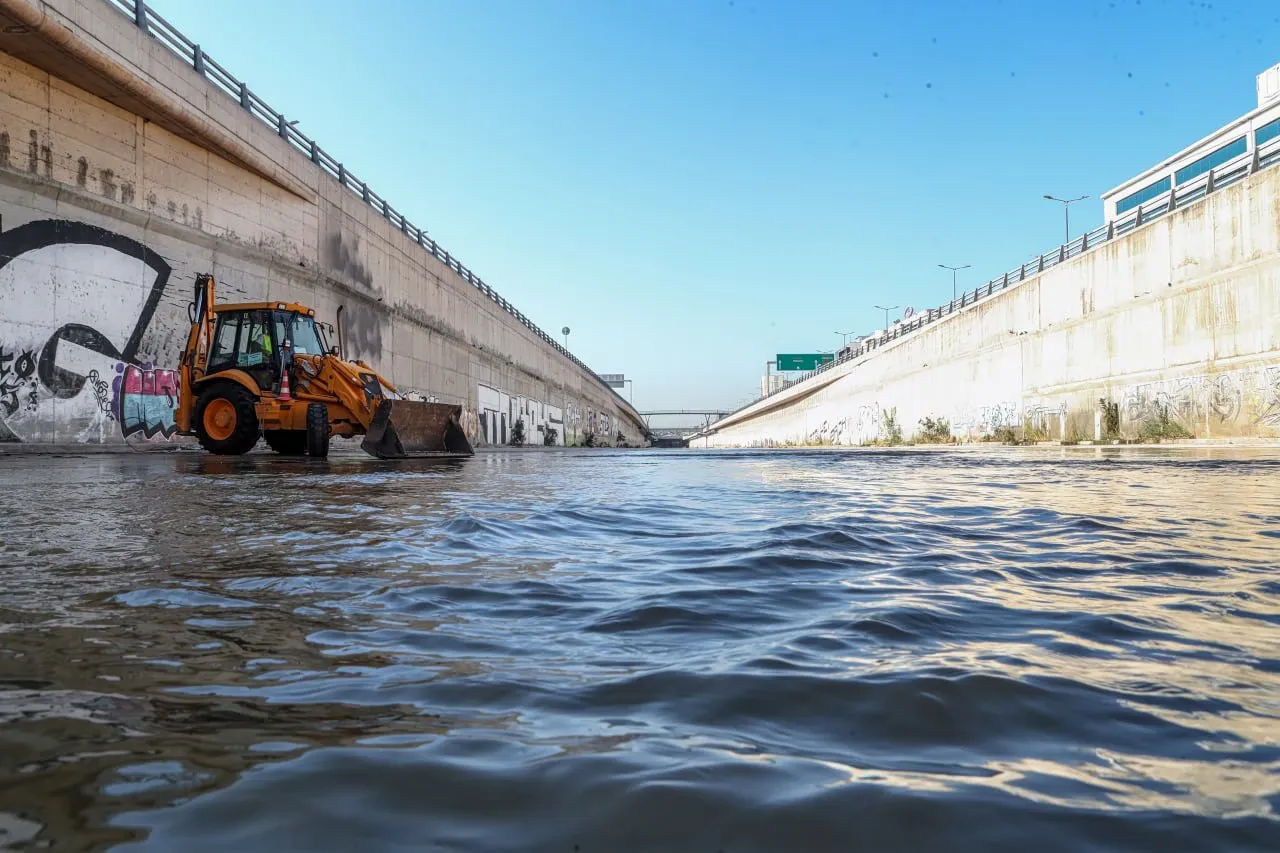
Why has there been a sudden surge in Kifisos river pollution inspections?
Recent enforcement actions by Greek authorities have highlighted significant environmental crimes involving industrial waste. In one recent case, an inspection at a cement factory revealed a leak of liquid chemical waste that flowed directly into the riverbed. This investigation, conducted by the Environmental Protection Department of the Attica Police in collaboration with the Region of Attica, led to the arrest of a 55-year-old individual responsible for maintaining the facility's environmental compliance.
Less than a week prior to the cement factory incident, a similar case was uncovered at a liquid fuel station in Egaleo. In that instance, tankers were found transporting hazardous industrial waste to the station, where it was subsequently discharged into the river via a pipeline. These incidents have prompted a renewed debate regarding the effectiveness of current environmental oversight and the frequency of illegal dumping practices in the Attica basin.
The pattern of industrial non-compliance
The recurring nature of these violations suggests that many industrial actors view the Kifisos as a convenient disposal site. Despite the recent arrests, critics argue that the penalties imposed—often around €10,000—are insufficient to deter large-scale industrial polluters. The suddenness of these inspections has been met with skepticism by local groups who claim that the river has suffered from systemic neglect for two decades.
How long has the Kifisos river been neglected?
Local citizen groups and experts claim the Kifisos river has been treated as a waste receptacle for approximately 20 years. Dimitris Theodopoulos, a member of a volunteer group of speleologists and engineers, reports that his team has documented between 40 and 50 instances of permanent pollution during their long-term monitoring of the river. According to Theodopoulos, many of these findings were reported to the authorities years ago without significant intervention.
One notable example of this neglect involves waste dumped near the bed of the Kifisos adjacent to Tzaneio Hospital. Despite volunteers collecting some of the hazardous waste, the local administration has reportedly failed to remove the remaining bags even a year later. Residents in areas like Metamorfosi also report a chaotic network of unidentified pipes and connections that discharge unknown substances into the water, creating a state of environmental disorder.
The pollution is not limited to industrial zones. The Eschatia stream, which flows into the Kifisos, has been described as having a tragic state of degradation, with significant odors and debris ranging from small objects to larger items like car parts. Furthermore, a 7-kilometer stretch between Agioi Anargyroi and Faliro remains a 'blind spot' where the actual extent of the pollution is difficult to assess due to the lack of mapping and accessibility.
What are the structural causes of water contamination in Athens?
The lack of accurate mapping for urban water networks is a primary driver of continuous contamination. Andreas Grammatikogiannis, Deputy Mayor of Civil Protection in Athens, explains that many networks in central Athens are 'pan-torrential,' meaning they carry both sewage and rainwater. Because these networks are often unmapped, it is difficult to determine where illegal connections or leaks are discharging into the Kifisos.
The structural issues are compounded by several factors:
- Illegal Connections: Many pipes connecting to the river are unauthorized and bypass official treatment systems.
- Network Fragmentation: The lack of separation between sewage and storm-water networks leads to overflows during heavy rains.
- Administrative Fragmentation: Responsibility for the river is split between the Ministry of Environment and Energy, the Ministry of Transport and Infrastructure, the Decentralized Administration, and the Region of Attica, which complicates coordinated action.
Grammatikogiannis notes that the current situation allows for easy environmental crimes, as individuals can simply open a manhole to discharge waste. Without a comprehensive mapping of the drainage systems, preventing the contamination of both the river and the sea remains a significant challenge.
What does scientific data reveal about water quality?
Scientific monitoring indicates that the Kifisos river suffers from severely degraded water quality, particularly in its lower reaches. According to research by the Institute of Marine Biological Resources, which conducted monthly sampling between April 2021 and October 2022, the water quality regarding nitrates is officially classified as 'bad' under the European Water Framework Directive (WFD).
The data shows a clear escalation of pollution as the river passes through urban areas. Key findings from the study include:
| Parameter | Observed Range / Average | Context |
|---|---|---|
| Nitrates | 1.7 to 18.7 mg/L | Average of 7.6 mg/L; peak at Podonifti (9.5 mg/L) |
| Ammonium | Moderate to Bad | Varies based on urban density |
| Dissolved Oxygen (DO) | 3.6 to 16.1 mg/L | Lower levels indicate higher organic pollution |
The research highlights that pollution levels typically spike during the summer months. This is attributed to low water flow, which concentrates industrial effluents, urban sewage, and leaks from the sewage network. The degradation is most pronounced in the section stretching from Kato Kifisia to Kokkinos Myloi.
How can technology improve river monitoring?
Implementing a network of automated stations and sensors could provide the real-time data necessary to prevent pollution. Ilia Dimetriou, a researcher at the Hellenic Centre for Marine Research (HCMR), states that while the technology exists, it is currently not integrated into a unified operational system. Currently, monitoring is often fragmented and relies on sporadic research projects.
HCMR has been monitoring Greek rivers since 2012 in accordance with EU Directive 2000/60/EC. While there is currently an automated station in the upstream semi-mountainous section of the Kifisos and another for flood monitoring, more coverage is needed. Dimetriou suggests that installing four to five additional stations along the river would significantly enhance the ability to detect pollution early.
An integrated system would offer several benefits:
- Real-time alerts: Sensors could monitor dissolved oxygen and water levels every hour.
- Targeted inspections: Early warnings would allow authorities to conduct inspections at the exact time and location of a leak.
- Improved prevention: Consistent data would support the design of better River Basin Management Plans (RBMP).
FAQ: Kifisos River Pollution
What are the main sources of pollution in the Kifisos?
The primary sources include illegal industrial waste discharges from factories, untreated urban sewage, and leakage from aging drainage networks. Additionally, unmapped pipes in urban areas often discharge unknown substances directly into the river, often exacerbated by the lack of separation between rainwater and sewage systems.
Is the water safe for contact?
No, the water quality is officially classified as 'bad' or 'moderate to bad' regarding nitrate and ammonium levels. High concentrations of pollutants and low dissolved oxygen levels indicate significant contamination, making the river unsuitable for any form of contact or recreational use.
Why is the pollution worse in the summer?
Pollution levels tend to increase during summer due to lower water flow rates. With less water to dilute contaminants, industrial effluents and sewage become more concentrated, leading to higher readings of nitrates and a more significant impact on the river's ecosystem.
How does the government monitor the river?
Monitoring is conducted through a combination of seasonal sampling by organizations like HCMR and periodic inspections by the Environmental Protection Department. However, experts suggest that a more robust, real-time system using automated sensors is required for effective and continuous oversight.
What is being done to stop the pollution?
Authorities have recently increased inspections, leading to arrests in cases of illegal chemical and industrial waste dumping. However, environmental groups argue that more systematic measures, such as comprehensive network mapping and the installation of permanent monitoring stations, are necessary to address the root causes.
Key takeaways
- Recent inspections led to arrests for illegal chemical and industrial waste dumping in the Kifisos.
- Water quality is officially rated as 'bad' for nitrates in several sections of the river.
- Pollution levels peak in summer due to low water flow and concentrated effluents.
- Experts call for an integrated, real-time sensor network to improve detection and response.
Conclusion
The recent enforcement actions against industrial polluters in the Attica region highlight a critical turning point for the Kifisos river. While the arrests of those responsible for chemical and fuel waste discharges are necessary, they address only the immediate symptoms of a much larger environmental crisis. The combination of unmapped sewage networks, fragmented administrative responsibility, and decades of systemic neglect has turned the river into a conduit for urban and industrial waste. Moving forward, effective restoration will require more than sporadic inspections; it demands a technological overhaul of monitoring systems and a structural commitment to separating urban water networks.







