
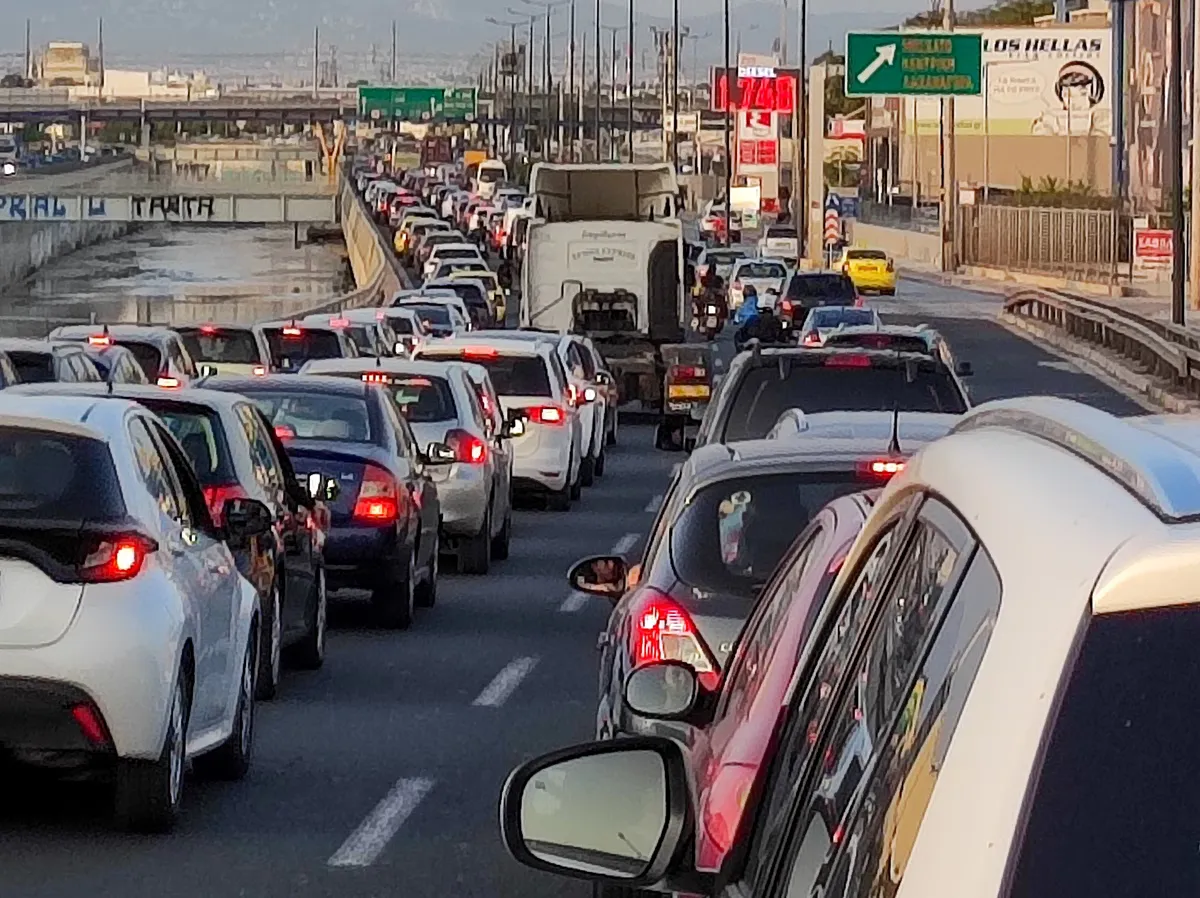
Why is the Kifisos highway reaching its operational limits?
The Kifisos highway is currently functioning at the edge of its physical capacity, acting as a microcosm for the broader transport crisis facing Athens. The congestion is not caused by a single factor but is a complex 'spatio-temporal problem' where the volume, timing, and location of vehicles collide. The road serves as a vital artery for both daily commuters and long-distance transit, creating a constant state of high pressure.
Several specific elements contribute to this saturation:
- Heavy Vehicle Volume: Trucks account for roughly 20% of the traffic on this axis, significantly impacting flow.
- Logistics Hubs: The presence of KETEL bus stations, commercial centers, and logistics facilities creates localized bottlenecks.
- Variable Road Widths: Frequent changes in the number of lanes create natural friction points for moving traffic.
- High Sensitivity to Incidents: Because the road operates near maximum capacity, even minor accidents or stalled vehicles trigger massive, cascading delays that can disrupt traffic for half a day.
The role of heavy vehicle transit
The presence of heavy goods vehicles (HGVs) is a primary driver of the Kifisos crisis. Beyond the sheer volume, the interaction between long-distance transit and local logistics—such as the 4,500 buses from various KETEL stations that must pass through the area daily—creates a permanent state of congestion. This mix of high-speed transit and frequent stopping for logistics makes the highway uniquely difficult to manage.
Will building new roads solve the Athens traffic problem?
Building new roads without fundamentally changing how people move will only displace the problem to different parts of the city. Transport specialist Stavros Konstantinidis argues that adding road capacity is a temporary fix that fails to address the underlying imbalance between the number of private vehicles and available infrastructure. The demand for private car travel in Athens has already exceeded the network's ability to accommodate it.
The core issue is the extreme inefficiency of current vehicle usage. Most private cars on the road carry only a single occupant, meaning a vast amount of road space is consumed to move just one person. This imbalance necessitates a shift in strategy from expanding asphalt to expanding mobility options. Instead of more roads, the focus must move toward creating a 'Green Ring'—a zone for low-emission vehicles and incentives for high-occupancy transport.
How can public transport reduce private vehicle demand?
A competitive public transport network is the only way to realistically decrease the demand for new private cars. For Athens to function as a modern metropolis, the majority of workers must be able to reach their destinations reliably and qualitatively via mass transit. Currently, the lack of sufficient public transport options forces a heavy dependence on private vehicles.
To achieve this, several structural improvements are required:
- Bus Network Expansion: Athens requires approximately 3,000 buses, supported by extensive dedicated bus lanes and redesigned route schedules.
- Metro and Rail Upgrades: Faster expansion of the Metro system and modernization of the Tram and Suburban Railway (Proastiakos) are essential.
- Intermodal Connectivity: Improving the ease of transferring between different modes of transport is crucial for making public transit a viable alternative to driving.
The immediate role of the bus network
While large-scale Metro expansions are long-term projects, the bus network serves as the most immediate tool for increasing transport supply. By implementing dedicated lanes and increasing frequency, the city can provide an instant relief valve for the road network. Without this, the demand for private cars will continue to outpace any road-building efforts.
What are the proposed short-term and long-term solutions?
Addressing the Kifisos crisis requires a combination of immediate management changes and long-term infrastructure projects. There is no single 'magic bullet,' but rather a need for a multi-layered approach that addresses both the symptoms and the causes of congestion.
Short-term interventions include:
- Traffic Management: Implementing time-based restrictions for heavy trucks, particularly during morning peak hours.
- Logistics Organization: Better scheduling of freight deliveries and loading/unloading activities to avoid peak times.
- Incident Response: Developing a more efficient system to clear accidents quickly, supported by better communication to prevent long-term gridlock.
- Operational Maintenance: Improving traffic light synchronization and strictly enforcing parking regulations.
Long-term infrastructure goals include:
- Strategic Interchanges: Projects like the Skaramangas triple junction and the Elefsina-Oinofyta axis could divert transit traffic away from the Kifisos.
- Urban Redesign: Redesigning intersections, pedestrian crossings, and road networks to meet modern European standards.
- Institutional Reform: The creation of Metropolitan Transport Planning bodies for Athens and Thessaloniki to ensure coordinated development.
What institutional changes are needed for sustainable mobility?
Sustainable mobility in Athens requires a structural overhaul of how the government manages transportation. Currently, the lack of coordination between different departments hampers effective planning. A significant proposal involves creating a specialized ministry or a high-level deputy for Sustainable Mobility that bridges the gap between Infrastructure, Transport, and Citizen Protection.
Furthermore, the urban planning of Athens remains stuck in the 1980s. Modernizing the city requires more than just new roads; it requires a commitment to 'the culture of everyday life.' This includes maintaining roads to high standards, installing clear asphalt markings, and establishing minimum standards for pedestrian crossings. As Konstantinidis notes, the city is currently lagging approximately 25 years behind European standards in terms of integrated urban mobility and sustainable planning.
Frequently asked questions
Why is Kifisos more congested than other roads?
Kifisos suffers from a unique combination of heavy truck transit (20% of traffic), intense local logistics, and high-frequency bus movements. Its role as both a local artery and a major transit route, combined with narrow points and high sensitivity to accidents, creates constant gridlock.
Can new highways reduce traffic in Athens?
No, according to experts, new roads without a change in travel habits merely shift congestion to other areas. Without improving public transport, the demand for private cars will always outgrow the capacity of any new road network built.
What is the most urgent solution for Athens?
The most immediate priority is the massive reinforcement of the bus network. This involves increasing the number of buses to approximately 3,000, creating dedicated bus lanes, and ensuring more frequent and reliable service to make public transit a competitive alternative.
How do accidents affect the Kifisos highway?
Because the highway operates at near-maximum capacity, even a minor incident can cause a chain reaction of delays. Currently, slow evacuation times and poor communication mean a single accident can negatively impact traffic for half the day.
What is the 'Green Ring' concept?
The 'Green Ring' refers to a redesigned urban zone that prioritizes low-emission vehicles and provides incentives for high-occupancy transport, aiming to reduce the environmental and congestion impact of private cars in the city center.
Key takeaways
- Kifisos handles 20% of Greece's heavy truck traffic, contributing to extreme saturation.
- Building more roads is insufficient; it only shifts congestion to different urban axes.
- Athens needs approximately 3,000 buses and expanded dedicated lanes to improve mobility.
- Effective management requires better incident response and stricter logistics scheduling.
- Urban mobility must shift from private car dominance to competitive public transport.
Conclusion
The crisis on the Kifisos highway is a clear indicator of the systemic failure of Athens' current transport model. Relying on private vehicles to navigate an outdated road network is unsustainable. Solving the congestion requires moving beyond the illusion of road expansion and investing heavily in a competitive, reliable, and integrated public transport system. Only by prioritizing buses, Metro expansion, and smarter urban management can the city transition from a state of constant gridlock to a functional, modern European metropolis that supports the quality of life for all its citizens.







