
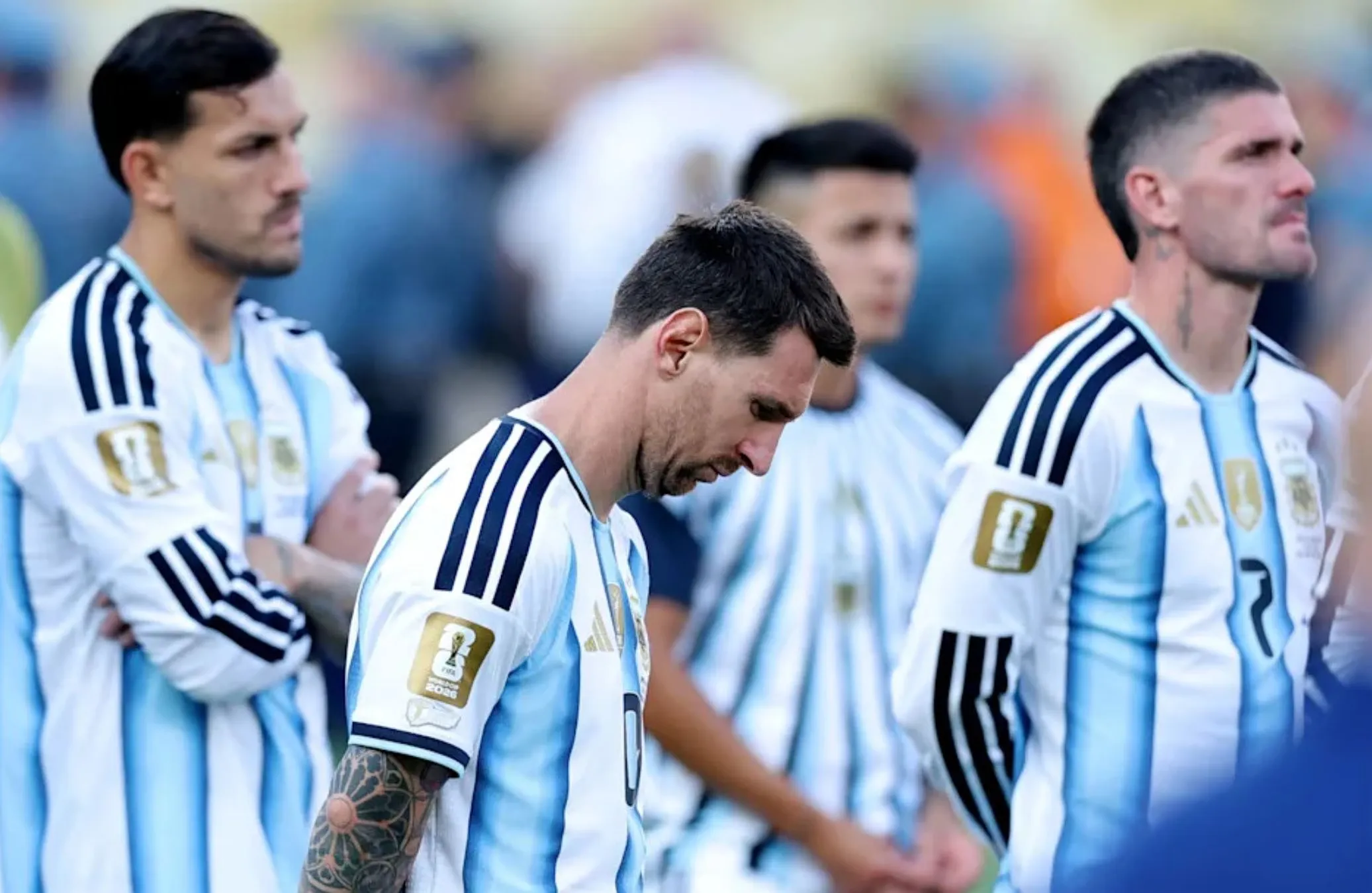
What happened during Lionel Messi's final match for Argentina?
Lionel Messi played his final international match for Argentina in a fixture against Benin on October 7, 2026. The match served as the conclusion of his storied career with the national team, often referred to as his 'last tango' with the Albiceleste. While the game itself was a standard international fixture, the atmosphere shifted toward celebration and reverence as the final whistle approached, recognizing the end of an era for South American football.
The conclusion of the match was marked by an unexpected moment of sportsmanship that transcended the typical boundaries of officiating. Rather than simply exiting the pitch, the match official sought to acknowledge the magnitude of the moment for both the player and the global football community. This moment of recognition turned a standard international fixture into a historic farewell that will be remembered by fans across the planet.
How did the referee honor Lionel Messi?
Chilean referee Fernando Veza honored Lionel Messi by presenting him with a symbolic gift of football cards immediately after the match concluded. Seconds after blowing the whistle to signal the end of the game against Benin, Veza approached the Argentine captain to offer his respects. In a gesture captured by spectators and widely shared on social media, the official reached into his equipment pouch and produced both a yellow card and a red card, handing them to Messi as souvenirs.
This gesture was widely interpreted as a tribute to the entire spectrum of Messi's career, acknowledging the discipline, the passion, and the intense competitive nature of his journey on the international stage. By gifting the cards, Veza moved beyond the role of a neutral arbiter to become a participant in the ceremonial farewell of a sporting icon. The act was described as a way to deliver the respect Messi deserved, rather than just ending the game and moving on.
The significance of the symbolic cards
The choice of cards—the yellow and the red—carries deep semiotic weight in football. For a player who has faced the highest levels of scrutiny and pressure, these objects represent the duality of the game: the rules that govern it and the intensity that often tests them. Social media reactions, including posts from major outlets like ESPN FC, highlighted the respect shown by the official, noting that instead of simply ending the game, the referee chose to deliver the respect Messi deserved.
By providing these specific tools of the trade, the referee encapsulated the highs and lows of a career spent under the constant gaze of the world. The cards serve as a physical reminder of the regulatory and emotional landscape of professional football, making them a poignant, if unconventional, commemorative gift for a player of Messi's stature.
What are Lionel Messi's final statistics for Argentina?
Lionel Messi concludes his international career with a record-breaking statistical profile that cements his status as the greatest player in the history of the Argentina national team. His final appearance against Benin marked his 208th cap for the Albiceleste, a figure that represents the absolute record for appearances in the national squad.
According to the match data, Messi's final tally of contributions to the Argentine attack is staggering. Throughout his international tenure, he recorded:
- Total Caps: 208
- Total Goals: 126
- Total Assists: 70
These figures place Messi at the pinnacle of international football, not just within Argentina, but globally. His ability to maintain such high levels of production over hundreds of matches demonstrates a longevity and consistency that is unprecedented in the modern era of the sport. He leaves the national team as the all-time leading scorer and the all-time leader in assists, effectively holding the keys to the record books for the nation. His 208 appearances stand as a testament to his enduring presence at the top level of the international game.
What is the impact of Messi's retirement on the Argentine national team?
The retirement of Lionel Messi leaves a significant void in the tactical and leadership structure of the Argentina national team. While the squad continues to evolve under the management of Lionel Scaloni, the departure of a player who served as both the primary playmaker and the psychological anchor of the team presents a transformative challenge for the upcoming international cycles.
Scaloni has been tasked with navigating the post-Messi era, a period that will require a fundamental shift in how Argentina approaches offensive transitions and game management. The team must now find new ways to replicate the creative output and clinical finishing that Messi provided for over a decade. The transition will likely involve a redistribution of responsibility among the younger core of the squad. While the tactical setup may remain similar, the reliance on a single talismanic figure must be replaced by a more collective approach to goal-scoring and chance creation.
The legacy of the recent successes under Scaloni provides a foundation, but the absence of Messi's individual brilliance will undoubtedly be felt in high-stakes knockout competitions. The team faces the daunting task of maintaining its global standing while transitioning away from its most iconic figure.
Frequently asked questions
Who was the referee that gave Messi the cards?
The referee was Fernando Veza, a professional official from Chile. He approached Messi immediately after the final whistle of the Argentina vs. Benin match to present the yellow and red cards as a commemorative gift to honor the player's retirement from international football.
How many goals did Messi score for Argentina?
Lionel Messi scored a total of 126 goals for the Argentina national team throughout his international career. This figure, combined with his 70 assists, makes him the most productive player in the history of the Argentine national squad.
Was the match against Benin Messi's last game?
Yes, the match against Benin on October 7, 2026, was officially Lionel Messi's final appearance for the Argentina national team. The game marked the end of his long-standing tenure with the Albiceleste, concluding his 208th international match.
Why did the referee give him a red card as a gift?
The red and yellow cards were given as a symbolic gesture of respect. Rather than being a disciplinary action, the cards served as mementos to commemorate the various emotions and intensities of Messi's legendary career, acting as a unique souvenir for his final match.
What is Messi's record for appearances?
Lionel Messi holds the record for the most appearances for the Argentina national team. His final match against Benin was his 208th cap, a milestone that places him as the most-capped player in the history of the country's footballing program.
Key takeaways
- Lionel Messi retired from the Argentina national team following a match against Benin on October 7, 2026.
- Referee Fernando Veza gifted Messi yellow and red cards as a symbolic tribute to his career.
- Messi finished his international career with 208 caps, 126 goals, and 70 assists.
- Messi remains the all-time record holder for goals, assists, and appearances for Argentina.
The end of an era in international football
The retirement of Lionel Messi marks the conclusion of one of the most significant chapters in the history of international football. His departure leaves a legacy defined by unprecedented statistical dominance and a profound impact on the identity of the Argentine national team. While the symbolic gift from Fernando Veza provided a moment of grace and individual recognition, the true impact of Messi's absence will be measured in the years to come as Argentina seeks to maintain its status on the world stage without its most iconic figure. The 'last tango' is over, but the records he set remain a benchmark for all future generations.







