
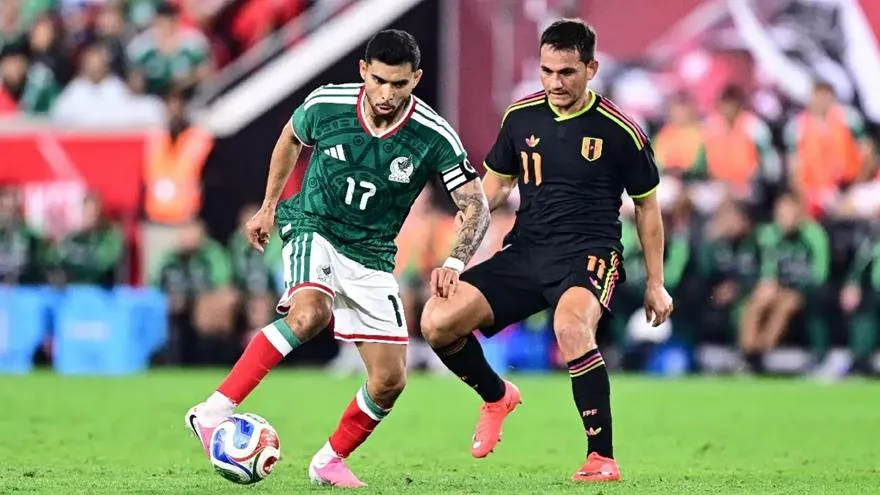
Tactical experimentation and squad rejuvenation in Mexico
Mexico utilized this friendly match to accelerate the 'rebirth' of their national squad by prioritizing youth and tactical flexibility. The coaching staff implemented significant changes to the starting lineup, opting to grant substantial playing time to players who had seen limited action in recent competitive fixtures. This strategy was reflected in the team's composition, with the starting XI maintaining an average age of just 24.4 years.
The selection process focused heavily on evaluating new prospects within the 'El Tri' system. Among the notable participants was former AEK player Orbelín Pineda, who featured in the starting lineup before being substituted in the 79th minute for Hugo Camerós. Such rotations suggest a long-term vision aimed at building depth and assessing how younger players handle the pressure of international competition outside of standard tournament cycles.
This emphasis on youth is a clear indicator of the current developmental phase of the Mexican national team. By fielding a much younger roster, the technical staff is able to identify emerging talents who can contribute to the squad's evolution. While the result was a draw, the primary objective of talent assessment and squad integration appears to have been the central focus of the technical direction.
Scoring breakdown and match progression
The deadlock was broken in the 26th minute by Peru, who took advantage of a defensive lapse to secure a lead. Jairo Velasquez scored the opening goal for the Peruvian side, converting a sequence that originated from a corner kick awarded to Mexico. This moment highlighted the defensive vulnerabilities that the Mexican side sought to address through their current rebuilding process.
Mexico responded in the second half to ensure the match remained competitive. In the 49th minute, Victor Guzman found the back of the net with a header to equalize the score. This goal shifted the momentum back to the Mexican side, though neither team was able to find a decisive winning goal in the subsequent period of play.
The 1-1 result remained unchanged until the final whistle, reflecting a match where both sides had opportunities to seize control but ultimately settled for a shared point. The scoring pattern—one early goal from Peru followed by an early second-half response from Mexico—dictated the rhythm of the encounter, leading to a balanced conclusion in New Jersey.
Player availability and upcoming international schedules
A notable absence from the match was Armando Gonzalez, the Olympiacos player, who did not feature in the encounter. His absence marks a temporary hiatus from the international stage before his anticipated return to Greece to rejoin his club duties.
Both nations now turn their attention to a demanding series of upcoming fixtures that will test the progress made during this friendly. For Mexico, the immediate challenge is a high-profile match against the United States scheduled for October 3. This matchup serves as a critical benchmark for the progress of their younger roster.
Peru's schedule follows a similar pattern of intense competition. They are set to face Chile on October 7 at 05:30. These consecutive matches will provide further data for both coaching staffs as they prepare for more formal competitive cycles, with the results of these upcoming games likely influencing future squad selections and tactical adjustments.
Frequently Asked Questions
Who scored the goals in the Mexico vs Peru friendly?
Jairo Velasquez scored the opening goal for Peru in the 26th minute of the match. Victor Guzman provided the equalizer for Mexico in the 49th minute, scoring with a header to bring the final score to 1-1.
Did Armando Gonzalez play in the match?
No, Armando Gonzalez did not participate in this friendly match between Mexico and Peru. The Olympiacos player remained sidelined during this specific encounter in New Jersey, awaiting his return to domestic club football in Greece.
What was the average age of the Mexican starting lineup?
The Mexican starting XI had an average age of 24.4 years. This low average age was a deliberate tactical choice by the coaching staff to facilitate a period of squad rejuvenation and to evaluate younger players for the national team.
When is the next match for Mexico?
Mexico is scheduled to play their next international match against the United States on October 3. This fixture follows their recent 1-1 draw against Peru and will be a key test for their developing squad.







