
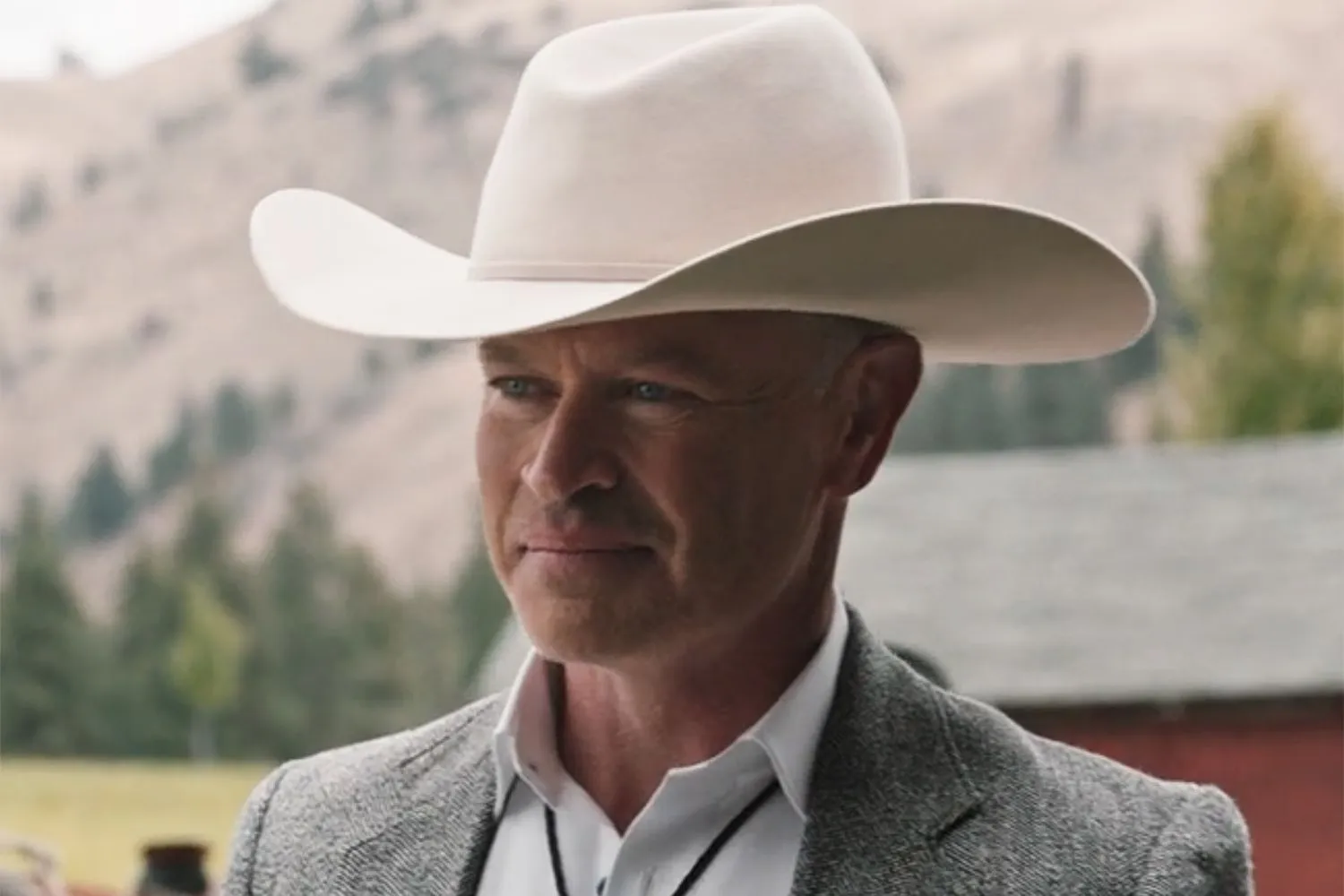
Why has Neil McDonough never watched Yellowstone?
Neil McDonough has never watched the television series Yellowstone, despite playing a prominent and chilling character in the production. While many actors review their performances to refine their craft or prepare for future roles, McDonough maintains a strict boundary between his professional output and his personal consumption of media. This decision is not born of indifference toward the quality of the work, but rather as a protective measure for his own mental state.
The actor, who portrays Malcolm Beck, noted that this habit extends to his entire career; he has never watched any project in which he has participated. For McDonough, the finished product on screen is a relic of a past emotional state that he prefers to leave behind. He expressed confidence in his professional abilities, noting that his continued employment in the industry serves as a practical validation of his talent. "I know I did an excellent job, because God gave me the talent," he stated, suggesting that the final visual result is secondary to the integrity of the performance delivered on set.
His perspective on the finished product is one of professional detachment. When asked if he ever desires to see the final version of a project, he remains steadfast in his refusal. He believes that having been present during the filming, he already possesses the necessary knowledge of his performance. To him, the validation of his work comes from the act of creation and the subsequent professional opportunities it provides, rather than the act of viewing.
How does the Stanislavski method affect his mental health?
The primary reason for McDonough's avoidance of his own work lies in his adherence to the Stanislavski system of acting. This method requires an actor to move beyond mere imitation, instead seeking to experience the genuine, authentic emotions of a character. For McDonough, this process involves a deep psychological immersion that can be difficult to untangle once the filming concludes.
During an appearance on the podcast "Arroyo Grande with Raymond Arroyo," McDonough described the process of revisiting his roles as "traumatic and painful." He explained that because he dives so deeply into the psyche of a character, watching a recorded performance would force him to confront those exact emotional states again. The intensity of the method means that the emotions are not just performed, but felt, creating a lasting connection to the character's internal world.
This method places a heavy burden on the performer's psyche. Unlike actors who might use technical cues to signal a character's presence, McDonough's approach is to inhabit the character's soul. Consequently, the boundary between the self and the role becomes blurred, making the act of watching the performance a psychological confrontation rather than a passive experience.
The psychological risks of deep character immersion
When an actor utilizes the Stanislavski method to inhabit dark or morally ambiguous characters, they are essentially navigating complex psychological terrain. McDonough noted that playing characters without a moral compass requires him to access thoughts and impulses that are fundamentally alien—and often distressing—to his own personality. He likened the experience to navigating dark mental spaces without the immediate guidance of a professional therapist, which can leave an actor feeling vulnerable after the cameras stop rolling.
The actor emphasized that while a professional therapist could provide guidance through these dark psychological explorations, an actor often lacks that immediate support during the creative process. This lack of professional psychological oversight while delving into the minds of "dark" characters adds a layer of risk to his method of performance. He noted that he must often go to places in his mind that he would not want to visit unless guided by a professional.
This creates a unique professional hazard. The very tools that allow him to deliver high-caliber, authentic performances are the same tools that expose him to psychological distress. The absence of a built-in safety net during the intense periods of character development means that the actor must manage these dark impulses largely on his own, making the transition back to reality all the more critical.
What is the impact of revisiting past performances?
Revisiting past work presents a unique challenge for an actor who relies on emotional authenticity. McDonough explained that if he were to watch his previous television appearances, he would be able to pinpoint exactly what he was thinking during specific scenes. This level of clarity is not a benefit for him, but a source of distress, as it serves as a direct portal back to the intense emotional states he inhabited during production.
The ability to recall the precise internal monologue of a character makes the viewing experience a form of emotional regression. Rather than seeing a character as a separate entity, the method-driven actor experiences the performance as a lived memory. This makes the act of watching a finished episode feel less like entertainment and more like a confrontation with a past version of oneself that was defined by hardship, darkness, or conflict.
For McDonough, the visual medium acts as a trigger. Because the Stanislavski method demands such high fidelity to the character's internal reality, the image of himself on screen serves as a sensory reminder of the psychological toll taken during those moments. To watch the screen is to re-experience the trauma of the character's journey, making the avoidance of his own filmography a necessary act of self-preservation.
How does McDonough maintain his personal identity?
To counteract the psychological weight of playing dark characters, McDonough relies heavily on his domestic life to ground himself. He described a specific ritual of emotional transition that allows him to exit a role and return to his true self. This process is essential for maintaining the distinction between the persona of a character like Malcolm Beck and his own reality as a husband and father.
The actor revealed that the primary way he breaks free from a dark or "gloomy" role is by looking at his family. He specifically mentioned his wife, Rouve, and their five children as his emotional anchors. By focusing on the faces of his loved ones, he is able to instantly reconnect with his own identity, effectively resetting his mental state and leaving the character behind on the set. This connection to his personal life provides the necessary stability to continue performing intense, psychologically demanding roles.
This grounding technique is his shield against the darkness he explores for his craft. The presence of his family serves as a constant, tangible reminder of his actual life, providing a stark contrast to the fictional, often morally bankrupt worlds he inhabits. It is through this domestic anchor that he is able to navigate the high-stakes emotional demands of his career without losing himself in the roles he portrays.
Key takeaways
- Neil McDonough has never watched Yellowstone or any of his previous acting projects.
- His refusal to watch his work is a psychological defense mechanism linked to the Stanislavski method.
- The actor finds revisiting performances "traumatic and painful" due to the deep emotional immersion required.
- McDonough uses his wife and five children as essential tools to ground himself after playing dark roles.
- He maintains confidence in his talent based on his professional longevity and divine gift.
FAQ: Neil McDonough and his acting process
Why doesn't Neil McDonough watch his own shows?
McDonough avoids watching his work because his commitment to the Stanislavski method makes revisiting performances emotionally taxing. He finds that watching himself can trigger the same intense, often dark, emotions he felt during filming, making the experience feel traumatic rather than enjoyable.
What is the Stanislavski method in acting?
The Stanislavski method is a system of acting that encourages performers to inhabit a character's true emotions and motivations rather than simply pretending. This requires a deep psychological connection to the role, which can lead to significant emotional investment from the actor.
How does playing dark characters affect him?
Playing characters without a moral compass requires McDonough to explore thoughts and impulses that are contrary to his own nature. He has described this process as navigating dark mental territory that can be difficult to process without professional psychological support.
How does he return to his normal self after filming?
McDonough uses his family as a grounding mechanism to exit his roles. By looking at his wife, Rouve, and their five children, he is able to mentally detach from the character and reconnect with his true identity as Neil McDonough.
Does he believe his acting is good without seeing it?
Yes, McDonough is confident in his performance quality. He believes his talent is a gift from God and points to his continued employment in the industry as evidence that he performs his roles successfully.
Conclusion
Neil McDonough's approach to acting highlights the profound psychological commitment required by the Stanislavski method. While his refusal to watch Yellowstone or any other past work may seem unconventional, it serves as a vital boundary for his mental health. By prioritizing emotional authenticity, he achieves high-level performances but must navigate the resulting psychological residue. Ultimately, his ability to balance the darkness of his roles with the stability of his family life allows him to continue a successful career in one of television's most demanding genres.







