
What is the current status of North Macedonia's EU accession?
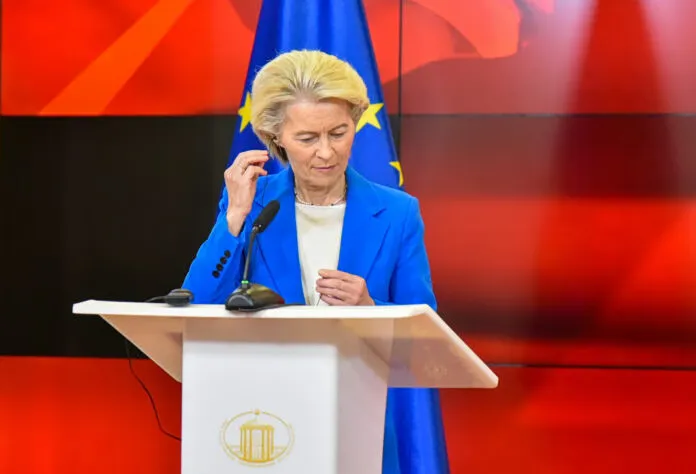
North Macedonia is moving closer to full integration within the European Union, bolstered by strong endorsements from the European Commission. During a joint press conference held on Friday, October 3, 2026, Ursula von der Leyen emphasized that the country has a definitive place at the European Union table. The President of the Commission described the nation as a country that keeps its word, highlighting its reliability as a partner in the ongoing enlargement process.
The momentum for accession is driven by the government's demonstrated commitment to the EU's Development Plan. Von der Leyen noted that the progress achieved thus far is "truly impressive," attributing this success to the readiness and dedication shown by the administration led by Prime Minister Hristian Mickoski. This diplomatic engagement serves as a formal recognition of North Macedonia's trajectory toward becoming a full member state.
The role of government commitment
The European Commission's positive assessment is not merely rhetorical; it is based on tangible benchmarks met under the current administration. The readiness of the North Macedonian government to implement structural reforms and adhere to the EU's acquis communautaire has been a decisive factor in recent discussions. By demonstrating a consistent willingness to align national policies with European standards, the Mickoski government has successfully navigated complex geopolitical hurdles.
How has financial support aided the accession process?
Financial assistance plays a critical role in stabilizing the economy and facilitating the reforms necessary for EU membership. According to Ursula von der Leyen, North Macedonia has already secured €140 million in funding to support its development goals. This capital injection is intended to bolster the country's infrastructure and institutional capacity as it prepares for the responsibilities of EU integration.
Beyond the initial sums already disbursed, the European Commission has signaled that additional payments are forthcoming. Von der Leyen stated that further financial installments are expected to follow in the coming weeks. This continuous stream of funding is designed to maintain the current pace of reform and ensure that the transition remains economically viable for the North Macedonian population.
| Funding Type | Status/Amount | Expected Timeline |
|---|---|---|
| Initial Development Funds | €140 million (already received) | Completed |
| Upcoming EU Payments | TBD (additional installments) | Next few weeks |
| Primary Objective | Support Development Plan reforms | Ongoing |
Why is the Prespa Agreement central to this relationship?
The Prespa Agreement serves as the foundational diplomatic breakthrough that enabled North Macedonia's current path toward the EU and NATO. Ursula von der Leyen characterized the agreement as a "moment of political courage," noting that it allowed both involved nations to turn a new page and begin a shared chapter of cooperation. This agreement was essential in resolving long-standing disputes that had previously stalled the country's international integration.
The impact of the Prespa Agreement extends beyond bilateral relations; it has fundamentally altered North Macedonia's security profile. Von der Leyen pointed out that the agreement paved the way for the country's accession to NATO, transforming it into a "valuable ally" for the alliance. This security integration is viewed as a precursor to the political integration sought through the European Union, creating a dual layer of stability in the Balkan region.
Building security through cooperation
The relationship between North Macedonia and the EU is increasingly focused on the security sector. Von der Leyen suggested that the spirit of cooperation established through the Prespa Agreement is being mirrored within the EU's own internal security frameworks. As North Macedonia integrates more deeply with European institutions, its role in regional stability and collective defense becomes increasingly vital to the broader European security architecture.
What is the significance of the EU's stance on Macedonian identity?
The European Union has explicitly recognized the cultural and linguistic rights of North Macedonia as integral to its membership potential. Ursula von der Leyen stated that the Macedonian language and culture would only serve to make the Union "richer." This stance is a significant departure from previous eras of diplomatic tension, as it provides a formal European endorsement of the nation's distinct identity.
The Commission's position can be summarized by the affirmation that North Macedonia belongs in the EU with its specific heritage intact. By embracing the Macedonian identity and language, the EU is promoting a model of integration based on diversity rather than uniformity. This approach aims to foster a sense of belonging among North Macedonian citizens, ensuring that their cultural roots are respected within the larger European community.
Cultural diversity within the Union
The inclusion of Macedonian culture is framed as an enrichment of the European mosaic. The EU's policy of "unity in diversity" is applied here to ensure that new member states do not feel pressured to dilute their national characteristics to fit a European mold. Instead, the Commission views the unique linguistic and cultural contributions of North Macedonia as assets that enhance the collective strength and cultural depth of the European Union.
Frequently asked questions
What did Ursula von der Leyen say about North Macedonia's identity?
Ursula von der Leyen affirmed that North Macedonia belongs in the European Union with its Macedonian identity and language. She stated that the Macedonian culture and language would enrich the diversity of the Union, signaling a formal acceptance of the country's unique cultural heritage during the integration process.
How much funding has North Macedonia received for its development?
North Macedonia has already received €140 million in funding to support its development plan. Additionally, the European Commission has announced that further payments are scheduled to be released in the coming weeks to continue supporting the country's progress toward EU accession.
What role did the Prespa Agreement play in this process?
The Prespa Agreement acted as a critical catalyst for North Macedonia's international integration. It resolved historical disputes, allowing the country to join NATO and proceed with its EU accession path. Von der Leyen described the agreement as a moment of political courage that opened a new chapter for the region.
Is North Macedonia considered a reliable partner by the EU?
Yes, the European Commission views North Macedonia as a reliable partner. Ursula von der Leyen specifically noted that the country is one that keeps its word, highlighting the government's commitment to the EU's requirements and its successful implementation of the Development Plan.
How does the EU view the Macedonian language?
The EU views the Macedonian language as a valuable component of European diversity. Rather than seeing it as a barrier, the Commission suggests that the language and the broader Macedonian culture will contribute positively to the richness and variety of the European Union.
Key takeaways
- North Macedonia has already secured €140 million in EU development funding.
- Ursula von der Leyen officially welcomed North Macedonia's identity and language into the EU.
- The Prespa Agreement was essential for North Macedonia's NATO and EU progress.
- Additional EU financial payments are expected to be released in the coming weeks.
Conclusion
The recent diplomatic exchange between Ursula von der Leyen and Hristian Mickoski marks a definitive shift in the relationship between North Macedonia and the European Union. By explicitly validating the country's Macedonian identity and language, the EU is moving toward an integration model that celebrates cultural diversity. Supported by significant financial commitments and the foundational stability provided by the Prespa Agreement, North Macedonia's path toward membership appears increasingly secure. This development not only strengthens the country's position but also reinforces the European Union's commitment to a diverse and stable Balkan region.







