
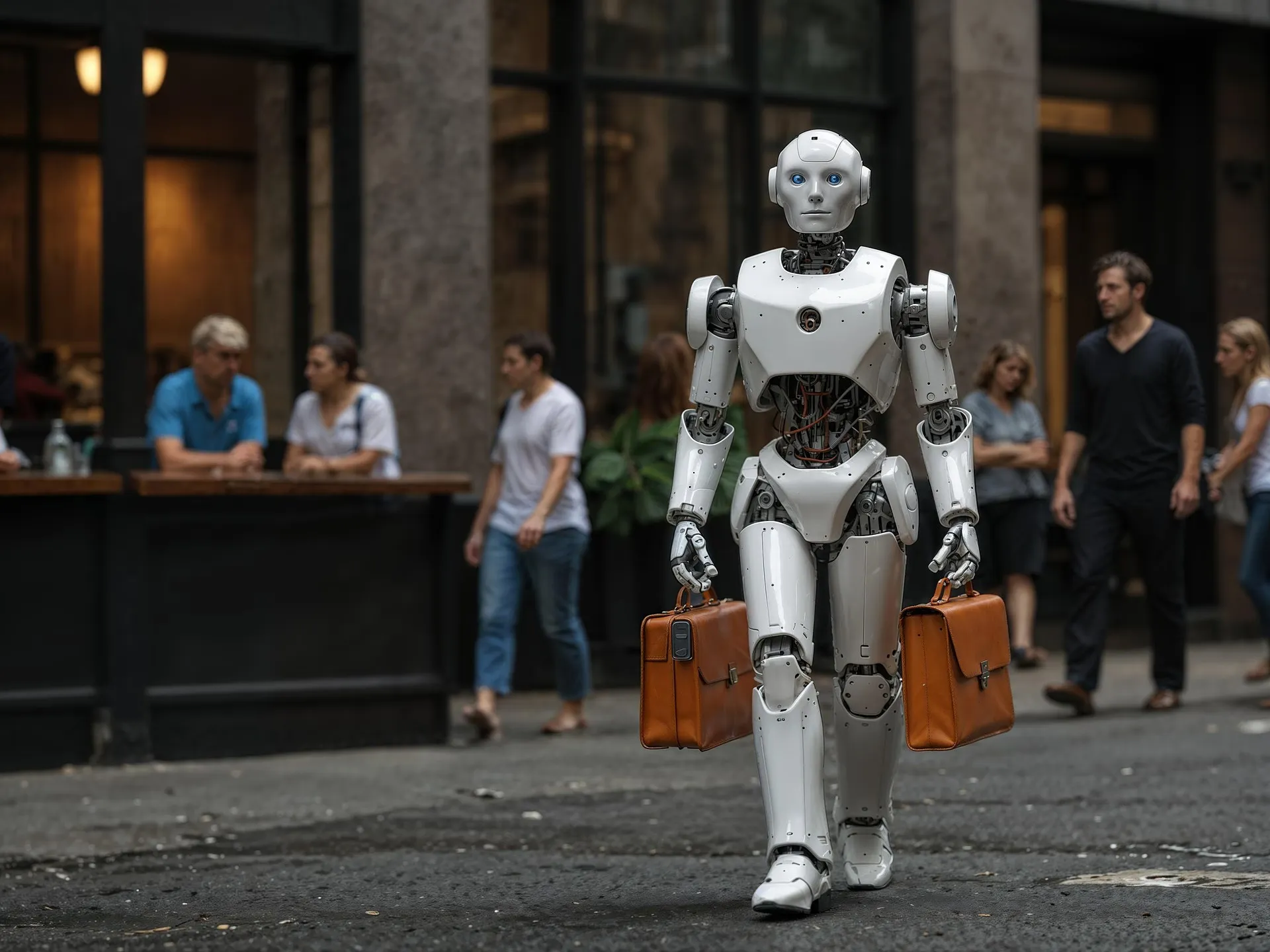
What are the primary limitations of artificial intelligence in work?
The primary limitation of artificial intelligence in work lies in the fundamental gap between task execution and strategic decision-making. While AI can process vast amounts of data and perform repetitive actions with high precision, it lacks the cognitive framework required to determine the direction of a project or the necessity of a specific goal. This distinction is not merely theoretical; it is a practical boundary that defines the current utility of generative models.
An OpenAI report analyzing research activities throughout the year highlights a stark contrast between these two domains. By examining all categories of research activity from the beginning of the year, the company's researchers have identified how AI agents are utilized. While every category of activity has seen an increase in usage, there is a massive discrepancy between the volume of work performed through execution and the volume of work performed through decision-making. AI agents are highly efficient at following instructions and generating outputs, but they cannot independently decide which research paths are worth pursuing or which outcomes are meaningful.
The Execution vs. Decision Gap
In the current technological landscape, work can be broadly categorized into two streams: the "doing" and the "deciding." AI has proven to be a master of the former. It can write code, debug errors, and monitor computational processes with minimal human input. However, the "deciding" aspect involves complex variables that AI cannot yet replicate, such as understanding organizational culture, navigating social compromises, and managing long-term risk. This gap represents the current frontier of human-AI collaboration.
Which professional sectors are seeing the most AI automation?
Programming and technical support are currently experiencing the highest levels of automation due to the structured and measurable nature of these tasks. According to the OpenAI findings, the most significant benefits from automation this year have been observed in several specific technical areas that rely on clear logic and repeatable processes.
- Software Development: The writing of code and the correction of existing errors.
- Technical Support: The resolution of routine queries and system-related issues.
- Computational Monitoring: The oversight of the execution of complex digital processes.
- Data Analysis: The interpretation of results and the identification of patterns within datasets.
These tasks are highly measurable, which is a key driver for their automation. As noted by Business Insider, companies can easily track whether code has been written, if a product has been delivered, or if a bug has been fixed. This inherent measurability makes these roles prime candidates for AI integration. When a task can be quantified through objective digital metrics, it becomes significantly easier to delegate to an automated system. This allows organizations to scale their output without a proportional increase in human labor for routine maintenance and execution.
Why does strategic planning remain a human domain?
Strategic planning remains a human domain because it requires a level of contextual understanding and risk tolerance that current AI models do not possess. OpenAI reports that high-level strategic design accounts for a minimal percentage of the total tokens produced by AI agents. This suggests that while the "engine" of production (the tokens) is increasingly driven by AI, the "steering" (the strategic design) remains predominantly human.
Deciding where to invest resources, how to set priorities, or when to abandon a failing project requires more than just pattern recognition. It requires a sense of purpose and an understanding of the broader environment. Humans provide the necessary judgment to determine if an idea is merely technically feasible or if it is strategically valuable within a specific context. Without human direction, AI is a powerful tool without a destination.
The role of human judgment in research
In research environments, the human element acts as the compass for AI's engine. OpenAI emphasizes that humans continue to define research priorities and judge which results are worth pursuing. This includes the critical ability to decide whether to scale a project, pause development, or pivot to a completely different system architecture. While the AI might generate the data or the code, it is the human researcher who decides if the results warrant a change in direction or a full-scale investment of resources.
How is the value of human labor shifting?
The value of human labor is shifting from the execution of routine tasks toward the mastery of high-level decision-making and critical judgment. As AI takes over the "heavy lifting" of data processing and code generation, the human worker's role is being redefined. We are moving away from a model where value is derived from the ability to perform a task, and toward a model where value is derived from the ability to direct the tools that perform the task.
This shift implies that the most valuable skills in the future economy will not be those related to technical execution alone, but rather the ability to guide AI tools toward meaningful outcomes. The capacity to understand nuance, manage human relationships, and take calculated risks will become the new benchmarks of professional excellence. The worker of the future is less of a manual operator and more of a supervisor and strategist.
The evolution of professional skills
As the barrier to technical execution lowers due to AI assistance, the competitive advantage moves to those who can ask the right questions and interpret the results through a lens of human experience. The ability to navigate ambiguity and make decisions in the face of incomplete or conflicting information is becoming the most sought-after asset in the workforce. In an era of automated execution, the ability to provide intent and direction is the ultimate professional differentiator.
FAQ: Limitations of artificial intelligence in work
What tasks is AI best at performing?
AI is most effective at execution-based tasks that are highly structured and measurable. This includes programming, technical support, monitoring computational processes, and analyzing data results. These tasks allow AI to leverage its ability to process information and follow logic patterns without needing to understand the broader strategic intent.
Why can't AI make strategic decisions?
AI lacks the ability to understand context, social nuances, and the long-term implications of risk. While it can process data, it cannot navigate the complex human compromises or the environmental atmosphere required to decide which projects deserve investment or which priorities should be set.
How will my job change because of AI?
Your job is likely to shift from performing repetitive or technical execution tasks to overseeing the AI that performs them. The focus will move toward decision-making, setting priorities, and ensuring that the AI's outputs align with human goals and strategic objectives.
Is programming becoming obsolete due to AI?
Programming is not becoming obsolete, but it is being automated at a high rate. While AI can write and fix code, humans are still required to decide what needs to be built, how it fits into a larger system, and whether the resulting code meets strategic needs.
What skills will be most valuable in an AI-driven world?
The most valuable skills will be high-level decision-making, strategic planning, critical judgment, and the ability to manage risk. As technical execution becomes easier, the capacity to provide direction, context, and purpose to AI tools will become the primary driver of professional value.
Key takeaways
- AI excels at execution-based tasks like programming and technical support but struggles with strategic decision-making.
- Human labor is shifting from performing routine tasks to managing high-level priorities and resource allocation.
- The most measurable tasks, such as code debugging, are the most susceptible to AI automation.
- Strategic planning remains a human responsibility because it requires contextual understanding and risk assessment.
Conclusion
The integration of artificial intelligence into the workforce does not signal the end of human utility, but rather a profound evolution of it. As the OpenAI report demonstrates, the division of labor is becoming clearer: AI handles the rapid, scalable execution of technical tasks, while humans retain control over the strategic direction. The future belongs to those who can bridge this gap, moving away from being mere executors and toward becoming the decisive architects of an AI-augmented world. Understanding this shift is essential for navigating the changing professional landscape.







