
What are the global exposure levels for ozone pollution in 2026?
More than one-third of the world's population, specifically 34%, was exposed to extremely high levels of ground-level ozone during 2026. Data released by the European Copernicus service indicates a severe global distribution of air quality issues, where the breakdown of exposure is highly skewed toward poor and very poor categories.
The analysis, conducted by the Copernicus Atmosphere Monitoring Service (CAMS), provides a granular view of how many people are breathing unsafe air. Beyond the 34% in the highest risk category, an additional 17% of the global population breathed air of "very poor" quality. This means that over half of the global population was breathing air that fell into the two most hazardous categories.
Conversely, the proportion of people living in areas with "good" ozone levels has dwindled to just 5%, while another 15% of the population experienced "acceptable" conditions. This statistical reality underscores a growing environmental crisis. The disparity between those in safe zones and those in high-risk zones suggests that the benefits of past air quality regulations are being offset by new climatic and industrial pressures.
Which regions are most affected by ozone exposure?
Asia emerged as the most heavily impacted region, with 53% of its population exposed to "extremely high" levels of ozone during the first eight months of 2026, according to the CAMS analysis.
The geographic distribution of ozone pollution is uneven, reflecting local industrial activity, climate patterns, and wildfire frequency. While Asia faces the highest percentage of extreme exposure, other major inhabited regions also reported significant degradation in air quality:
- North America: Two-thirds of the population were exposed to air quality ranging from "poor" to "very poor."
- Europe: Approximately 45% of the population experienced similar hazardous conditions.
- Global Trend: The pollution is not localized, as it travels across continents and oceans.
Laurent Ruig, Director of CAMS, emphasized that air pollution does not respect national borders. The pollutant can travel thousands of kilometers, meaning that the air quality in a specific region is often dictated by emissions produced far from its source, eventually worsening air quality much further away from the original point of emission.
The transboundary nature of atmospheric pollutants
The movement of ozone and its precursors across oceans and continents makes it a uniquely difficult challenge for national regulators. Because ozone is a secondary pollutant—formed in the atmosphere rather than emitted directly—the interaction between local emissions and long-range transport creates a complex web of responsibility and risk.
As Laurent Ruig noted, the phenomenon is made more severe because pollution "does not stop at borders." It traverses thousands of kilometers, crossing both continents and oceans. This transboundary movement means that even regions with strict local emission controls may still suffer from high ozone levels if neighboring regions or distant industrial hubs are producing high levels of precursors.
How is ground-level ozone formed and why is it increasing?
Ground-level ozone is a secondary atmospheric pollutant formed through chemical reactions between nitrogen oxides (NOx) and volatile organic compounds (VOCs) in the presence of sunlight.
Unlike the protective ozone layer in the upper atmosphere, ground-level ozone is a harmful component of smog. The formation process relies on several key precursors and environmental catalysts:
- Nitrogen Oxides (NOx): Primarily released through road and maritime transport, industrial activities, and large-scale wildfires.
- Volatile Organic Compounds (VOCs): Largely stemming from industrial processes and the combustion of fossil fuels.
- Ultraviolet (UV) Radiation: Sunlight acts as the engine that triggers the chemical reaction between NOx and VOCs.
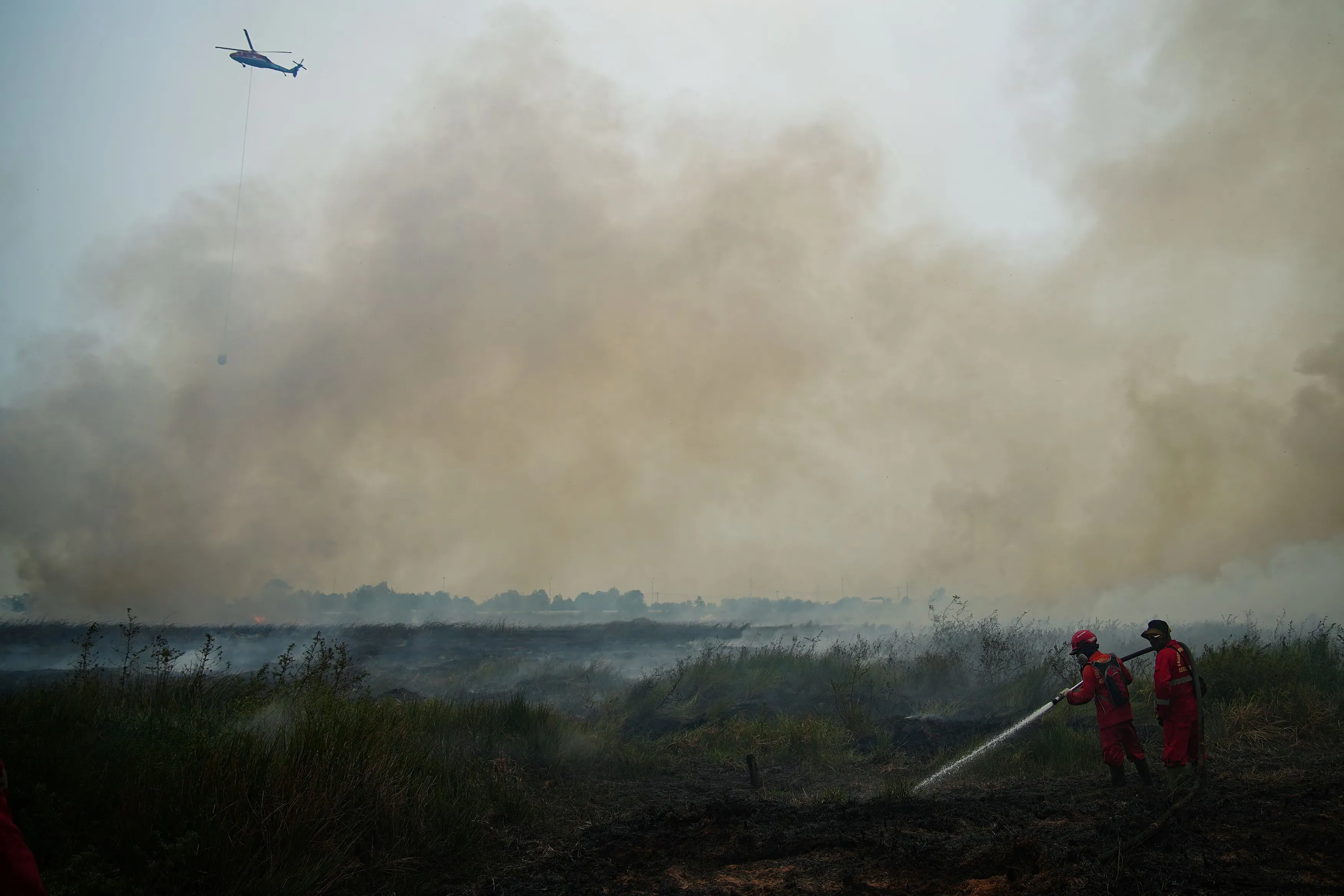
The 2026 data suggests that environmental factors are accelerating this formation. Record-breaking heatwaves and widespread wildfires across Europe and North America have provided both the chemical precursors and the thermal energy required to spike ozone concentrations. These extreme weather events, combined with human-driven emissions, highlight a tightening link between climate change and atmospheric pollution. The heatwaves and fires serve as a catalyst, spreading the impact far beyond the immediate areas where the fires or emissions originated.
What are the health and environmental impacts of ozone?
Ozone can penetrate deep into the human respiratory system, causing immediate physical distress and long-term health complications.
Exposure to high concentrations of ozone is linked to several acute and chronic health issues. Because the gas is highly reactive, it can irritate the mucous membranes and lung tissue. Common symptoms reported include coughing, a burning sensation in the eyes, and shortness of breath. For vulnerable populations, such as those with pre-existing conditions, the risks are even more severe, as ozone can trigger asthma attacks and worsen existing respiratory diseases.
The broader public health implications are staggering. Ian Manahan of the European Environment Agency (EEA) noted in a press briefing that air pollution is among the most significant environmental risks to human health. According to the EEA, air pollution causes approximately 180,000 premature deaths annually on a global scale, with roughly 60,000 of those deaths specifically attributed to ozone pollution.
Ecological risks and ecosystem stability
Beyond human health, the Copernicus service warns that ozone remains a major environmental threat to global ecosystems. The service emphasizes that ozone is a "great environmental risk" for both human health and the natural world.
While the source material focuses on the complexity of the challenge, it highlights that ozone remains a persistent threat to ecosystems. The interplay between high ozone levels and the environment creates a situation where the biological stability of various regions is at risk, mirroring the severe challenges faced by human populations.
FAQ: Ozone Pollution 2026
What is the difference between good and bad ozone?
Good ozone is located in the stratosphere, where it protects Earth from harmful UV radiation. Bad ozone, or ground-level ozone, is a pollutant found near the surface that is created by chemical reactions between sunlight and emissions, posing significant risks to human health and plants.
How does climate change affect ozone levels?
Climate change increases ozone levels by creating more frequent and intense heatwaves, which speed up the chemical reactions that form ozone. Additionally, climate-driven wildfires release massive amounts of nitrogen oxides and organic compounds, providing the raw materials for ozone production.
Who is most at risk from ozone exposure?
While ozone affects everyone, individuals with respiratory conditions like asthma are at much higher risk. The gas can exacerbate asthma attacks and worsen existing respiratory diseases. Additionally, the general population is at risk due to the high frequency of exposure in 2026.
Can ozone pollution be controlled locally?
Local control is possible by reducing nitrogen oxides from vehicles and industrial emissions, but it is limited by the transboundary nature of the gas. Because ozone can travel thousands of kilometers, local air quality is often influenced by pollutants emitted in other countries or regions.
What were the main causes of the 2026 ozone spike?
The spike in 2026 was driven by a combination of human activities and extreme weather. Record heatwaves and massive wildfires in Europe and North America provided the heat and chemical precursors, while industrial and transport emissions continued to supply nitrogen oxides and volatile organic compounds.
Key takeaways
- 34% of the global population was exposed to extremely high ozone levels in 2026.
- Asia faced the highest regional impact, with 53% of its population in extreme exposure zones.
- Ozone exposure is linked to approximately 60,000 premature deaths annually.
- Only 5% of the global population lived in areas with "good" ozone quality.
The evolving challenge of atmospheric management
Despite significant improvements in air quality regulations over recent decades, particularly in Europe, ozone remains a persistent and complex global threat. The 2026 findings demonstrate that environmental gains can be rapidly undermined by the intensifying effects of climate change. As heatwaves and wildfires become more frequent, the intersection of thermal extremes and chemical pollution creates a new paradigm of risk. Addressing this requires not only local emission reductions but a coordinated global strategy to mitigate the climatic drivers that fuel ozone formation.







