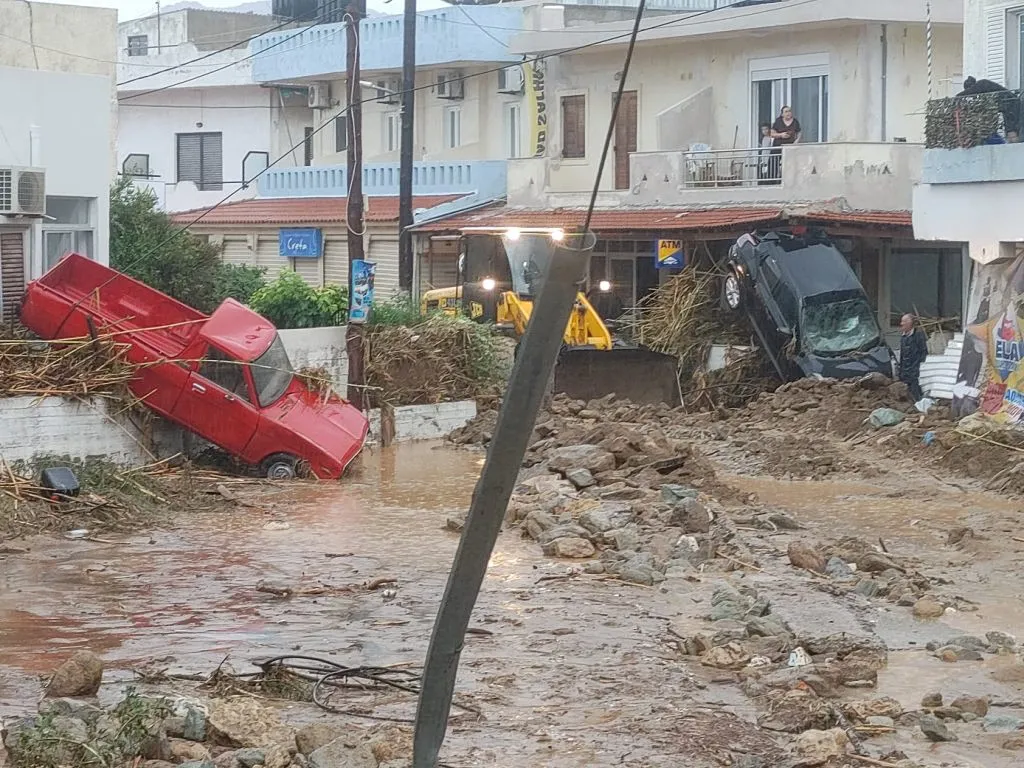
Why does urban development exacerbate flood consequences?
Urban development significantly increases the severity of flooding because many cities are being built without regard for established flood risk zones. A recent pan-European study, involving experts such as Professor Anastasios Stamou from the National Technical University of Athens and Assistant Professor Michalis Diakakis from the University of Athens, highlights a systemic failure in spatial planning. The research demonstrates that the scale of a catastrophe is not merely a function of extreme weather intensity but is heavily dictated by how much infrastructure is placed in vulnerable areas.
The study notes a dangerous trend where development continues to expand into or near high-risk zones. This is particularly evident in densely populated urban environments where the landscape has been modified in ways that prevent natural water absorption. Instead of retreating from risk, many regions are doubling down on exposure through continuous construction.
The danger of commercial expansion in river basins
One of the most alarming patterns identified by the researchers is the construction of large-scale commercial facilities near riverbeds. These structures often include extensive underground parking lots, which create massive concentrations of people and assets in areas highly susceptible to sudden water rises. When these zones are occupied, the potential for human casualties and economic loss increases exponentially compared to undeveloped land.
What are the five critical issues identified in the study?
The research identifies five transversal challenges that affect flood management across the European continent. These issues were analyzed by looking at diverse economic contexts, ranging from wealthy nations like Germany and the United Kingdom to regions with different resource levels, to find commonalities in how disasters manifest.
- Increased frequency of river and flash floods: There is a rising trend in both slow-rising river floods and sudden, violent flash floods in urban centers.
- Urbanization and absorption deficits: Rapid urban growth is replacing natural soil with impermeable surfaces, drastically reducing the ground's ability to absorb rainwater.
- Climate-driven risk profiles: Extreme weather events, intensified by climate change, are altering the fundamental nature of flood risks.
- Warning system deficiencies: There are significant gaps in the ability to disseminate timely and understandable warnings to the general public.
- Local disparities in preparedness: There is a marked difference in how various regions manage risk and their capacity to respond to sudden events.
How do early warning systems fail to protect citizens?
Early warning systems often fail not because the technology is absent, but because the communication fails to reach or persuade the intended audience. Even in countries with sophisticated monitoring infrastructure, such as Italy, Spain, or the UK, the transition from a technical alert to a meaningful public response is often broken. This gap can lead to significantly worsened outcomes during a crisis.
According to Professor Diakakis, the effectiveness of these systems is closely tied to the level of public education regarding flood risks. If citizens do not understand the severity of a warning or do not trust the source, they are less likely to take life-saving actions. A warning that is delayed, poorly phrased, or culturally disconnected from the local population fails in its primary mission of disaster mitigation.
What factors determine the impact of a flood event?
The study reveals that two regions facing identical weather phenomena can experience vastly different outcomes based on several socio-economic and structural factors. The impact of a flood is a complex calculation involving more than just the volume of water.
Key variables that dictate the extent of damage and the speed of recovery include:
- Population exposure: The number of people living in the direct path of the flood.
- Degree of urbanization: How much of the area is covered by non-absorbent materials like concrete.
- Infrastructure integrity: The current state and resilience of existing drainage and protection systems.
- Institutional readiness: The ability of local governments and emergency services to coordinate a response.
- Economic capacity: The financial resources available to a nation or region for both immediate relief and long-term reconstruction.
What measures are required for resilient flood management?
To build resilience, the study suggests that Europe must move away from reactive crisis management toward a proactive, multi-layered strategy. A single approach is insufficient; for example, measures designed to manage a slow-rising river flood are often ineffective against a sudden flash flood. A holistic model is required to address the diverse nature of modern hydrological risks.
The researchers advocate for a combination of the following pillars:
- Integrated spatial planning: Legally enforcing flood zones and ensuring that new construction is prohibited in high-risk areas.
- Advanced flood protection works: Investing in physical infrastructure designed to manage water flow and volume.
- Enhanced warning protocols: Developing communication channels that are both rapid and easily understood by diverse populations.
- Improved institutional coordination: Strengthening the links between meteorological services, local authorities, and emergency responders.
Ultimately, the study emphasizes that a society's ability to recover depends on its willingness to update legal frameworks, building regulations, and preparedness plans. Those that continue to build using outdated methods will inevitably face more frequent and severe disasters.
Frequently asked questions
Does climate change make floods more frequent?
Yes, the study indicates that climate change is a primary driver in altering the characteristics of flood risks. Extreme weather events are becoming more frequent and intense, which changes the traditional profiles of flood zones and necessitates more adaptive management strategies for European cities.
Why is urbanization a problem for flood control?
Urbanization replaces natural landscapes with impermeable surfaces like asphalt and concrete. This reduces the ground's ability to absorb rainwater, leading to increased surface runoff. This runoff contributes to more frequent flash floods and puts immense pressure on urban drainage systems that were not designed for such volumes.
Can technology alone solve the flooding problem?
No, technology is only one part of the solution. While advanced monitoring and early warning systems are vital, the study shows they must be paired with effective communication, updated building regulations, and careful spatial planning to prevent people and assets from being placed in harm's way.
How can cities protect themselves from flash floods?
Protecting against flash floods requires specific measures tailored to rapid water rises, such as improved urban drainage, the preservation of green spaces to aid absorption, and highly responsive early warning systems that can reach citizens in minutes rather than hours.
What is the role of spatial planning in flood prevention?
Spatial planning is the most effective long-term prevention tool. By identifying high-risk zones and strictly regulating or prohibiting construction in those areas, governments can prevent the creation of new vulnerabilities and reduce the potential for massive economic and human loss.
Key takeaways
- Flood disaster magnitude is driven by urban exposure and poor spatial planning rather than just rainfall intensity.
- Rapid urbanization reduces natural water absorption, significantly increasing the frequency of urban flash floods.
- Effective early warning systems require both technical accuracy and high levels of public education to be successful.
- Resilience depends on updating legal frameworks and building regulations to match current climate-driven risks.
- A one-size-fits-all approach fails because river floods and flash floods require different mitigation strategies.
Conclusion
The findings of this pan-European study serve as a critical warning for policymakers across the continent. As climate change intensifies extreme weather patterns, the traditional methods of urban expansion and disaster response are proving inadequate. The research underscores that the true cost of flooding is often a man-made consequence of ignoring risk zones in favor of rapid development. To mitigate future catastrophes, European nations must integrate rigorous spatial planning with sophisticated warning systems and adaptive infrastructure, ensuring that urban growth does not come at the expense of public safety.