
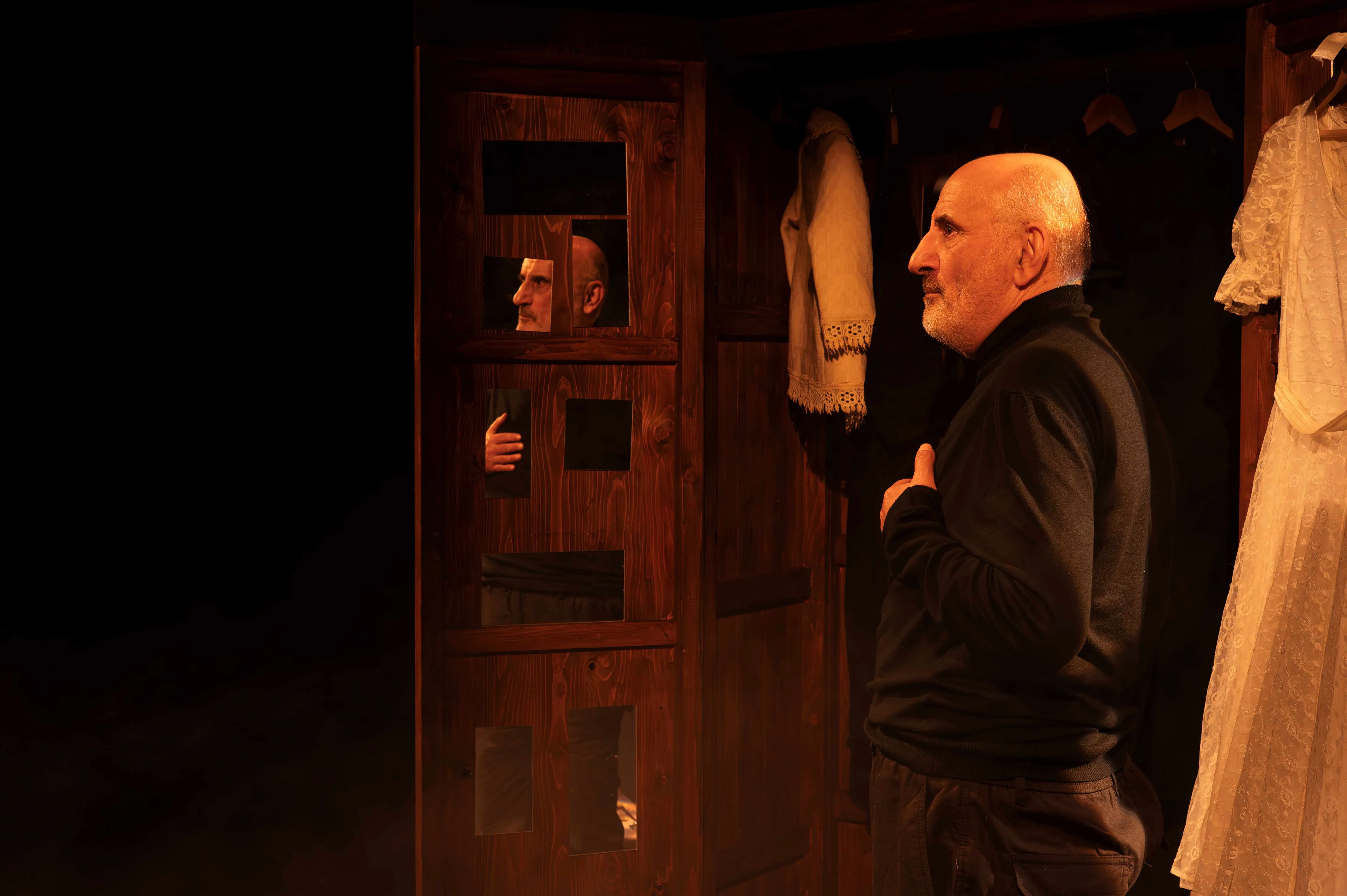
What is the story behind the Rodafnon play?
The Rodafnon play follows the turbulent and deeply personal journey of a Pontic woman named Parthena, whose life is irrevocably uprooted by the historical population exchange. Her story begins in a village within the region of Trebizond, a setting that represents the ancestral heart of the Pontic people. However, the narrative shifts dramatically as she is displaced, finding herself in a completely foreign reality within a village in Western Macedonia.
This movement from the shores of the Black Sea to the landscapes of Macedonia serves as a profound microcosm for the broader Pontic experience. It is a story that blends individual struggle with the collective trauma of displacement, capturing the essence of a people forced to redefine themselves in new lands. The play navigates the complexities of this transition, illustrating how a person's identity is tied to the soil they leave behind.
At the heart of the drama is Parthena's singular, deeply symbolic dream: to plant a rosebush (rodafnon) in her new courtyard using soil brought directly from her ancestral home in Trebizond. This act is far more than a simple gardening endeavor; it is a desperate, symbolic attempt to anchor the memory of Pontus within a foreign landscape. Through this rosebush, she seeks to ensure that her heritage and the very essence of her lost homeland take root and flourish, even in the midst of exile.
The production captures the inherent duality of the Pontic condition—the constant interplay between laughter and tears, and the exhausting daily struggle to maintain dignity amidst overwhelming loss. Through Parthena's eyes, the audience witnesses the intense tension between the cherished memories of a lost paradise and the harsh, practical requirements of survival in an unfamiliar land. It is a narrative that explores how one carries a home within oneself when the physical home is gone.
Who are the key figures behind this production?
The production is led by the director Themis Moumoulidis, who has undertaken a meticulous and fresh reading of the original literary material. Rather than a standard adaptation, Moumoulidis seeks to create a multi-sensory experience. He aims to immerse the audience in the specific linguistic, sonic, and historical textures of the Pontic ancestors, creating a journey that transcends simple storytelling to reach a deeper emotional truth.
The central, emotionally demanding role of the author's grandson is performed by Takis Vamvakidis. Vamvakidis is not merely an actor in this production; he is a vital link to the subject matter. As an actor of Pontic descent, he brings an authentic, lived connection to the material that is essential for a story of such sensitivity. His mastery of the Pontic dialect allows him to navigate the nuances of the characters' speech, ensuring that the linguistic heritage of the people is represented with accuracy and respect.
Vamvakidis' performance is designed to act as a guide for the audience, leading them through a landscape of profound human sensitivity and historical weight. His portrayal aims to bridge the gap between the historical record and the human heart, making the vast scale of Pontic history feel intimate and immediate. The collaboration between Moumoulidis' directorial vision and Vamvakidis' authentic performance forms the core strength of this theatrical endeavor.
The artistic vision of Themis Moumoulidis
Themis Moumoulidis does not simply stage a book; he seeks to reconstruct an entire era. His directorial approach focuses on the reconstruction of a cultural world through the senses. By prioritizing the sounds, the specific rhythms of speech, and the unique language of the Pontic people, the director seeks to bridge the gap between historical fact and emotional truth. This approach transforms the stage into a space where history is not just told, but felt.
Moumoulidis' vision is to bring the 2,000-year-old civilization of the Pontic Greeks to life through modern stagecraft, ensuring that the production functions as both a piece of high theatre and a significant cultural preservation effort. He delves deep into the history of the ancestors to ensure that every element of the production—from the dialogue to the atmosphere—contributes to a sense of a "travel through space and time."
This immersive method aims to transport the audience into the very soul of the Pontic people, making their joys, their sorrows, and their immense capacity for survival tangible. By focusing on the linguistic nuances, Moumoulidis ensures that the play honors the specific cultural identity that has survived through generations of diaspora. It is a vision that seeks to make the invisible threads of memory visible to a modern audience.
How does the play address Pontic history and identity?
The play is based on the acclaimed work by Kostas Diamantidis, who is recognized as one of the most prominent and powerful contemporary Pontic authors. Diamantidis provides a profound literary foundation for the production, offering a narrative that is described as a "testament of the soul." His writing explores the entire trajectory of the Pontic people, moving through the vast stretches of time from their ancestral lands through the periods of persecution and genocide, and finally into the modern era of the diaspora.
Thematically, the production is deeply concerned with the necessity of memory as a prerequisite for historical continuity. The play posits that for a culture to survive across generations, the preservation of its unique identity and memory is an absolute requirement. Without this active remembrance, the thread of history risks being broken by the forces of displacement and time.
The "Rodafnon" (the rosebush) serves as the central metaphor for this survival. It represents a living, breathing connection to a past that refuses to be erased by shifting borders or forced population movements. The play serves as a testament to the resilience of the Pontic spirit, acting as a hymn to life, to the strength required for survival, and ultimately, to the power of love. It is a narrative that acknowledges the pain of the past while celebrating the enduring strength of a culture that remains deeply rooted in the souls of its descendants.
What are the plans for the Rodafnon tour?
Following its highly successful and acclaimed performances in Athens and Thessaloniki during the previous winter, the production is now entering an expansive new phase. The play is scheduled for a comprehensive winter tour, which will see it travel to various cities across Greece. This expansion is a response to the significant interest the play has garnered and a desire to bring this important story to a broader domestic audience.
The tour is not limited to Greece; the production is also set to travel internationally. This decision is deeply significant, as it acknowledges the global reality of the Pontic diaspora. By taking the play to international stages, the production seeks to connect with Pontic communities living far from their historical origins, providing a shared cultural experience that honors their heritage. This international reach ensures that the themes of displacement, memory, and the search for roots resonate with those living in the global diaspora.
The tour represents a concerted effort to reconnect the scattered elements of Pontic identity through the medium of theatre. It is an opportunity for the story of Parthena and the collective history of the Pontic people to be shared on a much wider scale, reinforcing the bonds of a community that has been spread across the world but remains united by its shared memory.
Frequently asked questions
Who is the lead actor in the Rodafnon play?
Takis Vamvakidis stars in the production. As an actor of Pontic descent and a skilled practitioner of the Pontic dialect, he brings an essential layer of authenticity to the role of the author's grandson, guiding the audience through the play's emotional and historical complexities.
Where can the play be performed?
The play is returning to the Main Stage of the Apo Michanis Theatre. Following its run there, it will embark on a winter tour that includes various cities within Greece and several international locations, specifically targeting the global Pontic diaspora.
What is the source material for the play?
The play is an adaptation of the literary masterpiece "Rodafnon" by Kostas Diamantidis. Diamantidis is a leading contemporary Pontic writer whose work is celebrated for its ability to capture the history, the genocide, and the enduring spirit of the Pontic Greek people.
Who directed the current production?
The production is directed by Themis Moumoulidis. He has created a new stage reading of the work that focuses on creating an immersive experience through the use of language, sound, and historical context.
What are the central themes of the play?
The central themes include the vital necessity of preserving cultural memory for historical continuity, the trauma of the population exchange, the resilience of the Pontic people, and the symbolic connection between an ancestral homeland and a new life, represented by the planting of the rosebush.
Key takeaways
- The Rodafnon play returns to the Apo Michanis Theatre for its second year.
- Takis Vamvakidis leads the cast, bringing his Pontic heritage and dialect expertise to the central role.
- The production is a theatrical adaptation of the significant literary work by Kostas Diamantidis.
- A comprehensive winter tour is planned, covering both Greek cities and international venues.
- The play serves as a hymn to survival, exploring the deep connection between memory and identity.
The enduring legacy of Pontic memory
The return of the Rodafnon play signifies much more than a simple theatrical revival; it is a vital cultural event that reinforces the importance of historical continuity. By translating the profound literary insights of Kostas Diamantidis into a live, sensory experience, the production ensures that the struggles, the triumphs, and the very identity of the Pontic people remain visible and vibrant in the modern consciousness.
As the production moves from the stages of Athens and Thessaloniki to international venues, it carries with it an essential and universal message. Much like the symbolic rosebush that Parthena seeks to plant, memory is revealed to be a vital, living force—one that is necessary for the survival of identity in an ever-changing world. The play stands as a powerful reminder that while lands may be lost, a culture that keeps its memory alive can never truly be uprooted.







