How large is the financial gap in the Greek Super League?
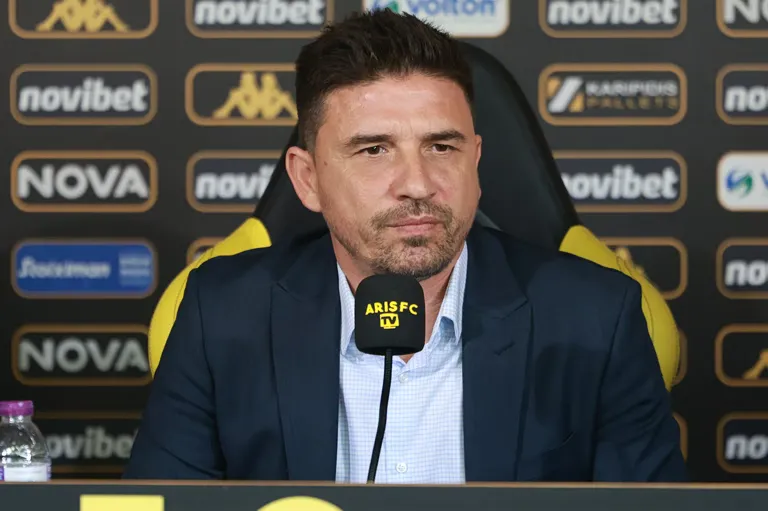
The economic divide between the elite clubs and the rest of the Greek football hierarchy is stark, with top-tier budgets dwarfing those of competitive mid-sized clubs. Ruben Reyes, currently in his second season with Aris FC, noted that while significant investments have entered the market following the economic crisis of 2015 and 2016, the concentration of wealth remains at the summit.
According to Reyes, the primary powerhouses of Greek football—Olympiacos, Panathinaikos, and AEK—maintain financial resources in the vicinity of €80 million. In contrast, Aris FC operates within a much tighter bracket of €12 million to €14 million. Despite this massive numerical difference, Reyes maintains that Aris remains a competitive force capable of challenging for high positions.
The impact of historical economic shifts
The current financial structure of the Super League is a direct consequence of the post-crisis recovery period. Reyes highlighted that the influx of capital seen in recent years has fundamentally changed the league's landscape compared to the era of the Greek financial crisis. However, this investment has not been distributed evenly, creating a tiered system where a handful of clubs possess the capital to dominate both domestic and European competitions.
What are the competitive goals for Aris FC?
Aris FC aims to bridge the gap through consistent performance and strategic targeting of European qualification. While the financial disparity is acknowledged, the club views itself as part of a secondary tier of power alongside PAOK, trailing only the three largest clubs.
For the Thessaloniki-based side, success is measured by specific league placements. Reyes stated that securing a fifth-place finish is considered a mandatory obligation for the club, whereas achieving fourth place would be viewed as a genuine success. The ultimate challenge for the club is to find ways to overcome the structural advantages held by the €80 million clubs.
Revenue drivers and stadium attendance
The club's ability to compete is heavily influenced by its matchday revenue and fan engagement. Aris currently maintains a base of approximately 9,000 season ticket holders. However, the financial ceiling of the club fluctuates based on on-pitch results; during successful runs, attendance can surge to as high as 24,000 spectators, providing a vital boost to the club's operational capacity.
How does the Super League compare tactically to La Liga?
The Greek Super League is characterized by high intensity and rapid transitions, differing significantly from the tactical rigidity often seen in Spanish football. Reyes, drawing on his experience, noted that the Greek game relies heavily on physical output and the ability to exploit space.
In his analysis, Reyes observed that while Spanish football places a premium on tactical positioning and structured play, the Super League features larger distances between defensive and attacking lines. This creates a style of play that demands specific player profiles: those capable of running with the ball and breaking through defensive blocks via sheer momentum and speed. He suggested that the current Aris squad, featuring players like Ratsidis, Hongla, and Soutalo, possesses the quality to compete in the Spanish top flight, potentially even fighting for La Liga survival.
The development of Greek football academies
Beyond the senior level, there is a growing emphasis on youth development within Greece. Reyes acknowledged that while there is significant room for improvement, investments in academies are beginning to yield visible results. The transition from youth ranks to first-team football remains a difficult hurdle for young Greek players, but the pathway is becoming more established through increased structural investment.
What is the future outlook for Ruben Reyes?
The professional future of Ruben Reyes remains uncertain as his current contract approaches its conclusion. While he has expressed immense satisfaction with his tenure at Aris FC, he has not ruled out a return to his former club, Real Oviedo.
Reyes reflected on his eleven-month period at Real Oviedo between 2021 and 2022, where he contributed to the club's modernization and helped facilitate the entry of the Pachuca group into the club's shareholding structure. Although he has maintained communication with Jesús Martínez, contractual complexities have prevented a reunion. With his contract set to expire this year, Reyes remains open to various professional directions.
Key takeaways
- The top three Greek clubs operate with budgets of roughly €80 million.
- Aris FC manages an annual budget between €12 million and €14 million.
- A fifth-place finish is the minimum requirement for Aris FC.
- Super League play is defined by high intensity and large gaps between lines.
- Aris can reach up to 24,000 spectators during successful periods.
Frequently asked questions
How much does Aris FC spend compared to Olympiacos?
Aris FC operates with a budget of €12 million to €14 million. This is significantly lower than Olympiacos, who, along with Panathinaikos and AEK, maintains a budget of approximately €80 million, according to Ruben Reyes.
What is the main tactical difference in the Super League?
The Super League is characterized by high intensity and rapid transitions. Unlike the tactical emphasis in Spain, the Greek league features larger distances between lines, requiring players who can run with the ball to break defensive structures.
What are the performance targets for Aris FC?
Aris FC views a fifth-place finish in the league as a mandatory obligation. Achieving a fourth-place position is considered a successful season for the club given their current financial standing.
How does attendance affect Aris FC's finances?
Attendance is highly dependent on results. While the club has 9,000 season ticket holders, successful periods can drive attendance up to 24,000, which significantly impacts the club's revenue and competitive potential.
Is youth development improving in Greece?
Yes, investments in Greek academies are showing gradual results. However, Reyes notes that it remains difficult for young players to successfully transition into first-team environments, suggesting there is still room for systemic improvement.
Conclusion
The financial landscape of the Greek Super League is defined by a massive disparity between the elite clubs and the rest of the field. While Aris FC operates with a fraction of the budget utilized by Olympiacos or AEK, the club continues to maintain high competitive standards and clear performance objectives. The tactical nature of the league, focused on intensity and transition, provides a unique environment for players. As Ruben Reyes's contract nears its end, the stability and ambitions of Aris FC remain central to the league's evolving competitive hierarchy.