
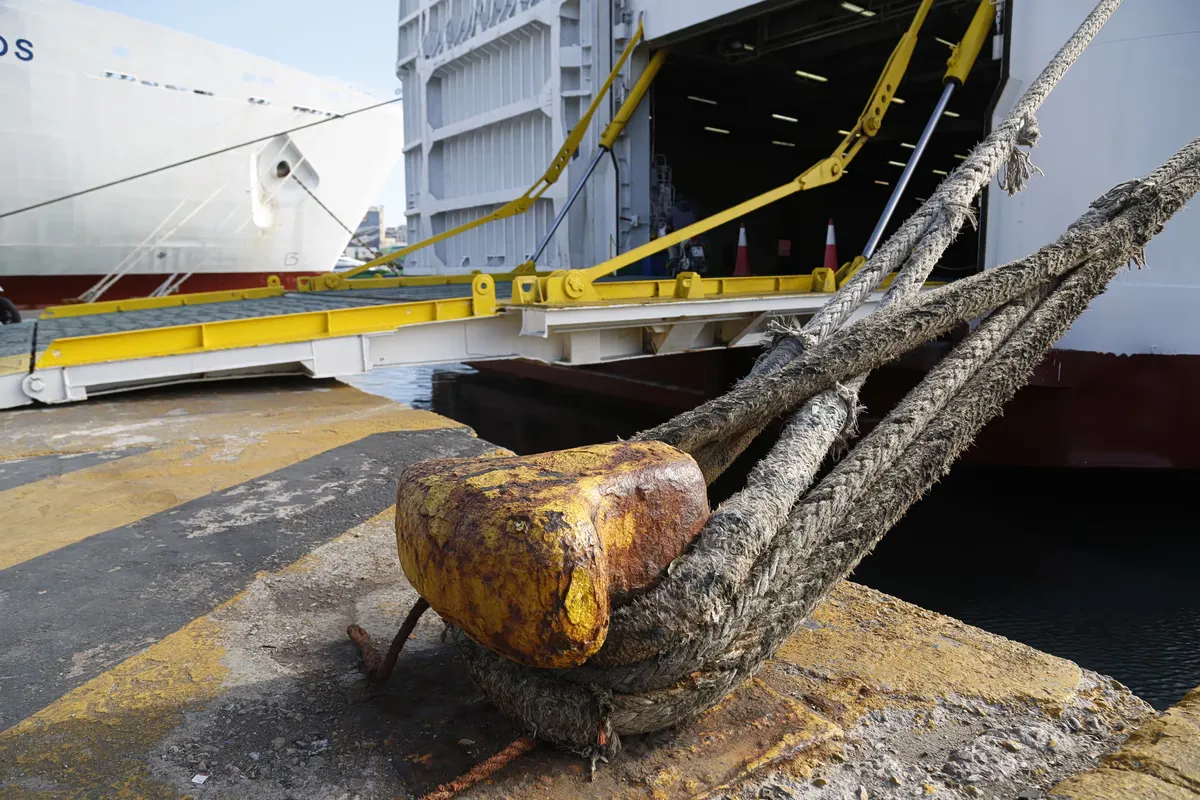
Severe weather triggers maritime restrictions
High-velocity winds reaching up to 9 Beaufort have necessitated a formal sailing ban in several key Greek maritime hubs. The restrictions are currently in effect for the ports of Piraeus, Rafina, and Lavrio. These measures were prompted by the arrival of powerful winds that threaten the safety of smaller vessels and high-speed transport across the Saronic Gulf and surrounding waters.
The decision to limit maritime activity is a direct response to the atmospheric instability currently affecting the region. As wind speeds climb toward the 9 Beaufort threshold, the sea state becomes increasingly hazardous for standard passenger operations, particularly for those relying on speed and stability in open waters.
Impact on vessel operations and hydrofoils
Hydrofoils remain moored and out of service as a direct consequence of the current weather alerts. According to the Hellenic Coast Guard, maritime routes in the Saronic Gulf are currently restricted to conventional vessels only. While larger, more stable ships continue to operate, the lighter and more sensitive hydrofoil services have been suspended to prevent accidents caused by the turbulent sea conditions.
This distinction between vessel types is critical for passengers to understand. While the ports are not entirely closed to all maritime traffic, the specialized high-speed services that many commuters and tourists rely on are unavailable. The reliance on conventional ships means that travel times may be longer, and capacity may be more limited than during standard operating conditions.
Traveler guidance and port communication
Passengers planning to travel through the affected ports are strongly advised to verify their schedules before departing for the harbor. Because weather conditions can shift rapidly, maritime authorities and transport companies may implement sudden modifications to existing itineraries. The most reliable way to obtain real-time information is through direct communication with local port authorities or designated travel agencies.
Checking status updates before arriving at Piraeus, Rafina, or Lavrio can prevent significant disruptions to travel plans. Travelers should remain vigilant regarding official announcements, as the sailing ban and the operational status of specific ferry lines are subject to change based on the evolving meteorological situation in the Aegean and Saronic regions.
Frequently Asked Questions
Which ports are currently under a sailing ban?
The sailing ban is currently active for the ports of Piraeus, Rafina, and Lavrio. These locations are facing significant weather challenges due to high winds, necessitating strict maritime safety protocols to protect passengers and crew from the dangerous sea conditions currently present in the area.
Can any ferries still operate in the Saronic Gulf?
Yes, maritime routes are still being serviced, but only by conventional ships. According to the Hellenic Coast Guard, hydrofoils and other high-speed vessels must remain moored and cannot operate under the current weather conditions, which include winds reaching up to 9 Beaufort in several locations.
What should I do if I have a scheduled trip today?
You should contact your local port authority or your travel agency immediately to confirm your departure. Because schedules are subject to sudden changes or cancellations due to the gale-force winds, verifying your itinerary before heading to the port is essential to avoid unnecessary travel disruptions.







