
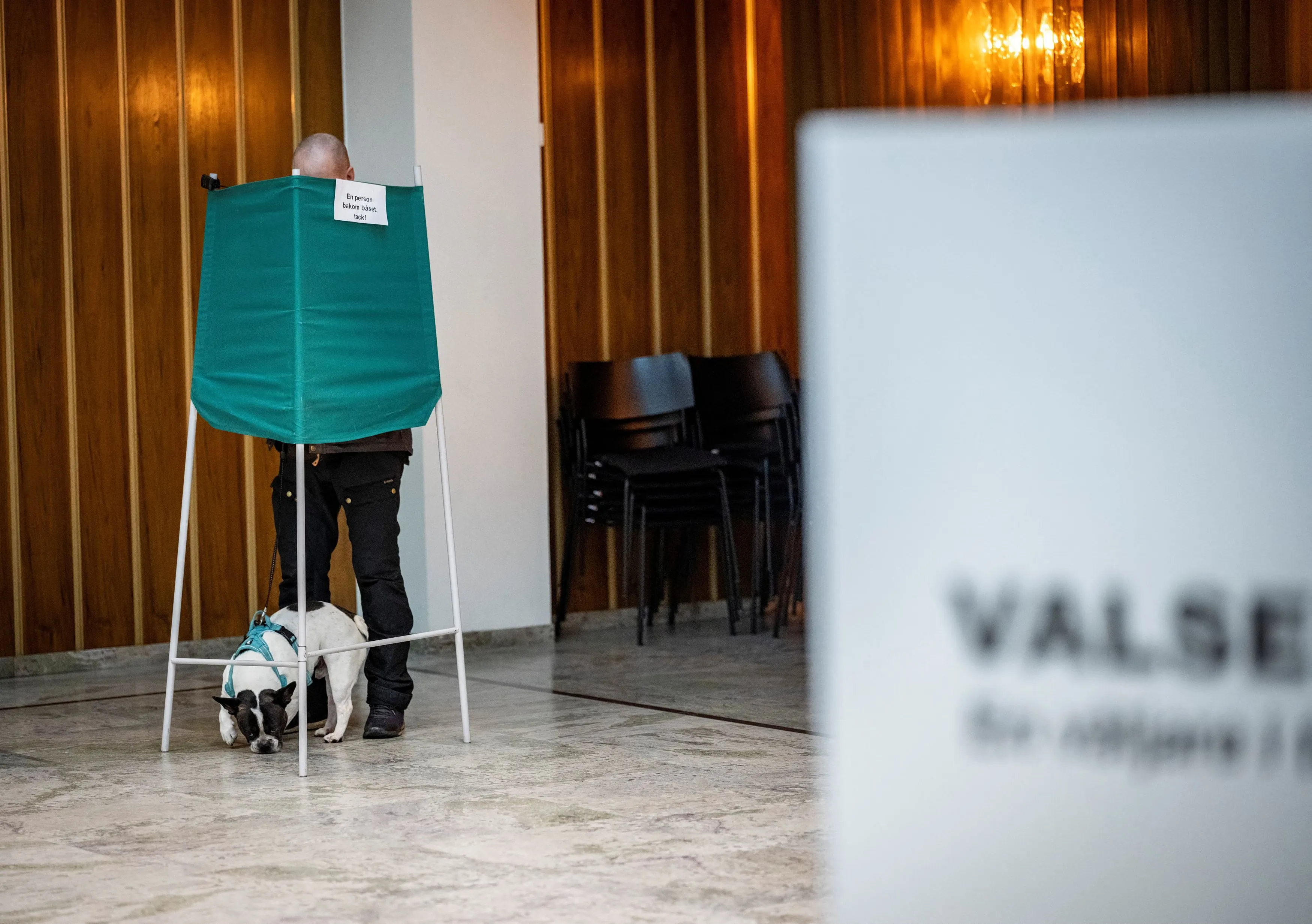
Exit poll results show left alliance ahead
Public broadcaster SVT published an exit poll placing the combined centre-left parties at 51.3% and the right-wing parties at 46.8%. A separate Novus poll for TV4 recorded nearly identical bloc figures of 51.3% and 47%. The Social Democratic Party recorded 28.4%, the Sweden Democrats 17.2-18.5%, and the Moderates 17.5-18.1%. Seat projections derived from these shares allocate 182 seats to the left alliance and 167 to the right. The result marks a clear projected victory for the opposition despite the narrowing gap seen in the final days of campaigning. Counting of actual ballots begins after 11:30 Greek time and will be reported progressively by Swedish broadcasters.
Party-by-party breakdown from SVT exit poll
The Social Democrats finished first at 28.4%. The Sweden Democrats placed second at 18.5% in the Novus poll and third in the SVT poll. The Moderates received 17.5-18.1%. The Centre Party reached 9%, the Greens 7%, the Left Party 6.9%, the Christian Democrats 6%, and the Liberals 5%. All parties cleared the 4% threshold required for seats. The Sweden Democrats fell short of earlier expectations that had positioned them for second place and a potential kingmaker role. The Sweden Democrats under Jimmy Åkesson received a share well below the levels projected in pre-election surveys.
Seat projections and government formation
With 182 projected seats, the Social Democrats and their allies hold a majority in the 349-seat Riksdag. The right-wing bloc falls short at 167 seats. Sweden's proportional system translates national vote shares directly into parliamentary representation, and governments are normally formed through coalitions rather than single-party majorities. The left alliance's projected total would allow it to govern without support from the right-wing parties. The Social Democrats have stated they are ready to govern.
Pre-election polling trends and late narrowing
The left bloc maintained a consistent lead for most of the campaign. The margin narrowed sharply in the final two weeks, with some surveys showing differences as small as 0.3 percentage points. The Sweden Democrats underperformed relative to earlier polling expectations and lost their projected second-place position. The Social Democrats under Magdalena Andersson retained their lead even as the overall difference between blocs approached parity in some late polls. The left bloc under Andersson held a comfortable lead for months before the final narrowing.
Electoral system and turnout context
Sweden elects its Riksdag every four years under simple proportional representation. Early voting opened on 26 August and reached record levels. Nearly eight million citizens were registered to vote, and participation typically exceeds 80%. Voters who cast early ballots could change their choice on election day. Regional and local elections were also held on the same date, expanding the scope of the vote beyond the national parliament. The 4% national threshold excludes very small parties from seats. Governments in Sweden are usually coalitions.
Frequently asked questions
When will official results be available?
Counting begins after 11:30 Greek time and will be reported progressively by Swedish broadcasters throughout the evening.
Can the Sweden Democrats still influence government formation?
Their lower-than-expected share reduces their leverage, but any coalition talks will still require negotiations among multiple parties.
What is the minimum threshold for seats?
Parties must obtain at least 4% of the national vote to enter the Riksdag.
Are regional and local elections held on the same day?
Yes, voters also elected regional and municipal councils on 13 September 2026.
Could early voters change their ballots?
Early voters were permitted to cast a new ballot on election day to cancel their previous choice.
Key takeaways
Exit polls give the centre-left 51.3% and 182 seats. The Social Democrats recorded 28.4%. The right bloc trails at 46.8-47% and 167 seats. All listed parties cleared the 4% threshold. Final results will be released after counting begins at 11:30 Greek time.
Outlook for coalition talks
The projected majority for the left alliance positions Magdalena Andersson to lead government formation. The right-wing parties, including the Moderates under Ulf Kristersson, face a narrower path to power. Discussions are expected to begin once official seat totals are confirmed. The Social Democrats have stated they are ready to govern, while the outgoing prime minister has described the outcome as still open. Because the Moderates under Kristersson appear prepared to cooperate with the Sweden Democrats, the election outcome may carry significant implications for security in Europe and for the broader debate on integrating the far right into mainstream politics.
Conclusion
The Social Democrats state they are ready to govern. The outgoing prime minister describes the outcome as still open. The projected left majority opens the path for Andersson to form a government while leaving the right-wing bloc with fewer options and raising wider questions about future alliances and European security implications.







