
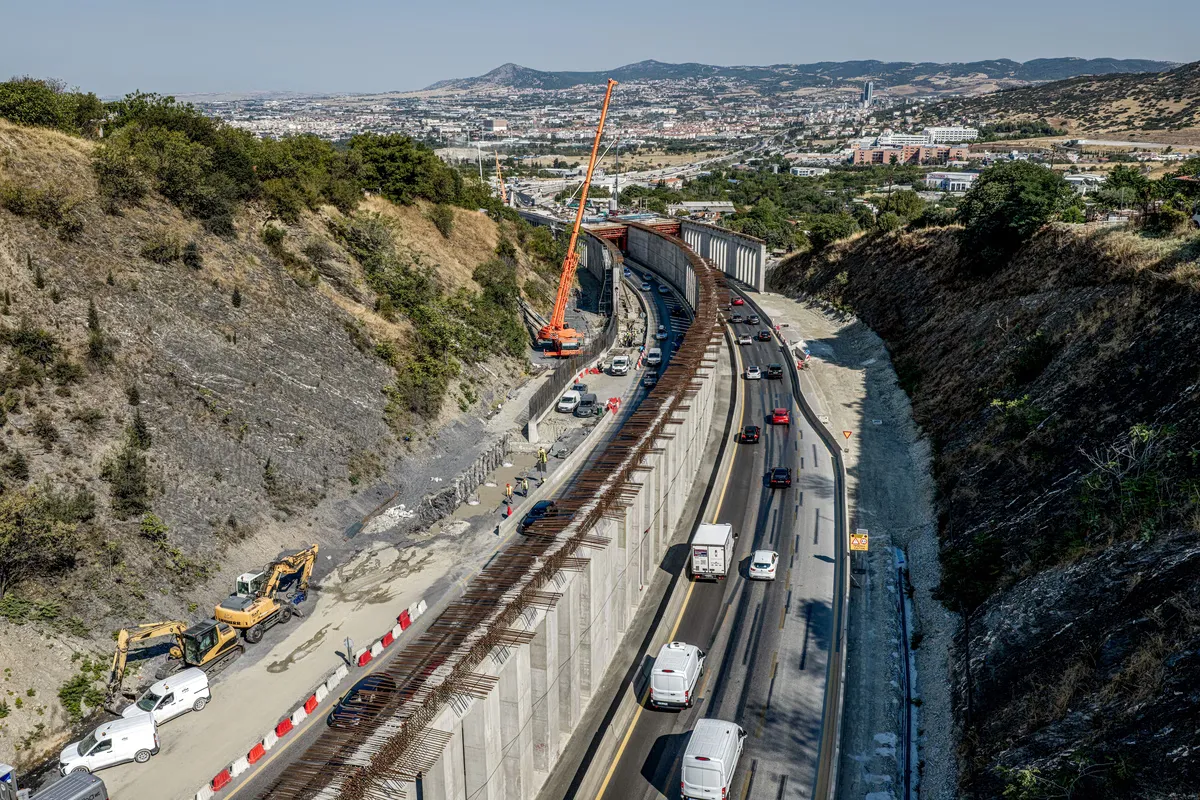
What is the scope of the Thessaloniki ring road closure?
The planned closure affects the Eastern Inner Ring Road of Thessaloniki, specifically targeting the segment between the asymmetrical nodes K5 (Papageorgiou) and K6 (Meteora). This total blockade is designed to facilitate the technical requirements of the Flyover project, a significant infrastructure undertaking in the region. The suspension of traffic is scheduled to occur during the night hours, starting from 23:30 on Saturday, October 3, 2026, and concluding at 05:30 on Sunday, October 4, 2026.
The closure is not limited to a single direction; rather, it encompasses a full halt of all vehicle movement in both eastbound and westbound flows within the specified zone. This ensures that construction crews have an unobstructed environment to carry out high-risk or heavy-duty tasks associated with the Flyover development. Authorities have emphasized that these nocturnal windows are chosen to minimize the overall impact on the city's daily commuting patterns, although the scale of the works necessitates a complete halt during these specific hours.
Affected nodes and specific zones
The primary area of impact involves the stretch of road near the Eukarpia exit (Municipal Stadium) and the area surrounding the hospitals. For eastbound traffic, the interruption is particularly significant near the Titan area. For westbound traffic, the disruption is centered around the K6 (Meteora) node. The precision of these closures is intended to allow for concentrated work zones that do not compromise the safety of either the workers or the surrounding urban environment.
How will traffic be diverted for eastbound travelers?
Eastbound traffic, particularly vehicles moving toward Chalkidiki and the Airport, will face mandatory diversions through the Sklavenitis exit. According to the traffic police announcement, vehicles traveling from the main flow of the Western Inner Ring Road (moving East) must exit at the Sklavenitis (Eukarpia) junction. From there, the route will guide drivers through the Sklavenitis, Gianni Ritsou, and Thiseos nodes, eventually leading them back to Stratou Avenue.
A critical detail for commuters is the total restriction of access to the Inner Ring Road from the hospital-level entrance ramp. This means that drivers cannot use the standard entrance near the medical facilities to rejoin the eastbound flow during the work period. Instead, the traffic will be funneled through the city center via the Eukarpia exit, utilizing appropriate informational signage to guide motorists through the detour via Stratou Avenue. This rerouting strategy aims to maintain a continuous, albeit indirect, flow of traffic toward the eastern suburbs and the airport region.
What are the diversion routes for westbound traffic?
Westbound travelers, specifically those heading toward Kavala and Katerini, will be rerouted through the urban fabric of Thessaloniki. The closure for this direction occurs at the level of the K6 (Meteora) node. Vehicles will be forced to exit at the Meteora node and will subsequently be directed through Andrea Papandreou Avenue and the urban street network to reach their destinations.
This diversion effectively moves heavy transit traffic from the high-speed ring road into the city's arterial boulevards. While this ensures that the motorway remains clear for construction, it places additional load on the Papandreou and Papanikolaou avenues. Motorists are advised to account for potential delays as the traffic volume typically found on the ring road is redistributed into these municipal streets. The use of the urban network is a necessary contingency to ensure that the connection between the city and the northern/eastern routes remains functional during the Flyover construction window.
Why is the Flyover project causing these disruptions?
The Flyover project is a large-scale infrastructure initiative designed to alleviate chronic congestion in the Thessaloniki metropolitan area by creating new multi-level interchanges and bypasses. The current works necessitating the October 3-4 closure are part of this broader structural transformation. These works often involve heavy machinery, the positioning of large structural components, or the modification of existing road surfaces, all of which require a sterile environment free of civilian traffic to ensure maximum safety.
The complexity of the Flyover project means that construction phases are often non-linear, requiring sudden or periodic closures of major arteries. By implementing these closures during the late-night and early-morning hours (23:30 to 05:30), the project management seeks to balance the urgent need for infrastructure modernization with the city's requirement for mobility. The long-term goal of the Flyover is to significantly reduce travel times and improve the efficiency of the Thessaloniki ring road, though the transitional phase involves these necessary logistical challenges.
Summary of traffic adjustments
To assist drivers in navigating the changes, the following table summarizes the primary diversions and affected areas:
| Direction of Travel | Primary Destination | Mandatory Diversion Route | Key Restriction |
|---|---|---|---|
| Eastbound | Chalkidiki / Airport | Sklavenitis Exit → Gianni Ritsou → Thiseos → Stratou Ave | No access via Hospital ramp |
| Westbound | Kavala / Katerini | Meteora (K6) Exit → Andrea Papandreou Ave → Urban Network | Full closure at K6 node |
Frequently asked questions
When exactly will the Thessaloniki ring road be closed?
The closure is scheduled to begin at 23:30 on Saturday, October 3, 2026, and will remain in effect until 05:30 on Sunday, October 4, 2026. This nocturnal window is designed to minimize the impact on daily commuters while allowing for essential Flyover construction works.
Which specific sections of the road are affected?
The closure affects the Eastern Inner Ring Road between the Eukarpia and Meteora nodes (K5 to K6). This includes a total blockade of both eastbound and westbound lanes within this specific segment to facilitate the Flyover project's technical requirements.
Can I use the hospital entrance ramp during the closure?
No, the entrance ramp located at the level of the hospitals will be strictly closed to all vehicles attempting to enter the eastbound Inner Ring Road. Drivers must instead follow the designated diversion routes through the Sklavenitis junction and the city center.
What should I do if I am driving toward the Airport?
If you are traveling toward the Airport or Chalkidiki, you must follow the mandatory diversion at the Sklavenitis (Eukarpia) exit. You will be routed through the Sklavenitis, Gianni Ritsou, and Thiseos nodes before eventually reaching Stratou Avenue to continue your journey.
How will traffic move toward Kavala and Katerini?
Drivers heading toward Kavala or Katerini will be diverted at the Meteora (K6) node. The traffic will be rerouted through Andrea Papandreou Avenue and the local urban street network to bypass the construction zone on the ring road.
Key takeaways
- The Thessaloniki ring road closure occurs from 23:30 on Oct 3 to 05:30 on Oct 4, 2026.
- The closure impacts both directions between the Eukarpia and Meteora nodes.
- Eastbound traffic toward the Airport must use the Sklavenitis diversion route.
- Westbound traffic toward Kavala will be rerouted via Andrea Papandreou Avenue.
- The hospital-level entrance ramp will be completely inaccessible during this period.
Conclusion
The scheduled closure of the Thessaloniki ring road is a critical component of the ongoing Flyover project, aimed at long-term congestion relief in the region. While the total blockade between the Eukarpia and Meteora nodes presents immediate logistical challenges for motorists, the nocturnal timing is intended to mitigate widespread disruption. Drivers traveling toward the Airport, Chalkidiki, Kavala, or Katerini must strictly adhere to the mandatory diversion routes via Sklavenitis or Andrea Papandreou Avenue. Staying informed through official traffic signage and following the prescribed detours will ensure safer and more efficient travel during this essential infrastructure phase.







