
What is the inspiration behind the Tsakouala theatrical production?
The production draws its narrative foundation from the acclaimed literary work of Christos Economou. Specifically, the play is adapted from his short story collection titled "Something Will Happen, You Will See" (Kati tha ginei, tha deis). This collection was notably recognized with a State Award for Short Stories in 2011, establishing a high-quality literary basis for the stage adaptation.
By translating these written narratives into a theatrical format, the creators aim to bring the lived experiences of specific social environments to a wider audience. The stories serve as a lens through which the complexities of human resilience are examined, moving from the page to the physical space of the stage at Theatro Thiseion. The source material provides a rich tapestry of human struggle that the production seeks to manifest through performance. The adaptation seeks to bridge the gap between the solitary act of reading Economou's prose and the communal experience of witnessing these stories unfold in a live setting.
The transition from award-winning prose to the stage allows for a visceral exploration of the themes Economou established. While the collection provided the initial spark, the theatrical medium expands these narratives into a shared sensory experience, emphasizing the isolation and the collective struggle inherent in the stories. The production aims to honor the depth of the 2011 State Award-winning work while finding new ways to communicate its urgency to a contemporary audience.
Who are the creative minds behind this new work?
The play is a collaborative effort led by director and actor George Vardamis, alongside Kalliopi Panagiotidou and Christos Kontogeorgis. Vardamis, who previously gained recognition for his work in "Nohavelandi," brings his experience in character-driven drama to this new project.
The collaboration between Vardamis, Panagiotidou, and Kontogeorgis suggests a multidisciplinary approach to the storytelling. Their goal is to reconstruct the atmosphere of the western suburbs, ensuring that the setting feels as authentic and pressing as the literary source material. This creative trio focuses on the intersection of personal struggle and social decay, aiming to present a cohesive vision of life on the margins. Through their combined expertise, they aim to translate Economou's prose into a visceral theatrical experience, moving beyond mere dialogue to create a world that feels inhabited and urgent. The production relies on this synergy to capture the specific nuances of the characters' lives.
By working together, the team seeks to ensure that the adaptation is not merely a recitation of stories, but a living, breathing environment. Vardamis's background in successful productions like "Nohavelandi" provides a foundation for managing the complex emotional landscapes required by Economou's writing. The involvement of Panagiotidou and Kontogeorgis adds layers to this creative process, aiming to turn the "western suburbs" from a mere location into a palpable presence on stage.
What are the central themes of the performance?
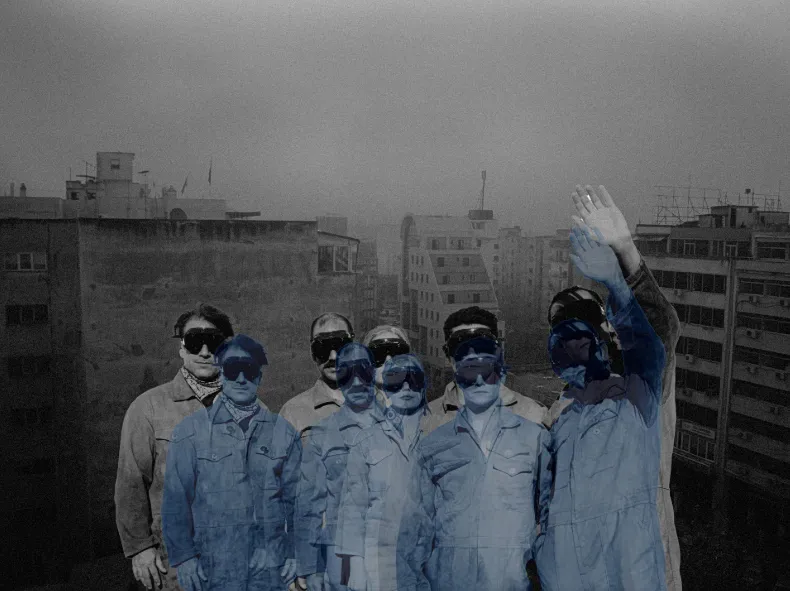
The performance centers on the concept of survival in an era of uncertainty. It depicts four individuals who are forced to develop their own psychological defense mechanisms as the stability of their world begins to erode. The play focuses on how people cling to the remaining fragments of their lives when traditional certainties vanish.
Beyond simple survival, the production explores deeper human qualities such as:
- Dignity: How individuals maintain their sense of self when facing social or economic collapse.
- Resilience: The specific, often desperate, ways people adapt to environments that offer no choices.
- Social Marginalization: The reality of living in the "western suburbs," a setting that implies a specific socio-economic context.
The play portrays these struggles not just as tragedies, but as an unavoidable fight that must be waged, regardless of the eventual cost or outcome. It examines the tension between the individual and a world that seems to be falling apart around them. The narrative suggests that when the structures of society fail, the individual is left with nothing but their own internal mechanisms to prevent total dissolution.
These themes are explored through the lens of four distinct characters, each representing a different facet of the struggle to remain upright in a crumbling world. The production does not offer easy answers or simple resolutions; instead, it focuses on the persistence required to simply exist. The tension lies in the choice to defend one's dignity even when the cost of that defense is high and the outcome remains uncertain.
The metaphor of the Tsakouala
The title of the play is derived from a specific biological metaphor involving a desert lizard. The Tsakouala, when feeling threatened, retreats into its burrow, inflates its lungs, and wedges itself tightly into the space to wait out the danger. This biological reflex serves as a powerful symbol for the characters in the play. Much like the lizard, the human protagonists employ their own "inflation" and "wedging"—metaphorical defense mechanisms—to endure the pressures of a collapsing society. This imagery underscores the instinctual, almost primal nature of the characters' struggle to remain present and intact despite overwhelming external forces. It suggests that survival is not always an active, conquering force, but sometimes a desperate, static act of holding one's ground.
This metaphor provides a visual and psychological anchor for the entire production. It explains the "why" behind the characters' seemingly irrational or stubborn behaviors. When the world outside becomes too volatile, the instinct to withdraw and solidify becomes a primary means of preservation. The Tsakouala is not just a title; it is a description of a human state—a state of being wedged into the small, safe spaces of one's own making to survive the storm.
How does the setting influence the narrative?
The setting of the western suburbs is not merely a backdrop but a character in itself. The play is described as a story from these specific neighborhoods, suggesting that the geography plays a crucial role in shaping the characters' identities and limitations. These areas are presented as places where people exist on the "edge," often lacking the luxury of choice.
By situating the drama in these suburbs, the production highlights the disconnect between the center of urban life and the peripheral zones where survival becomes a daily requirement. The crumbling world mentioned in the production notes is directly linked to the atmosphere of these neighborhoods, where the breakdown of social structures is felt most acutely by those living on the margins. The setting provides the necessary pressure to trigger the characters' defensive "Tsakouala" instincts. The geography of the western suburbs serves to isolate the characters, forcing them into the very corners they must inhabit to survive.
The western suburbs represent a specific socio-economic reality where the "edge" is a lived experience. The production uses this setting to ground the abstract themes of dignity and survival in a concrete, recognizable reality. The decay of the physical environment mirrors the decay of the social certainties the characters once relied upon, creating a closed loop of pressure that necessitates the defensive behaviors described in the play.
FAQ: Tsakouala theatrical production
When does the play premiere?
The Tsakouala theatrical production is scheduled to have its premiere on October 26, 2026. The performances will take place at the Theatro Thiseion, located in the Syntagma area, providing a central venue for this exploration of suburban life.
What literary work is the play based on?
The play is based on the collection of short stories titled "Something Will Happen, You Will See" by Christos Economou. This collection is highly regarded in Greek literature, having received a State Award for Short Stories in 2011.
Who is the director of the production?
George Vardamis is the director of the production. He is an actor and director known for his previous successful work in "Nohavelandi," and he is collaborating with Kalliopi Panagiotidou and Christos Kontogeorgis on this new project.
What is the meaning of the title "Tsakouala"?
The title refers to a desert lizard that inflates its lungs to wedge itself into a burrow when threatened. This serves as a metaphor for the characters' defensive mechanisms and their instinctual drive to survive in a collapsing world.
Where can the play be watched?
The production will be staged at the Theatro Thiseion in Syntagma. This venue will host the stories of the four individuals as they navigate their survival in the western suburbs.
Key takeaways
- The production premieres on October 26, 2026, at Theatro Thiseion in Syntagma.
- The play is adapted from Christos Economou's 2011 State Award-winning story collection.
- George Vardamis, Kalliopi Panagiotidou, and Christos Kontogeorgis are the primary creators.
- The central metaphor uses a desert lizard's defense mechanism to represent human survival.
Conclusion
The Tsakouala theatrical production represents a significant cultural intersection between award-winning literature and contemporary stagecraft. By adapting Christos Economou's profound observations of suburban life, the creative team led by George Vardamis offers a visceral look at human resilience. The play moves beyond simple storytelling to provide a metaphorical study of how individuals protect their dignity when social structures fail. As it prepares to open at Theatro Thiseion this October, it promises to be a challenging exploration of the instinct to endure against all odds.







