How did the 1964 American Museum of Natural History robbery occur?
The heist was executed in a matter of minutes by three men who exploited significant security vulnerabilities within the museum. The perpetrators, identified as Jack Roland Murphy (known as "Murph the Surf"), Alan Dale Kuhn, and Roger Clark, had traveled from Florida to New York specifically to study the museum's layout and security protocols. Their entry was made possible by a combination of environmental factors and technical failures that left the institution exposed.
Security failures and the method of entry
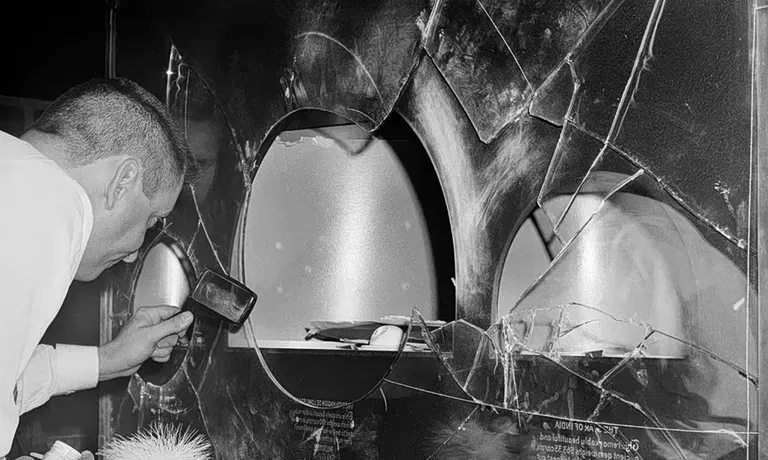
The thieves utilized a multi-step approach to bypass the museum's defenses. Murphy and Kuhn climbed the exterior of the building using a fire escape, navigating a narrow ledge to reach the upper windows. They were able to enter the Hall of Gems and Minerals through a window that had been left open for ventilation. Once inside, the duo used glass cutters and adhesive tape to access the display cases quickly. While Murphy and Kuhn performed the physical theft, Roger Clark remained outside to act as a lookout, monitoring the surroundings for any sign of security intervention.
Several critical lapses in protocol facilitated the crime. First, the museum's alarm system in the display areas was non-functional because the batteries had been exhausted. Second, the night security presence was deemed insufficient given the immense value of the collection. These oversights allowed the trio to complete their mission and flee the scene without triggering any immediate response from museum staff or local authorities.
What were the most valuable gemstones stolen during the heist?
The theft involved between 22 and 24 items, ranging from massive star sapphires to raw diamonds and emeralds. While the total value at the time was estimated at $410,000, the cultural and scientific significance of the stones far exceeded their market price. The loss of these unique specimens represented a significant blow to the museum's collection.
The legendary lost and recovered gems
Among the stolen items were some of the most famous gemstones in the world:
- The Star of India: A massive 563.35-carat grayish-blue star sapphire. Donated by J.P. Morgan, this stone is unique for displaying its star effect on both sides. The museum considered it essentially irreplaceable.
- The DeLong Star Ruby: A 100.32-carat star ruby donated by Edith Hacking DeLong. Originally purchased for approximately $21,400, it was recovered in 1965 after a $25,000 ransom was paid by businessman John D. MacArthur.
- The Midnight Star: A striking 116-carat black star sapphire. As one of the Morgan collection's most recognizable pieces, its rarity and historical provenance made it nearly impossible to value through standard commercial metrics.
- The Eagle Diamond: A 16.25-carat diamond discovered near Eagle, Wisconsin. Unlike the other major stones, the Eagle Diamond was never recovered. Historians suspect it may have been broken down into smaller, unrecognizable stones to facilitate its sale.
In addition to these famous stones, the thieves made off with various emeralds, aquamarines, and uncut diamonds. Because many of these items lacked documented individual valuations, determining the exact total loss remains a subject of historical debate.
How did the investigation lead to the arrest of the thieves?
The perpetrators were caught primarily because their sudden displays of wealth in New York City drew unwanted attention. Following the robbery, the trio's extravagant spending and social activities provided law enforcement with the necessary leads to track them down. Within approximately two days of the theft, authorities had identified and arrested the suspects.
The recovery process and legal outcomes
The recovery of the stolen goods was a fragmented process. In January 1965, Alan Dale Kuhn cooperated with investigators, leading them to a bus station locker in Miami. Inside, authorities found nine precious stones, including the Star of India and the Midnight Star. The DeLong Star Ruby followed in September 1965 after the aforementioned ransom payment. All three men eventually pleaded guilty to their crimes and were sentenced to three years in prison. However, the investigation was only partially successful, as several items, most notably the Eagle Diamond, remained missing indefinitely.
What was the long-term impact of the robbery on museum security?
The 1964 robbery served as a wake-up call for cultural institutions globally, highlighting how even world-class museums could be vulnerable to determined criminals. The event forced the American Museum of Natural History to undergo a massive overhaul of its security infrastructure to protect its remaining and future acquisitions.
Following the incident, the museum implemented much stricter protocols. The Star of India, for example, was moved to a significantly more secure display case and was required to be stored in a high-security vault whenever it was not on active exhibition. This incident underscored a fundamental truth in museum management: the financial value of an object is often secondary to its scientific and historical importance. A unique natural specimen cannot be replaced by a stone of similar weight or quality; once lost, a piece of cultural heritage is gone forever.
FAQ: 1964 American Museum of Natural History robbery
Who were the people responsible for the theft?
The theft was carried out by three men: Jack Roland Murphy, known as "Murph the Surf"; Alan Dale Kuhn; and Roger Clark. They traveled from Florida to New York to execute the heist, which they had previously studied in detail.
How much were the stolen gems worth in today's money?
While the 1964 value was approximately $410,000, modern estimates vary. According to Smithsonian Magazine, this is roughly $3 million when adjusted for inflation, though other calculations based on 2023 values suggest the amount could be closer to $3.9 million.
Was the Star of India ever recovered?
Yes, the Star of India was recovered in January 1965. It was found by authorities in a bus station locker in Miami after Alan Dale Kuhn cooperated with the police investigation.
What happened to the Eagle Diamond?
The Eagle Diamond remains one of the most significant lost items from the heist. It was never recovered, and experts believe it may have been cut into smaller stones to hide its identity during illegal sales.
How did the thieves enter the museum?
The thieves entered through an upper-level window that had been left open for ventilation. They reached this window by climbing an external fire escape and traversing a narrow ledge on the building's exterior.
Key takeaways
- The 1964 heist involved the theft of roughly 22 to 24 rare gemstones from the J.P. Morgan Hall.
- Security failures, including dead alarm batteries and open windows, facilitated the rapid entry.
- Major recovered items included the Star of India and the DeLong Star Ruby.
- The Eagle Diamond remains missing and is believed to have been dismantled.
- The robbery led to a total overhaul of security protocols at the museum.
The lasting legacy of a cultural loss
The 1964 American Museum of Natural History robbery is more than a mere criminal case; it is a cautionary tale regarding the protection of human heritage. It demonstrated that the security of a museum must match the intrinsic value of its contents, not just their market price. While many of the stones were returned, the permanent loss of items like the Eagle Diamond serves as a reminder that once historical artifacts are dispersed into the black market, they are often lost to science and history forever.