What is the historical significance of October 28th in Greece?
October 28th marks the anniversary of the moment Greece rejected the demands of Fascist Italy, an event that triggered the Greco-Italian War. This conflict was a pivotal moment in the early stages of World War II, as it saw the Greek military engage in a defensive struggle against an Axis power. The date is officially recognized as a national holiday, serving as a symbol of national sovereignty and resistance.
The historical context revolves around the tension in the Mediterranean during the late 1930s. As Italy sought to expand its influence, the delivery of an ultimatum to the Greek government forced a definitive choice between submission and conflict. The decision made on this day fundamentally altered the course of Greek history and its involvement in the broader global struggle against fascism.
How did the Metaxas ultimatum unfold in 1940?
The crisis began when the Italian ambassador, Emanuele Grazzi, delivered an ultimatum to the Greek Prime Minister and dictator, Ioannis Metaxas, during the early hours of October 28, 1940. The document contained Italian territorial claims that would have compromised Greek independence. Rather than accepting these terms, the Greek leadership chose to resist.
While the day is popularly known as 'Ohi Day' (No Day) due to the rejection of the demands, the actual historical response was more nuanced. According to historical accounts, Metaxas did not simply utter a single word of refusal. Instead, he responded in French with the phrase "Alors, c’est la guerre" ("So, it is war"). This statement served as a formal rejection of the Italian requirements and a clear signal that Greece was entering a state of war.
The immediate consequences of the refusal
The refusal of the ultimatum had immediate and profound geopolitical consequences. It led to the Italian invasion of Greece, marking the start of the Greco-Italian War. This conflict demonstrated the resilience of the Greek forces and eventually drew Greece into the complexities of World War II, affecting the entire Balkan region and the Mediterranean theater.
How is October 28th commemorated through art and culture?
Modern commemorations of October 28th often blend historical gravity with artistic expression. A notable contemporary example is the tribute by the well-known Greek cartoonist Arkas. Moving away from his usual pen-and-ink sketches, Arkas chose to honor the day through a different medium, utilizing existing masterpieces of Greek art to evoke the spirit of the era.
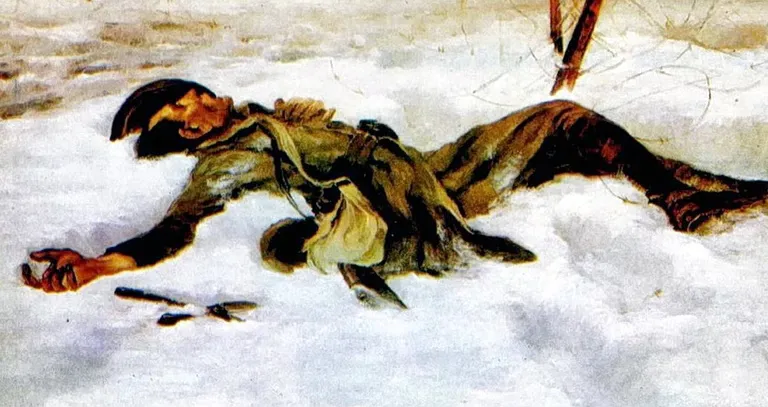
In a recent tribute, Arkas highlighted the iconic work of painter Alexander Alexandrakis, specifically the piece titled "Order of the Executioner" (Διαταγή εξετελέστη). To deepen the emotional resonance of the image, Arkas paired it with the poignant verses of the Nobel Prize-winning poet Odysseas Elytis. The verses describe the rugged landscape of Albania and the fallen soldiers, painting a picture of bravery and the harsh reality of war.
The role of poetry in national memory
The use of Elytis' poetry alongside Alexandrakis' art serves to connect the physical landscape of the war with the emotional experience of the Greek people. The poem's imagery—referring to the mountains of Albania and the silence of the fallen—reinforces the theme of heroic sacrifice that defines the national consciousness regarding Ohi Day.
What does the legacy of October 28th mean for modern Greece?
For contemporary Greeks, October 28th is more than just a day off from work; it is a day of reflection on national identity and resilience. The legacy of the 1940 refusal continues to inform the Greek spirit, particularly the concept of standing firm against overwhelming odds. Political leaders and citizens alike use the occasion to honor the courage shown by previous generations.
The day is observed through various means, including military parades, school ceremonies, and public gatherings. It serves as a reminder of the historical lessons learned from the struggle against fascism. As noted by various public figures, the history of October 28th proves that even smaller nations can successfully resist powerful adversaries through determination and unity.
Key takeaways
- October 28th commemorates Greece's rejection of the 1940 Italian ultimatum.
- Prime Minister Ioannis Metaxas famously responded to the ultimatum in French, signaling war.
- The event marked the beginning of the Greco-Italian War and Greece's entry into WWII.
- Modern tributes, such as those by cartoonist Arkas, use art and poetry to honor the day.
- The holiday remains a central symbol of Greek national sovereignty and resistance.
FAQ: October 28th in Greece
Why is October 28th called Ohi Day?
Ohi Day, or "No Day," refers to the Greek government's refusal to comply with the ultimatum issued by Fascist Italy in 1940. The name symbolizes the nation's definitive "no" to Italian territorial demands and the preservation of Greek independence.
What was the actual response of Ioannis Metaxas?
Although commonly referred to as saying "No," historical records indicate that Ioannis Metaxas responded to the Italian ambassador in French. He stated, "Alors, c’est la guerre," which translates to "So, it is war," effectively acknowledging the transition into a state of conflict.
What war began as a result of this event?
The rejection of the ultimatum directly led to the Greco-Italian War. This conflict was a significant part of the early stages of World War II and involved the Greek military defending its borders against the invading Italian forces.
How do artists like Arkas commemorate the day?
Artists such as Arkas commemorate the day by integrating historical art with literature. For instance, Arkas used the paintings of Alexander Alexandrakis alongside the poetry of Odysseas Elytis to create a profound cultural tribute that honors the memory of those who fought.
Is October 28th a public holiday in Greece?
Yes, October 28th is an official national holiday in Greece. It is observed throughout the country with various commemorative activities, including parades and ceremonies, to honor the historical significance of the day and the nation's resilience.
Conclusion
October 28th stands as a cornerstone of Greek national identity, representing the moment when the nation chose sovereignty over submission. From the high-stakes diplomatic crisis involving Ioannis Metaxas to the enduring cultural tributes involving poets like Odysseas Elytis, the day transcends mere history. It serves as a living reminder of the courage required to face existential threats. As Greece continues to navigate modern challenges, the legacy of the 1940 refusal remains a powerful symbol of the strength found in national unity and the determination to defend freedom.