
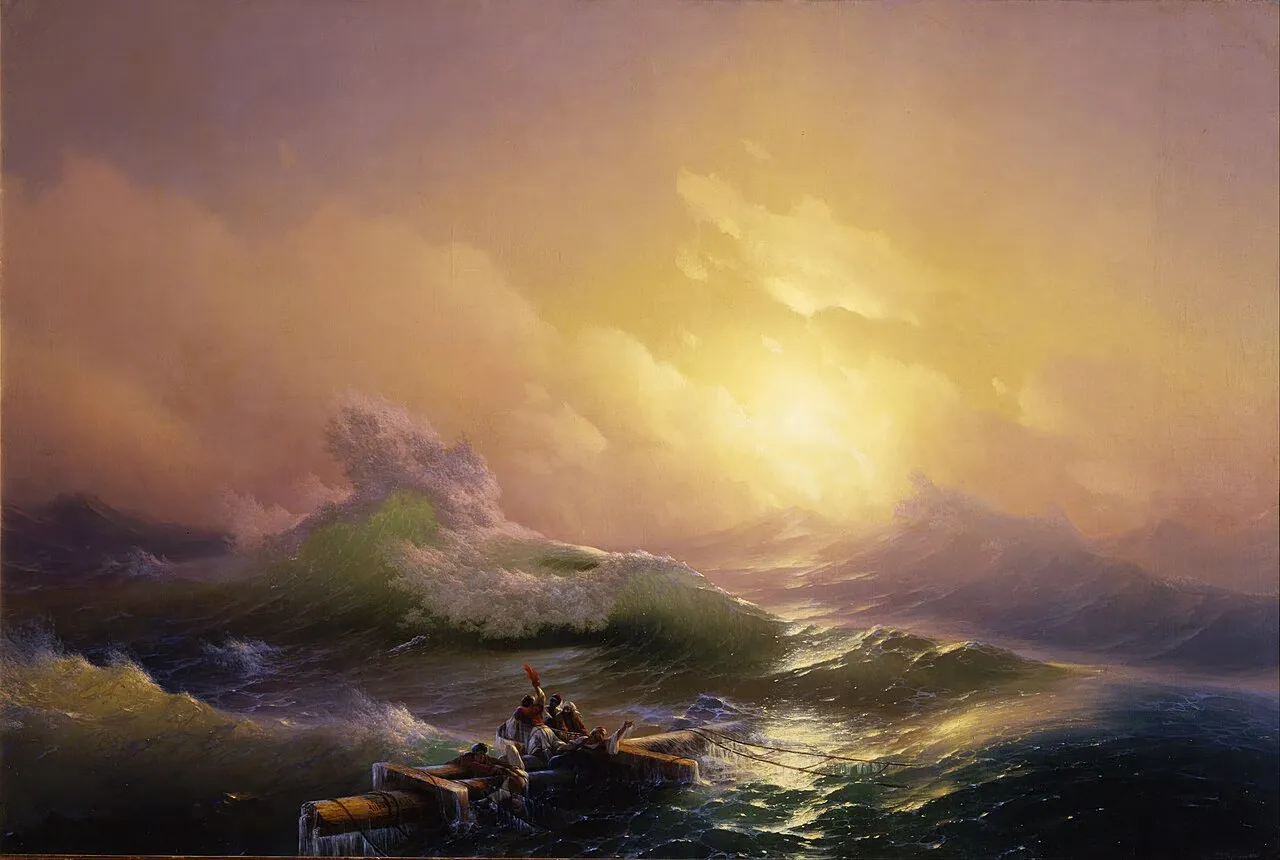
What was the scope of The Ninth Wave restoration?
The State Russian Museum has finalized a comprehensive technical conservation of Ivan Aivazovsky’s iconic 1850 painting, 'The Ninth Wave.' This restoration effort was initiated in June 2026 specifically to prepare for an upcoming retrospective exhibition dedicated to the artist. The painting, which is widely considered the museum's most popular piece among visitors, required meticulous intervention to address over 175 years of natural aging and environmental wear.
The restoration focused on two primary areas: the integrity of the canvas surface and the structural condition of the original frame. Because the painting is a cornerstone of the museum's collection, the conservation followed the institution's highest maintenance standards. According to Alla Manilova, the museum's General Director, the project was driven by the high expectations of the public and the necessity of preserving a work that has been part of the Benois Wing for over a century.
The conservation timeline and objectives
The decision to begin the restoration in June 2026 was based on the visible need for surface stabilization. As the painting crossed the 150-year mark, experts identified areas where the pigment was becoming unstable. The museum's objective was not merely aesthetic but structural, ensuring that the chemical and physical layers of the artwork remain intact for future generations of viewers.
The project was undertaken with a sense of urgency and responsibility. As Manilova noted during the commencement of the work, the museum recognizes that a work of this age will eventually require full restoration involving specialized experts to maintain the high standards of the institution. The goal was to address these needs proactively before the retrospective exhibition begins.
How did experts repair the canvas and pigment?
Museum specialists employed a multi-stage technical process to stabilize the painting's surface, specifically targeting areas where the color had begun to flake or peel. The restoration team applied new primer and pigment across the entire surface of the canvas to ensure color uniformity and structural cohesion. This process was essential to counteract the effects of time on the original oil layers.
Following the stabilization of the pigment, the experts applied a final varnish coating. This protective layer serves a dual purpose: it protects the newly applied colors from environmental contaminants and provides the specific refractive index required to replicate the luminosity of the sea and sunlight that Aivazovsky intended. This technical precision is vital for a work that relies so heavily on the interplay of light and water, ensuring the dramatic visual impact of the post-storm scene is preserved.
What technical steps were taken to restore the frame?
The restoration extended beyond the canvas to include the significant reconstruction of the painting's original frame. The frame, crafted from flamme wood, had suffered considerable loss over the decades. Specialists identified and replaced more than 100 missing pieces to restore the frame to its intended structural and aesthetic grandeur.
To complete the reconstruction, the team utilized gold leaf to cover the newly integrated sections. This ensures that the repairs are seamless and that the frame maintains the high-status appearance appropriate for a masterpiece of this magnitude. By addressing both the painting and its housing, the museum has ensured a holistic preservation of the object, treating the frame as an integral part of the artwork's historical presentation.
Who was Ivan Aivazovsky and why is his work significant?
Ivan Aivazovsky was a preeminent marine artist of the Romantic movement, renowned for his ability to capture the terrifying and sublime power of the ocean. Born with Armenian roots and trained at the Saint Petersburg Academy of Fine Arts, Aivazovsky became one of the most influential seascape painters in history. His work is characterized by a profound dedication to depicting the fluid, ever-changing nature of the sea.
Aivazovsky's oeuvre includes several other legendary maritime works that demonstrate his mastery of light and water, such as:
- "The Bombardment of the Turkish Frigate by Canar" (1881)
- "Stormy Sea at Night" (1849)
His style, deeply rooted in Romanticism, sought to evoke emotion through the depiction of natural forces. This is most evident in 'The Ninth Wave,' where he uses the contrast between the violent sea and the emerging sunlight to create a sense of drama and hope.
The symbolism of the Ninth Wave
The title of the painting is derived from ancient maritime lore, which suggests that the ninth wave is the largest and most powerful of a series. This concept adds a layer of narrative tension to the visual composition. By capturing the moment after a storm when the sun begins to break through the clouds, Aivazovsky creates a visual metaphor for resilience against the overwhelming strength of the natural world.
What is the impact of this restoration on the museum's collection?
The successful restoration of 'The Ninth Wave' reinforces the State Russian Museum's position as a leader in high-standard art conservation. By addressing the needs of its most popular exhibit, the museum meets the cultural expectations of its international audience. The painting's return to the Benois Wing marks a new chapter in its 120-year history within the institution.
Furthermore, the restoration serves as a precursor to the broader retrospective of Aivazovsky's work. It allows the museum to present the artist's technical evolution in its best possible light, showcasing the vibrancy of his colors and the depth of his maritime scenes without the distraction of surface degradation. This ensures that the upcoming exhibition will provide a definitive look at the artist's contribution to 19th-century art.
FAQ: The Ninth Wave restoration
Why is the painting called 'The Ninth Wave'?
The title is based on an old maritime belief that the ninth wave in a sequence is the most massive and powerful. Aivazovsky uses this concept to heighten the drama of the scene, depicting the ocean's immense strength following a storm.
What materials were used in the frame restoration?
The frame was reconstructed using flamme wood. Specialists replaced over 100 missing pieces and finished the surface with gold leaf to ensure the frame's historical and aesthetic integrity was fully restored.
Where will the restored painting be displayed?
The painting will be exhibited in the Benois Wing of the State Russian Museum in Saint Petersburg. This is the same location where the masterpiece has been housed for the past 120 years.
What specific damage was repaired on the canvas?
Experts addressed areas where the paint had begun to peel or flake. They applied new primer and pigment across the entire surface and finished the process with a protective varnish coating.
When did the restoration process begin?
The restoration project officially commenced in June 2026. The work was undertaken to prepare the masterpiece for a major retrospective exhibition dedicated to the life and works of Ivan Aivazovsky.
Key takeaways
- The State Russian Museum completed the restoration of Aivazovsky's 'The Ninth Wave' in 2026.
- Conservation involved repairing flaking pigment and applying a new varnish layer.
- The flamme wood frame required the replacement of over 100 missing pieces.
- The painting is a cornerstone of the museum's Benois Wing collection.
Conclusion
The restoration of 'The Ninth Wave' represents a significant achievement in maritime art conservation. By meticulously addressing both the canvas's surface integrity and the structural needs of its ornate frame, the State Russian Museum has ensured that Ivan Aivazovsky's most famous work remains a vibrant testament to the Romantic movement. As the museum prepares for its upcoming Aivazovsky retrospective, this masterpiece will continue to serve as a profound exploration of the ocean's power, offering visitors a restored window into the sublime beauty and terror of the sea.







