The paradox of television content consumption
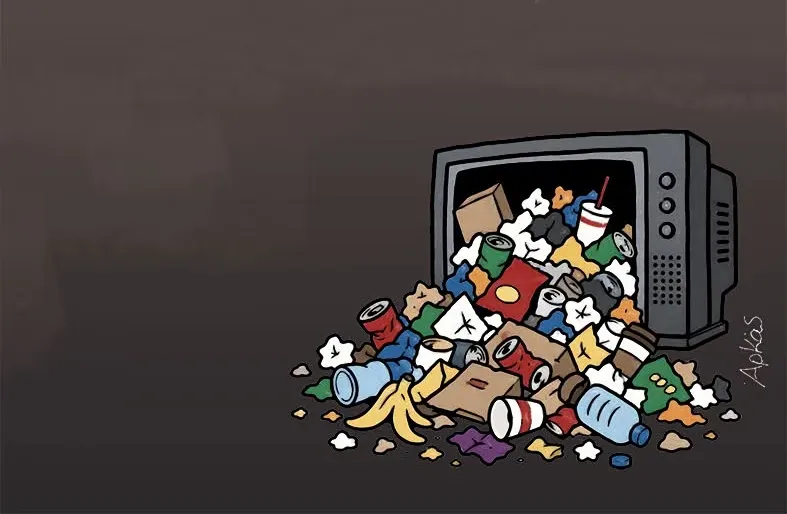
The latest satirical work by the renowned cartoonist Arkas highlights a fundamental contradiction in how audiences interact with broadcast media. Through a visual metaphor, the artist critiques the relationship between viewers and the quality of the content they consume. The sketch depicts a television set overflowing with literal refuse, symbolizing the perceived decline in programming standards.
The core of the critique lies in the behavior of the consumer rather than just the producer. As noted in the commentary accompanying the sketch, one cannot blame a provider for serving 'garbage' if the consumer actively requests a second helping. This provocative statement suggests that the market for low-quality content is sustained by the very people who claim to despise it.
Visual symbolism in satire
By using imagery of waste spilling from a screen, Arkas bypasses the need for complex dialogue. The visual impact serves to underscore the idea that poor-quality media is not just a passive occurrence but an active transaction between the broadcaster and the viewer.
Audience responsibility and media accountability
A central question raised by the Arkas cartoon media criticism is the extent of viewer responsibility in shaping the media landscape. If viewership numbers and ratings are the primary metrics for success, then the audience effectively holds the power to reward or punish specific types of content.
The sketch suggests that by continuing to tune in, audiences are inadvertently validating the production of substandard material. This creates a cycle where broadcasters, driven by the need for engagement, prioritize sensationalism or low-effort programming over substantive or high-quality alternatives. This dynamic shifts the debate from a purely editorial concern to a sociological one involving collective consumer habits.
The impact of consumer demand on broadcasting standards
The relationship between demand and supply is clearly illustrated in the artist's commentary. When viewers demand more of the same content—even if they criticize it—they provide the economic incentive for its continued production. This creates a significant challenge for media regulators and creators seeking to elevate standards.
The critique implies that social dissatisfaction with media quality is often performative. While individuals may express frustration with the state of television in social settings, their viewing habits often tell a different story. This gap between stated preference and actual behavior remains one of the most difficult hurdles in improving the quality of the global media ecosystem.
Frequently Asked Questions
What is the main message of the Arkas cartoon?
The main message is the hypocrisy of viewers who complain about poor television quality while simultaneously consuming it. Arkas uses satire to show that audience demand for low-quality content is what ultimately keeps such programming on the airwaves.
How does the cartoon use symbolism?
The cartoon uses the image of a television overflowing with trash to represent low-quality programming. This visual metaphor makes the critique of media standards immediate and easy to understand, linking the concept of 'bad content' to physical waste.
Why is viewer responsibility important in media?
Viewer responsibility is crucial because ratings drive production. If audiences consistently choose high-quality content, broadcasters are incentivized to produce more of it. Conversely, rewarding low-quality content with high viewership ensures that those standards remain unchanged.