
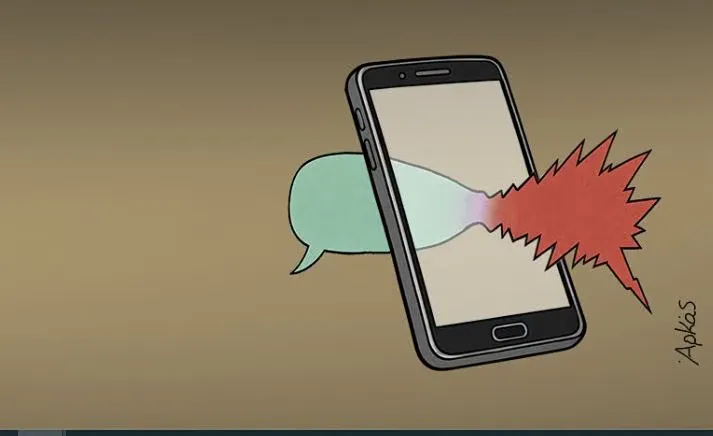
The distortion of identity in digital spaces
Arkas social media commentary highlights a growing gap between authentic human existence and the curated versions of ourselves presented online. The core of the recent observation suggests that in the realm of social networks, a person is no longer viewed as a complete human being. Instead, they are reduced to a singular, often misinterpreted, viewpoint.
This phenomenon creates a landscape where complexity is stripped away in favor of digestible, often polarizing, snippets of information. When users interact with a profile, they are not engaging with a multifaceted individual, but rather with a digital shadow that has been filtered through various algorithmic and social lenses.
Perception vs. Reality in social networks
The concept of the "other" in social media is defined by how an observer chooses to interpret a digital presence. According to the commentary provided by Arkas, the person seen online is not the actual human, but rather the version of their opinion as understood by the viewer.
The role of the observer
This shift places the burden of meaning on the consumer rather than the creator. In this environment, the truth of an individual's character is secondary to the observer's cognitive biases and personal interpretations.
Fragmented communication
Because digital communication relies heavily on text, images, and short bursts of thought, the nuance required to convey a full human identity is frequently lost. This fragmentation allows for the rapid construction of personas that may bear little resemblance to the actual person behind the screen.
The sociological impact of online personas
The reduction of humans to mere "opinions" has significant implications for social cohesion and empathy. When we stop seeing the humanity in those we disagree with online, the potential for constructive dialogue diminishes.
As social media platforms continue to evolve, the distinction between a person's lived reality and their digital footprint becomes increasingly blurred. This creates a cycle where the digital persona dictates social standing and influence, often at the expense of genuine human connection and understanding.
Frequently Asked Questions
What is the central theme of the Arkas commentary?
The central theme is the loss of human complexity in digital spaces. It argues that social media transforms individuals into mere representations of their opinions, which are then interpreted subjectively by others, rather than being recognized as multifaceted human beings with diverse lives.
How does social media affect our perception of others?
Social media affects perception by providing a limited, curated view of people. Instead of seeing a whole person, observers see a digital version of an opinion. This leads to a skewed understanding where the observer's own interpretation defines the individual's identity.
Why is digital identity considered a "shadow" of reality?
Digital identity is considered a shadow because it lacks the depth, nuance, and physical presence of a real person. It is a filtered version of a human being that focuses on specific traits or opinions, making it an incomplete and often inaccurate reflection of reality.







