How is the hospitality industry campaigning against labor shortages?
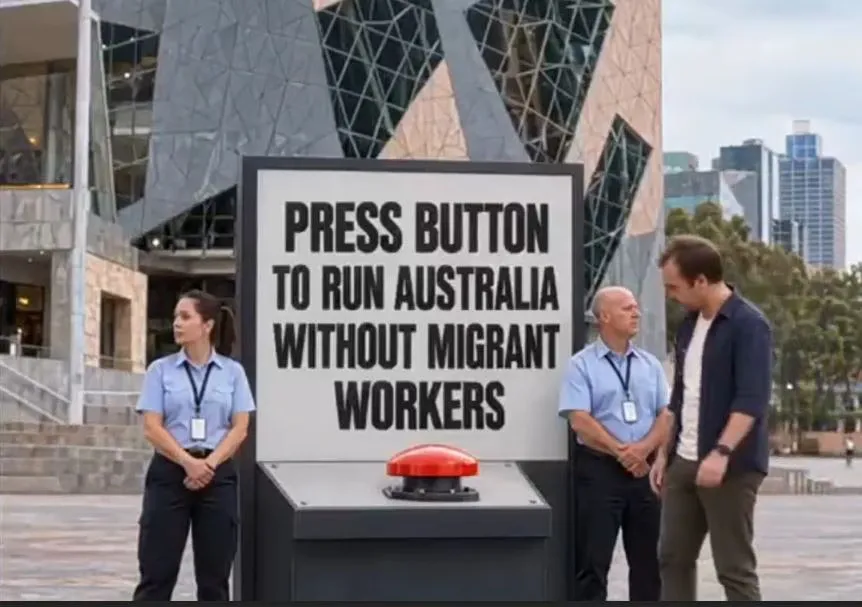
The Australian Hotels Association, alongside Hospitality Tasmania and Hospitality Northern Territory, has launched a visual campaign to illustrate the reality of a nation without migrant labor. The campaign utilizes a "press the button" concept, asking citizens to imagine the immediate consequences of a sudden removal of all foreign-born workers through legislative changes or enforcement.
Rather than engaging in traditional political rhetoric, the campaign focuses on daily life. It poses practical questions: who will prepare your coffee, harvest the fruit, cook your restaurant meal, or make your hotel bed? By shifting the focus from ideology to utility, the organizers aim to force a logical confrontation with the economic necessity of migration.
This approach seeks to bypass the often-polarized debates surrounding immigration by highlighting the direct impact on consumer convenience and service availability. The campaign serves as a warning to policymakers that the removal of skilled labor is not a theoretical exercise but a practical threat to the standard of living in Australia.
What are the risks of the proposed visa changes?
Proposed changes to the working holiday visa system could lead to a significant decline in the regional workforce. The Australian federal government is considering a lottery-based system for workers wishing to extend their stay for a second or third year.
Currently, these visa holders provide vital flexibility to the economy. They often move to remote or regional areas to fill seasonal gaps, ensuring that tourism and agriculture can function throughout the year. Industry experts warn that restricting these pathways will have immediate repercussions.
The impact on regional employment figures
The Hospitality Northern Territory, which represents 300 businesses, has issued a stark warning regarding these policy shifts. According to the organization, changes to visa accessibility could result in the loss of up to 40,000 workers in Australia's regional and remote areas.
The Northern Territory is identified as one of the regions most vulnerable to these fluctuations. Without the ability to secure long-term or extended stays for seasonal workers, businesses in these isolated locations face a permanent state of understaffing, which threatens the viability of the local tourism and service economies.
Why is Australia's healthcare sector dependent on international talent?
The dependency on migrant workers extends far beyond the hospitality sector, reaching critical levels within the national healthcare system. International Medical Graduates (IMGs) are essential to maintaining medical standards and coverage across the continent.
The statistics regarding medical staffing reveal a profound reliance on overseas-trained professionals. In the broader medical field, IMGs constitute 32% of the workforce. This figure rises significantly in specific contexts, particularly in isolated or rural settings where local recruitment often fails to meet demand.
- Rural Medical Staffing: 50% of the workforce in remote areas consists of international graduates.
- Primary Care: 56% of primary healthcare professionals are international medical graduates.
The disparity between urban and rural healthcare capabilities is largely bridged by these professionals. Consequently, any tightening of visa regulations that affects medical practitioners could exacerbate existing health inequalities between metropolitan centers and the Australian outback.
How does migration support high-tech and specialized industries?
Australia's position in the global high-technology landscape is heavily supported by a workforce born outside the country. In the high-tech sector, 66% of the workforce is comprised of individuals born overseas, with a significant portion originating from India.
This trend is not limited to technology; it spans dozens of specialized professions where international skill sets are often superior or more readily available than local ones. The government has recognized this by implementing various visa pathways designed to retain these essential workers.
Visa pathways for skilled professionals
Several specific visa categories exist to facilitate the integration of skilled migrants into the Australian economy:
- Subclass 482 and 491 Visas: These are designed for high-demand occupations, offering pathways for four-to-five-year stays.
- Subclass 494 Visa: This Regional Employer Sponsored Worker visa provides a temporary pathway for doctors and other professionals in underserved areas. After three years of employment in a regional location, these workers can apply for permanent residency.
These mechanisms are intended to stabilize the workforce in areas where the domestic labor market is insufficient. However, the current delays in processing these visa applications are causing significant friction for employers who require immediate staffing solutions.
What are the broader economic implications of migration policy?
The debate over migration policy in Australia is increasingly being viewed through the lens of economic stability rather than just social identity. While major political parties have announced various migration stances, industry leaders argue that the economic costs of these policies are being overlooked.
The hospitality and tourism associations are calling on the federal government to address the administrative delays in visa processing. They argue that the current system creates a bottleneck that prevents businesses from planning effectively, especially in the Northern Territory and Tasmania.
The core of the argument presented by the Australian Hotels Association is that a sudden contraction of the migrant workforce would trigger a chain reaction. From empty supermarket shelves—a phenomenon noted in the UK following Brexit—to the collapse of regional tourism, the economic fallout of restrictive migration could be widespread and difficult to reverse.
Frequently asked questions
What is the purpose of the "press the button" campaign?
The campaign is designed to demonstrate the practical consequences of removing migrant workers from Australia. By using a "what if" scenario, it forces citizens and policymakers to realize that essential services, from hospitality to healthcare, rely heavily on international labor to function effectively.
How many jobs are at risk in regional Australia?
Industry bodies, specifically Hospitality Northern Territory, warn that up to 40,000 jobs in regional and remote areas could be lost if visa regulations become too restrictive. This would disproportionately affect territories like the Northern Territory and Tasmania.
Why are international doctors so important to Australia?
International Medical Graduates make up 32% of the total medical workforce and 50% of the workforce in rural areas. They are critical for providing healthcare access to remote populations where domestic doctors are often unavailable or insufficient in number.
What is the impact of Brexit on labor shortages?
The source cites the United Kingdom as a cautionary tale, noting that following Brexit, many supermarkets faced empty shelves. This was largely due to a shortage of truck drivers, a significant portion of whom were non-British citizens.
How do the 494 visas help regional areas?
The Subclass 494 visa allows skilled workers, such as doctors, to work in regional or underserved areas on a temporary basis. After three years of service in these locations, the visa provides a pathway to permanent residency, helping to stabilize the regional workforce.
Key takeaways
- The hospitality campaign uses daily service examples to illustrate the economic necessity of migrant labor.
- Regional areas face a potential loss of 40,000 workers due to proposed visa changes.
- International medical graduates provide 50% of the healthcare workforce in remote Australian regions.
- The high-tech sector in Australia is 66% comprised of workers born overseas.
Conclusion
The tension between migration policy and economic necessity is reaching a critical point in Australia. As the hospitality and healthcare sectors highlight, the nation's ability to maintain basic services and high-tech competitiveness is deeply intertwined with its ability to attract and retain international talent. While political discussions often focus on the social aspects of migration, the practical reality is one of functional dependency. Addressing visa processing delays and ensuring stable pathways for skilled workers in regional areas remains essential to preventing significant economic disruption and ensuring the continued viability of Australia's remote communities.