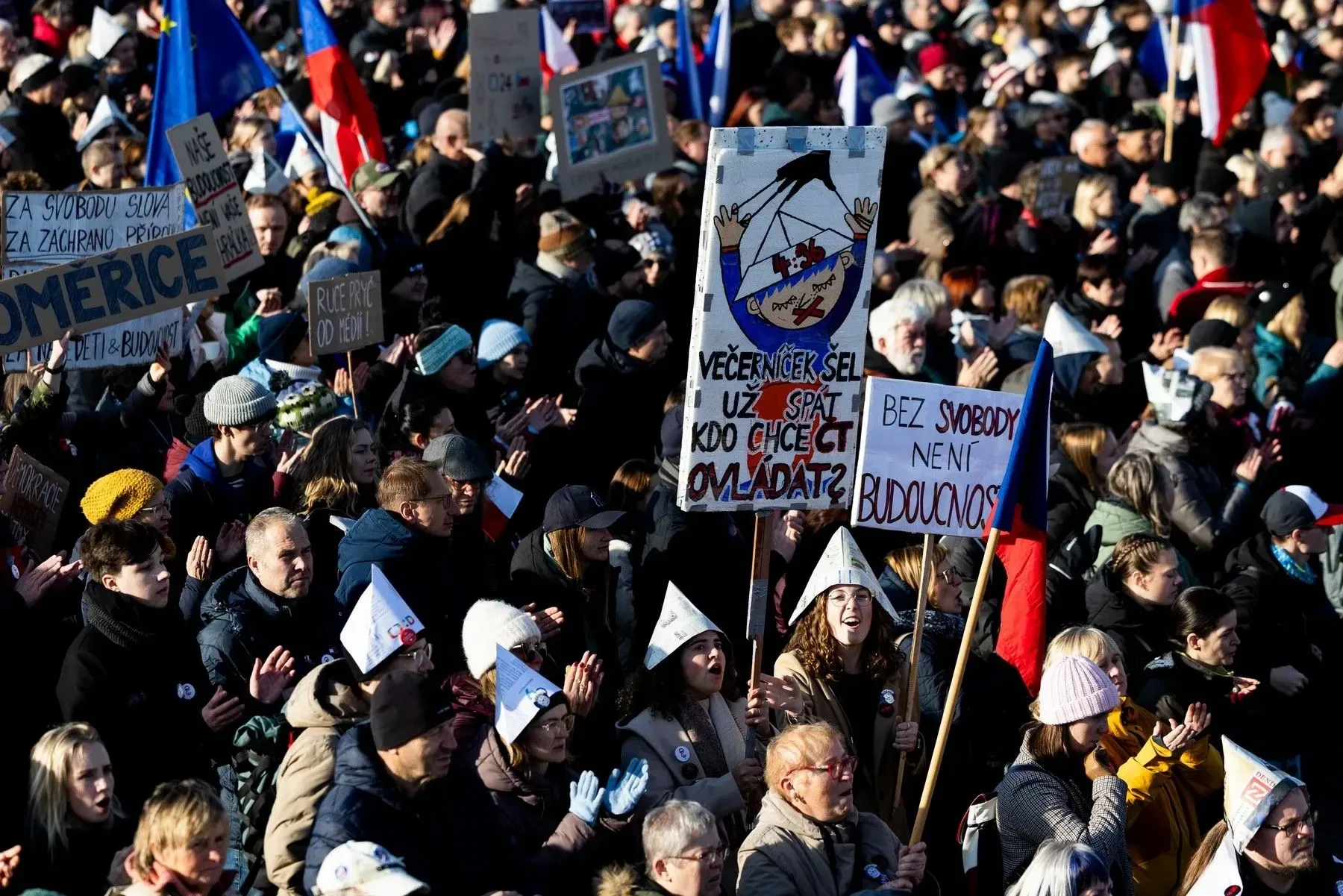
Mass demonstrations in Prague respond to funding reforms
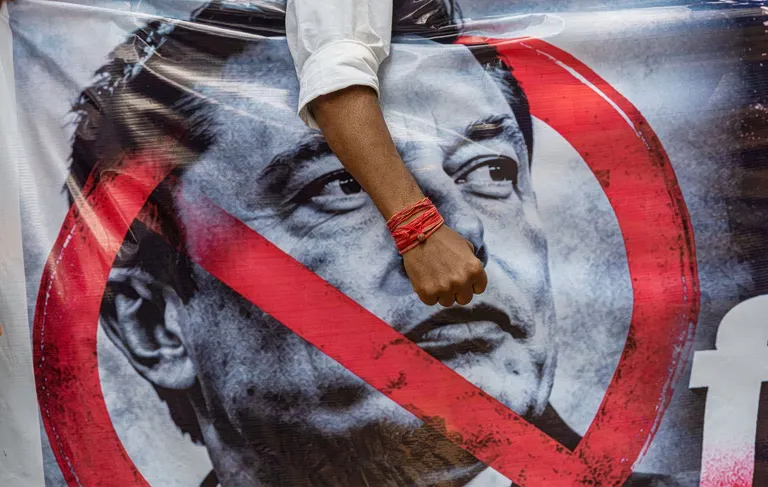
Hundreds of thousands of citizens flooded the streets of Prague on Sunday, November 15, to protest a legislative shift in how Czech public media is financed. The government's plan involves the abolition of the current reciprocal license fee, which currently funds public television and radio, in favor of moving these costs into the state budget. This transition is expected to include a 15% reduction in the broadcasters' existing budgets.
The scale of the mobilization is significant; organizers estimated the turnout at between 350,000 and 450,000 people. For many participants, the move represents a direct threat to the autonomy of public media institutions. Critics argue that shifting from a dedicated fee to state-controlled budget allocations could make broadcasters more susceptible to political influence and reduce their long-term sustainability.
The scale of the protest
The demonstrations are being described as some of the largest seen in the country since the Velvet Revolution of 1989. By moving the funding mechanism to the state budget, the government risks centralizing control over the financial resources that currently allow public broadcasters to operate independently of the immediate political cycle. The 15% budget cut proposed alongside this transition has further intensified the public outcry.
The symbolic role of Večerníček in the protests
Protesters have utilized a unique visual symbol to express their dissent: small hats made from folded newspapers. While appearing unusual to foreign observers, this imagery is deeply rooted in Czech culture through the character Večerníček. The animated boy, who has appeared on Czech public television every evening at 18:45 since 1965, is known for his signature newspaper hat.
Večerníček's name is derived from the word "večerník," meaning an evening newspaper. In his televised ritual, the character tips his hat, says "dobrý večer" (good evening), and flies into the sky while carrying newspapers under his arm. By wearing these newspaper hats, demonstrators are linking the fight for media independence to a shared cultural heritage that spans generations.
The character serves as a unifying figure because he does not represent a specific political ideology, but rather a collective cultural experience. He has survived major historical shifts, including the Soviet invasion, the Velvet Revolution, and the dissolution of Czechoslovakia, making him a resilient symbol for a nation facing modern institutional changes.
The voice behind the ritual: Michal Čtaviš
The iconic voice that has delivered the nightly "dobrou noc" (good night) to Czech children for decades belongs to 68-year-old Michal Čtaviš. He recorded the character's signature phrases, "dobrý večer" and "dobrou noc," in 1964 when he was only six years old. According to Čtaviš, the recording took place in August during his school holidays while he was staying with his grandparents near Prague.
Čtaviš recalls the simplicity of the process: a car was sent to pick him up and take him to the television studio, where he repeated the four words required for the segment. He noted that at the time, he did not think much of the experience. Today, he lives as a digital nomad, managing a travel business with his wife, Zuzana, moving between Southeast Asia, Europe, and South Africa.
<\/tr>| Key Figure | Role/Context | Details |
|---|---|---|
| Michal Čtaviš | Voice of Večerníček | Recorded signature phrases in 1964 at age 6 |
| Zuzana | Spouse of Čtaviš | Co-manages a travel business with Michal |
| Večerníček | Animated Character | Appears daily at 18:45 on public TV |
Cultural continuity and the threat to media independence
For Czech families, the appearance of Večerníček serves as a nightly ritual marking the transition from playtime to sleep. This ritual is characterized by specific musical cues and the character's farewell. The longevity of the program has made it a cornerstone of Czech identity, featuring other classic characters such as the forest bandit Roumçaís, the giant dog Maxipísek Fík, and the popular Little Blind Mole, Krtek.
The current political tension threatens to disrupt this continuity. While Čtaviš, speaking from near Pretoria, South Africa, noted that he has not followed the protests closely, he confirmed that his own daughter participated in the Sunday demonstrations. The fear shared by many citizens is that if the funding model shifts to the state budget, the cultural and educational value of such programming could be compromised by political agendas.
Generational connection to public media
The protests are not merely about economics; they are about the preservation of a medium that connects different age groups. The transition from a dedicated fee to a state-funded model is viewed by many as a move that could prioritize government-aligned content over the diverse, independent programming that has defined Czech public broadcasting for sixty years.