
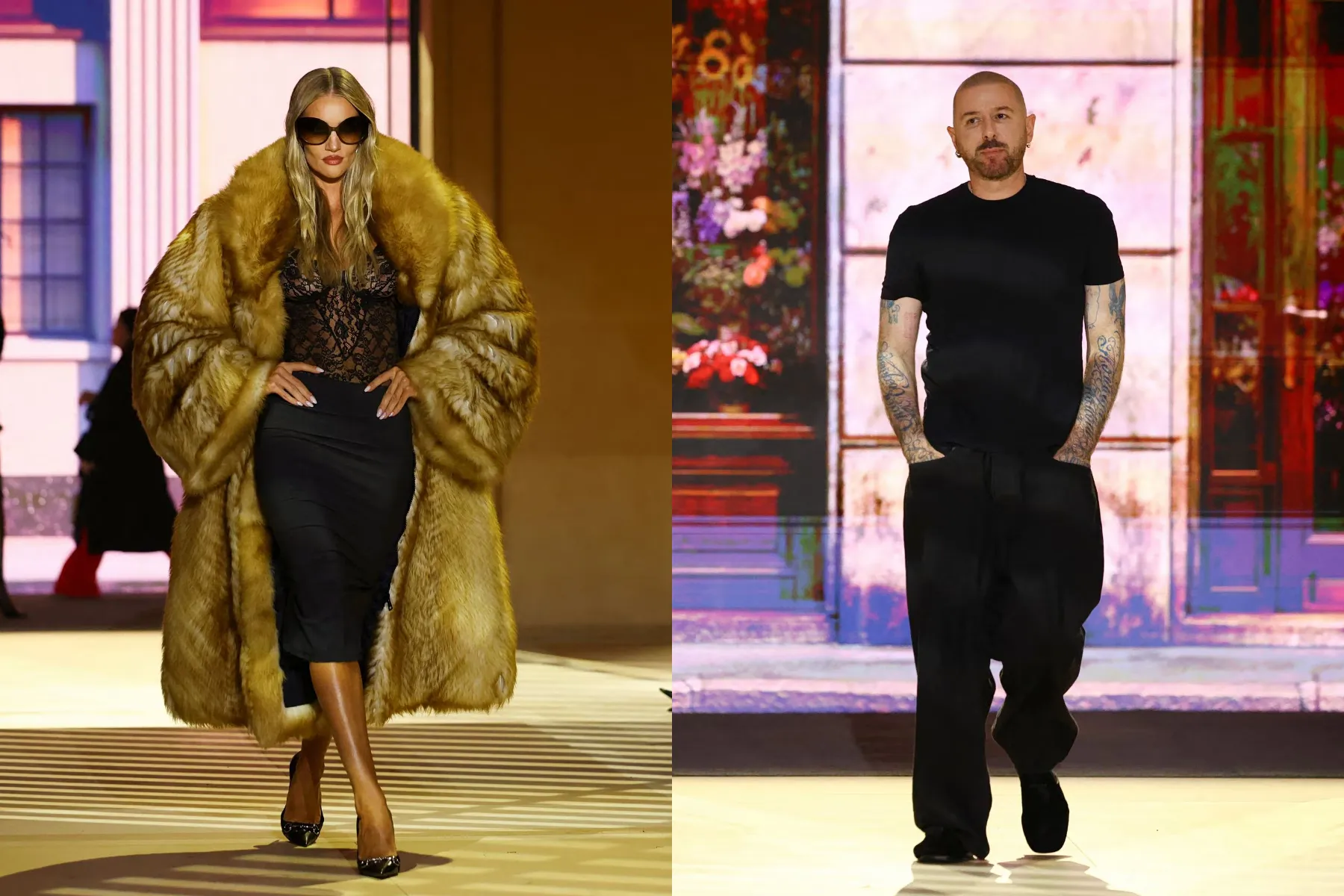
How is Demna defining the new Gucci identity?
Demna is attempting to synthesize the various historical layers of Gucci into a unified creative direction that avoids the pitfalls of a single, repetitive silhouette. He describes the brand as possessing a form of "multiple personality disorder," a complexity that stems from its diverse eras of leadership and stylistic shifts. Rather than choosing one path, he is identifying the core archetypes that constitute the house's essence.
According to Demna in an interview with Tim Blanks for Business of Fashion, the brand's identity is built upon three distinct pillars: the aristocrat, the snob, and the eccentric. His mission is to find the balance between these three elements to create a singular, recognizable vision. He notes that it would be too restrictive to produce only one silhouette, as the brand's very nature demands a certain breadth of expression. He is moving away from playing with the theme of "characters" and instead focusing on the foundational identities upon which his vision rests.
The lineage of Gucci's creative eras
To understand the current direction, one must look at the predecessors Demna is navigating. He identifies several distinct 'personalities' that have defined the house: Tom Ford’s era was characterized by a provocative "porno chic," while Frida Giannini maintained a more bourgeois, polished style. Most recently, Alessandro Michele introduced a highly eccentric and queer aesthetic. Demna's goal is not to mimic these styles but to decode them.
He describes his own approach as a "snobbish, bourgeois eccentricity," a blend that seeks to honor the brand's heritage while establishing a new, modern vocabulary. He notes that this is not just about clothing, but about the social class the brand represents—the snobbish bourgeoisie from which the family originally emerged, even if the family itself did not strictly adhere to those norms. He has had to work through the complex layers of previous lines like Famiglia, Gucci Gen, and Primavera to find the right ingredients for his own "recipe."
Why does Demna feel an attraction to the brand through aversion?
Demna's creative process involves a deep, almost anthropological investigation into the social classes that Gucci represents. Tim Blanks, writing for Business of Fashion, observes that Demna's fascination with Gucci often stems from a sense of aversion. This tension drives his research, as he explores environments that are fundamentally outside his own comfort zone.
Demna admits that the world of high-society luxury—exemplified by the lifestyle of those on Riva boats in Lake Como, wearing white jeans and loafers without socks—does not naturally appeal to him. "It is not at all my comfort zone," he admits. However, he used this distance as a tool for his research. By observing the "snobbish bourgeoisie" from an outsider's perspective, he can translate those social codes into fashion without becoming lost in them. This method of collecting social samples is a technique he honed during his time at Vetements, and he is now applying it to the complex layers of the Gucci legacy to create a style that is more "snob" than "sexy."
How is the Spring/Summer 2027 collection addressing previous criticisms?
The Spring/Summer 2027 collection, titled "The Store Show," represents a deliberate attempt to move past the controversies surrounding his February debut. After facing backlash regarding product quality and perceived "cheapness," Demna has pivoted toward a more controlled and intentional presentation. The collection utilizes a set design reminiscent of a real boutique, signaling a return to the core of the retail experience.
Demna has been vocal in defending the brand against accusations of declining quality. He asserts that the quality has actually improved under his tenure and criticizes those who judge luxury products through a digital screen without understanding the material reality. "The people who judge everything from a screen have no idea," he states. For Demna, the goal is to shift the public discourse away from superficial criticisms and toward a deeper conversation about what Gucci represents and who its intended audience is.
Navigating public perception and mental resilience
The transition from seeking universal approval to embracing creative autonomy has been a significant psychological shift for the designer. Demna reveals that through therapy in Paris, he has learned to accept that he cannot control public opinion. This newfound resilience has allowed him to adopt a more defiant stance toward critics.
He suggests that if Gucci fails to provoke a reaction, it is failing its fundamental purpose as a cultural driver. He notes that he would view a lack of reaction with suspicion, as a brand like Gucci should naturally elicit responses. His current philosophy is centered on creative satisfaction rather than the pursuit of consensus, adopting a mindset of "fuck it, I like it!" This marks a significant departure from his earlier career stages where the desire for approval was more central.
What are the economic implications for the Kering empire?
The success of Demna's creative restructuring is not merely a matter of artistic pride; it is a critical business necessity for the Kering group. As Gucci remains a cornerstone of Kering's global portfolio, the brand's ability to maintain its cultural relevance directly impacts the conglomerate's financial stability. Every runway show has become a site of intense economic speculation, where fashion decisions are weighed against market performance.
The tension between creative experimentation and commercial consistency is at the heart of the current strategy. By attempting to unify the brand's "multiple personalities," Demna is essentially trying to stabilize a high-stakes asset. If he can successfully create a cohesive identity that resonates with both the traditional luxury consumer and a new generation of clients, he will provide the stability Kering requires to navigate the volatile luxury market.
Key takeaways
- Demna defines the Gucci identity through a blend of aristocratic, snobbish, and eccentric archetypes.
- The Spring/Summer 2027 collection, "The Store Show," focuses on reclaiming the brand's core essence through a boutique-inspired setting.
- Demna uses an outsider's perspective to research and translate bourgeois social codes into fashion.
- The designer has shifted his focus from seeking universal approval to prioritizing creative autonomy and personal satisfaction.
- Gucci's creative direction is a critical driver for the financial health of the Kering empire.
FAQ: Demna and the Gucci transformation
What is Demna's specific vision for Gucci?
Demna's vision is a synthesis of three core identities: the aristocrat, the snob, and the eccentric. He aims to create a cohesive brand identity by balancing these elements rather than relying on a single, repetitive silhouette or aesthetic style.
How does Demna respond to quality criticisms?
Demna maintains that product quality has improved under his leadership. He argues that many criticisms regarding the "cheapness" of items are unfounded and stem from observers who lack a physical understanding of the materials and craftsmanship involved.
What inspired the Spring/Summer 2027 collection?
The Spring/Summer 2027 collection, titled "The Store Show," was inspired by the concept of a boutique. It serves as a platform for Demna to present his unified vision of the Gucci identity through a more structured and intentional lens.
Why does Demna study social classes he dislikes?
Demna uses his aversion to certain high-society lifestyles as a research tool. By observing the "snobbish bourgeoisie" from an outsider's perspective, he can more effectively translate their social codes into a compelling fashion narrative.
How has Demna's approach to criticism changed?
Demna has moved away from trying to please everyone. Influenced by therapeutic insights, he now accepts that he cannot control public opinion and prefers to focus on his own creative satisfaction and the brand's ability to provoke discussion.
Conclusion
Demna is navigating a complex period of transition, attempting to heal the fragmented identity of one of fashion's most significant houses. By embracing the "multiple personalities" of Gucci—the aristocrat, the snob, and the eccentric—he is building a foundation for a more stable and unified brand. While the economic pressures from Kering and the scrutiny of the public remain intense, his shift toward creative autonomy and a focus on quality suggests a long-term strategy aimed at cultural and commercial longevity. Whether this new equilibrium will satisfy the market remains to be seen.







