What was the core legal conflict in the speech?
The central dispute in the speech revolves around a specific resolution proposed by Aristocrates to provide extraordinary security guarantees for Charidemus. These guarantees were intended to protect Charidemus from potential assassination attempts, effectively placing him under a special legal status that exceeded the standard legislative boundaries of the time.
The tension arose because the resolution did not specify the nature of Charidemus's future actions. It remained ambiguous whether his conduct would ultimately serve or harm the interests of Athens. This lack of clarity allowed his opponents to frame the proposal as a dangerous precedent that bypassed established Athenian law.
The challenge of legal ambiguity
The legal crux of the matter lies in the phrasing of the resolution. Opponents argued that by failing to define the impact of Charidemus's actions, Aristocrates was essentially asking the assembly to grant immunity to an individual whose future loyalty was unproven. This ambiguity was not merely a linguistic oversight but a strategic point of contention in the Athenian courts and assembly.
How did Euthykles challenge the Aristocrates resolution?
Euthykles attacked the resolution by characterizing it as a violation of existing legal frameworks and a threat to the city's welfare. His primary argument was that Aristocrates had submitted proposals that were fundamentally unlawful, seeking to grant Charidemus a privileged status that was unearned and legally unsound.
Euthykles' critique focused on three main pillars of opposition:
- Illegality: He asserted that the proposed measures were contrary to the written laws of Athens, suggesting that the resolution attempted to create a "legal vacuum" for Charidemus.
- Public Interest: He claimed the resolution was fundamentally opposed to the strategic interests of the city, arguing that providing such protections could undermine Athenian stability.
- Character Assessment: He argued that Charidemus himself did not merit the special treatment or the level of security being proposed by Aristocrates.
By framing the debate in this manner, Euthykles shifted the focus from a simple security measure to a broader discussion on the integrity of the Athenian legal system and the potential for corruption through special exemptions.
What are the geopolitical implications for Thrace?
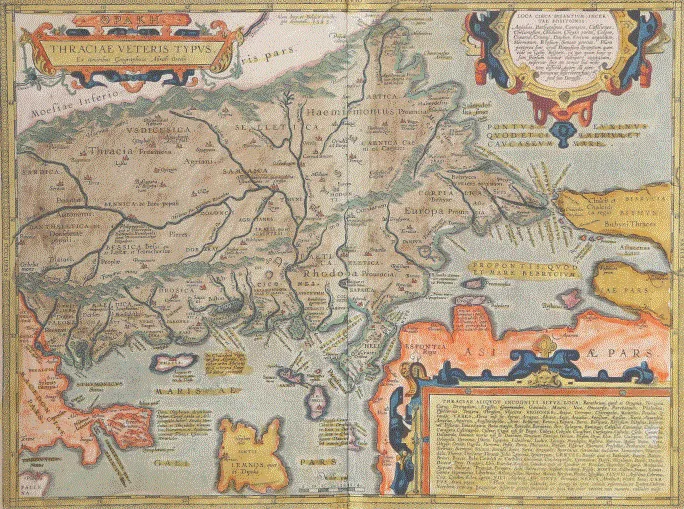
Beyond the immediate legal battles in Athens, the speech carries significant weight regarding the regional power dynamics in Thrace. The political maneuvering surrounding Charidemus was deeply intertwined with the influence of Thracian leaders and their relationships with the Athenian state.
According to Albin Lesky in his work "History of Ancient Greek Literature" (published by Kyriakidis Brothers, Thessaloniki, 1983), Demosthenes' intervention in this matter was not merely an isolated legal argument. Instead, it served as a strategic move to support Amadokos, the brother of Kersobleptes and a ruler of a separate portion of Thrace.
This connection highlights how Athenian oratory was often a tool for managing foreign policy. The decisions made regarding individuals like Charidemus had direct consequences for Athenian influence in Thrace and the stability of its northern borders. The oratorical battle was, in many ways, a proxy for the struggle to maintain control over Thracian political factions.
Why does the speech remain significant for classical studies?
The speech is studied today not only for its rhetorical brilliance but as a window into the complexities of Athenian democracy and international relations. It illustrates how legal technicalities could be used as weapons in high-stakes political warfare.
The debate over the "Against Aristocrates" resolution demonstrates the delicate balance between the need for diplomatic flexibility and the necessity of adhering to the rule of law. For historians, the text provides evidence of how Athenian leaders navigated the intersection of domestic legislation and foreign geopolitical interests, particularly in the volatile region of Thrace.
Frequently asked questions
What was the primary goal of Aristocrates' resolution?
The resolution aimed to provide Charidemus with special security guarantees to prevent any attempts on his life. This was intended to protect him, although it bypassed the standard legal procedures and boundaries of Athenian law at the time.
How did Euthykles define the illegality of the proposal?
Euthykles argued that the resolution was illegal because it proposed actions that contradicted the established written laws of Athens. He maintained that such special privileges could not be granted without violating the fundamental legal structure of the city.
Who was Amadokos in the context of this history?
Amadokos was the brother of Kersobleptes, a ruler of a specific section of Thrace. According to scholar Albin Lesky, Demosthenes used his speech to provide political support to Amadokos within the complex Thracian power structure.
Why was the ambiguity of Charidemus's actions a problem?
The resolution did not specify whether Charidemus's future actions would benefit or harm Athens. This lack of foresight allowed opponents to argue that the city was providing protection to an individual whose interests might eventually clash with those of the state.
What role did Thrace play in this Athenian debate?
Thrace was a critical geopolitical region where Athenian influence was contested. The political decisions regarding leaders like Charidemus and the support for figures like Amadokos were essential for managing Athenian relations with Thracian rulers and ensuring regional stability.
Key takeaways
- The speech centers on the controversial security guarantees proposed for Charidemus by Aristocrates.
- Euthykles argued the resolution was illegal, contrary to public interest, and unmerited.
- Albin Lesky notes that Demosthenes' intervention supported Amadokos, a Thracian ruler.
- The conflict illustrates the intersection of Athenian law and Thracian geopolitical strategy.
Conclusion
The debate surrounding "Demosthenes Against Aristocrates" serves as a profound example of how legal interpretation and political ambition converge in ancient history. While the immediate conflict focused on the legality of security measures for Charidemus, the underlying motivations were deeply rooted in the broader struggle for influence in Thrace. Through the lens of scholars like Albin Lesky, we see that the oratorical battles in the Athenian assembly were never just about local laws; they were essential instruments of foreign policy used to navigate the complex and often volatile landscape of the ancient Mediterranean world.