
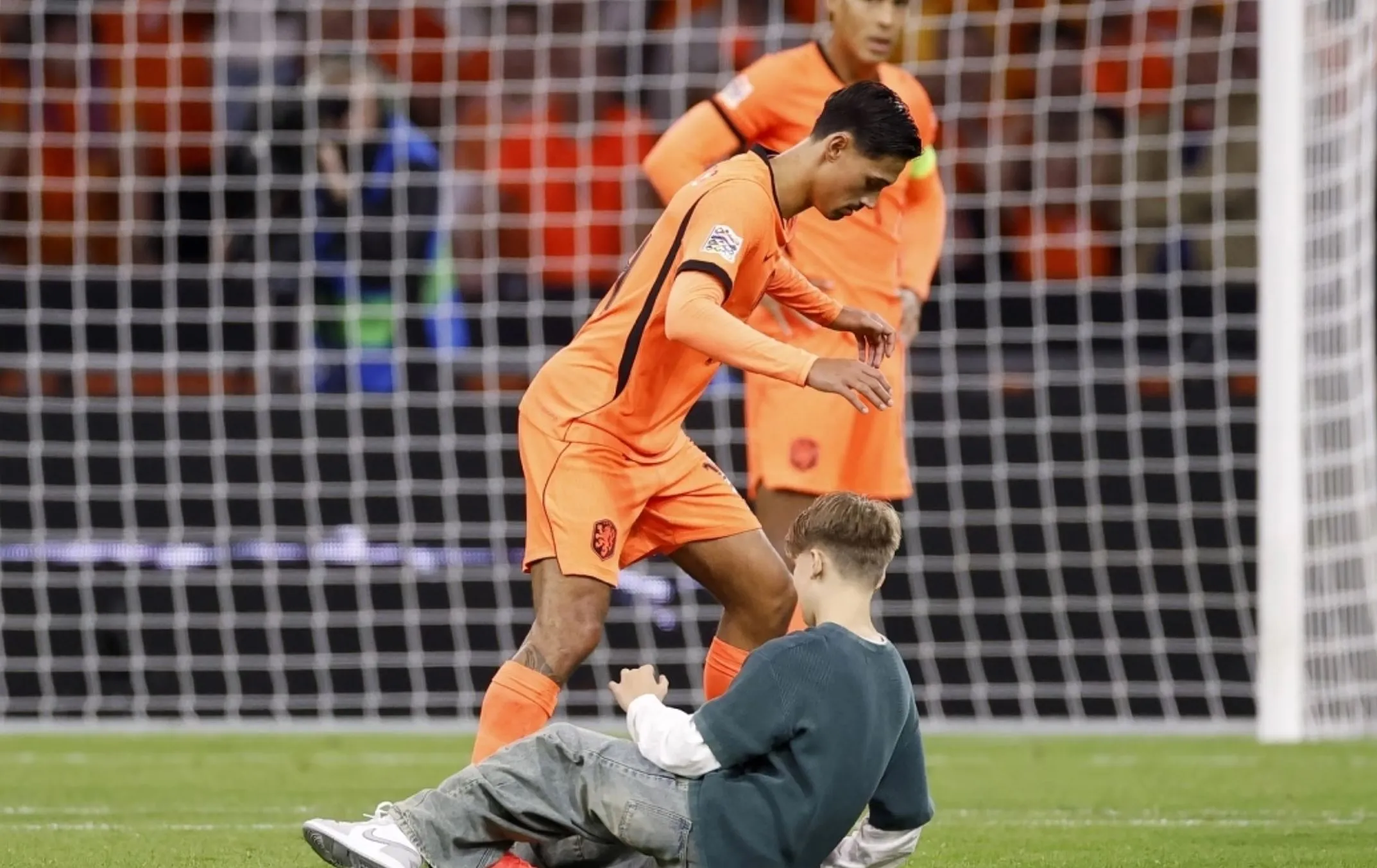
Severe disciplinary action following pitch invasion
A five-year ban from all Dutch football stadiums has been imposed on a 13-year-old supporter. The disciplinary measure stems from an incident that occurred during the Nations League fixture between the Netherlands and Germany. While the young fan successfully achieved his goal of interacting with a professional athlete, the breach of stadium protocol resulted in a long-term exclusion from live matches.
The incident took place on September 24 at the Johan Cruijff ArenA. During the match, the minor managed to bypass security measures to enter the playing area. His primary motivation was to take a photograph with Dutch international Tijjani Reijnders. Although Reijnders complied with the request and allowed the photo to be taken, the act of entering the pitch triggered an immediate and heavy response from the governing body.
The severity of the punishment ensures that the teenager will be unable to attend professional football matches in person until he reaches the age of 18. This decision reflects a zero-tolerance policy regarding unauthorized access to the field of play, regardless of the age of the individual involved or the perceived harmlessness of the intent.
Financial penalties and legal implications
Beyond the long-term stadium ban, the Dutch football federation has introduced immediate financial consequences for the incident. The minor has been issued a fine of 100 euros. However, the federation has signaled that this may only be the beginning of the economic repercussions associated with the breach of security.
The football authorities have explicitly stated that they reserve the right to seek further compensation from the teenager's legal guardians. This potential secondary claim could cover any additional financial damages or administrative costs incurred as a result of the pitch invasion. By involving the legal representatives of the minor, the federation aims to emphasize the seriousness of stadium security breaches.
This approach highlights a growing trend in professional sports where clubs and federations hold families accountable for the actions of minors. The move serves as both a punitive measure and a deterrent to prevent similar occurrences in the future, ensuring that the cost of such actions extends beyond mere temporary bans.
Player safety and stadium security protocols
The Dutch football federation has emphasized that the primary driver for such strict penalties is the necessity of ensuring player safety. The entry of spectators into the field of play is strictly prohibited to maintain a controlled environment for athletes. Even seemingly benign interactions, such as a request for a photograph, can disrupt the flow of a professional match and create unpredictable safety risks.
Maintaining a secure perimeter is essential for the integrity of international competitions. When fans breach the pitch, it creates a distraction for players and officials, potentially compromising the physical safety of the athletes on the field. The federation's stance underscores that the security of the players must always take precedence over fan engagement or social media opportunities.
As professional football continues to grow in global popularity, the pressure on stadium security increases. The incident at the Johan Cruijff ArenA serves as a case study for how governing bodies manage the tension between fan enthusiasm and the rigorous safety standards required for modern international football.
Match context and Nations League background
The match in which the incident occurred was a closely contested Nations League encounter between the Netherlands and Germany. The game ended in a 1-1 draw, providing a high-stakes backdrop to the security breach. The scoring for the match was shared, with Germany's Ermito finding the net, followed by an equalizer from Hakpo during the closing stages of the game.
The intensity of the match highlights why pitch invasions are viewed so critically by officials. In a competitive environment where every moment is vital to the outcome, any unauthorized movement on the field can alter the psychological or physical state of the competitors. The 1-1 result reflects the competitive nature of the fixture, which was played under significant scrutiny.
For the Dutch national team, the match was a crucial part of their Nations League campaign. While the players focused on the tactical battle on the pitch, the administrative and security fallout from the fan's actions continues to resonate within the Dutch football community, serving as a reminder of the responsibilities held by both fans and organizers.
Frequently Asked Questions
What was the reason for the 13-year-old's stadium ban?
The teenager received a five-year ban because he entered the pitch during the Netherlands vs. Germany Nations League match. His intention was to take a selfie with Dutch player Tijjani Reijnders. This breach of stadium security protocols led the Dutch football federation to impose strict disciplinary sanctions.
How long will the football ban last?
The ban is set to last for five years, meaning the young supporter will not be allowed to attend Dutch football stadiums until he reaches the age of 18. This long-term exclusion is intended to serve as a deterrent against future pitch invasions by fans of any age.
Are there any financial penalties involved in this case?
Yes, the minor has been fined 100 euros. Additionally, the Dutch football federation has indicated that they may pursue the teenager's legal guardians for any further financial damages resulting from the incident. This ensures that the economic impact of the security breach is addressed directly.
Why is pitch invasion treated so seriously by federations?
Pitch invasions are treated with high severity primarily to ensure the safety and security of the players. Governing bodies maintain that unauthorized access to the field of play disrupts the match and creates potential physical risks for the athletes, regardless of whether the fan's intent was malicious or harmless.







