
How did the Nations League results affect the Greece FIFA ranking?
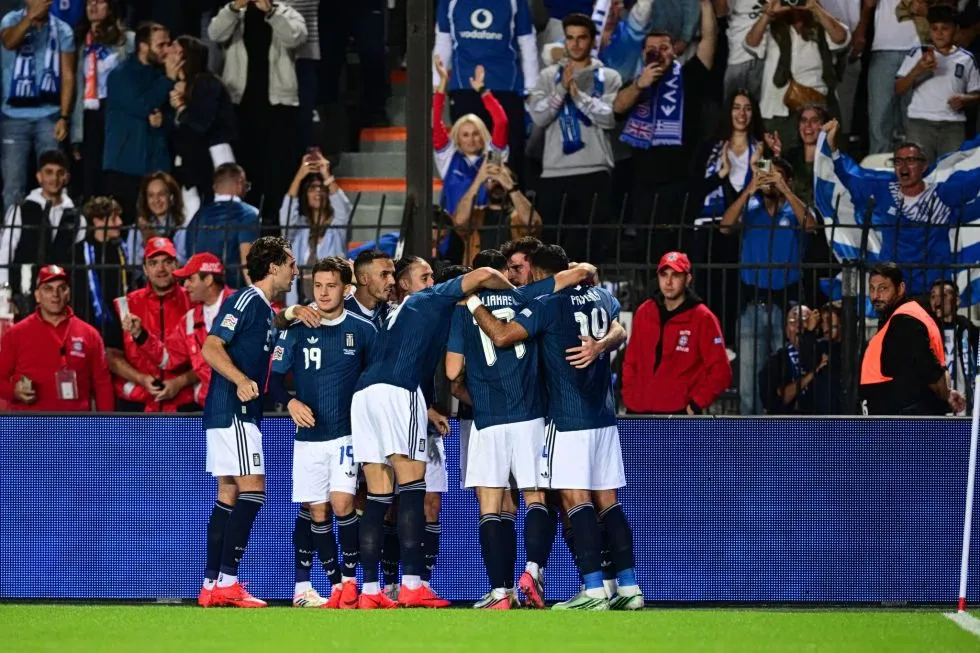
The recent surge in the Greece FIFA ranking is a direct consequence of the national team's competitive form in the UEFA Nations League. By securing two victories and two draws against high-caliber European sides such as Germany, Serbia, and the Netherlands, Greece accumulated the necessary points to leapfrog five positions in the global hierarchy. According to data released on October 7, 2026, the team transitioned from 46th to 41st place.
These points are not merely symbolic; they represent a tangible improvement in the team's coefficient within the FIFA points system. The ability to hold its own against top-tier nations like Germany demonstrates that the Greek tactical approach is yielding results on the international stage. This momentum is crucial for a team looking to re-establish itself as a consistent force in European football. The results in the Nations League have provided the necessary statistical foundation to justify this upward movement in the official rankings.
The mathematical path to the top 40
The current position at 41st puts Greece within striking distance of the prestigious top 40. To breach this threshold, the national team must maintain its current rhythm in upcoming fixtures. Even a single additional victory or a well-managed draw against a ranked opponent could provide the marginal point gain required to secure a spot in the elite bracket. The consistency shown in the early stages of the Nations League suggests that the ceiling for this squad is significantly higher than its current ranking implies.
The climb to the top 40 is not just about prestige; it is about the momentum that comes with being part of the world's elite tier. As Greece approaches this milestone, the pressure to maintain the same level of performance against high-ranking opponents will increase. However, the current trajectory suggests that if the team continues to secure points in the Nations League, the jump into the top 40 is a realistic and imminent goal.
What are the strategic implications for Euro 2028?
The improvement in the Greece FIFA ranking coincides with a major structural advantage for the upcoming Euro 2028 qualifying campaign. Greece has mathematically secured a position in the first seeding pot for the Euro 2028 draw. This seeding is a critical asset, as it ensures that the national team will avoid the highest-ranked opponents during the initial group stages of the qualifiers.
Being placed in the top pot provides several competitive benefits:
- Easier Group Composition: Greece will likely face lower-seeded nations, increasing the probability of qualifying for the tournament finals.
- Scheduling Advantages: Higher seeds often benefit from more favorable fixture rotations in international windows.
- Psychological Momentum: Entering the qualifiers with a rising ranking and a secured top seed builds confidence within the squad and the fan base.
This combination of high ranking and favorable seeding creates a unique window of opportunity for Greek football to return to the major tournament stage, mirroring the heights achieved during the country's historical peak in the mid-2000s. The success in the Nations League has effectively paved the way for a more manageable path toward Euro 2028 qualification.
How does Greece's current trajectory compare to its historical peak?
While the current rise is significant, it is viewed through the lens of Greece's historical footballing legacy. The national team has previously reached as high as 8th in the FIFA world rankings, a period characterized by sustained excellence between 2004 and 2014. The current ascent from 46th to 41st is seen as the beginning of a rebuilding phase aimed at returning to those elite levels.
The progress made in the 2026 Nations League serves as a foundation. Unlike the rapid fluctuations seen in previous decades, the current climb appears to be built on consistent performances against established European powers. If the team can replicate these results, the prospect of returning to the top 20 or even the top 10 becomes a long-term strategic goal rather than a distant memory. The current era is defined by gradual, calculated growth rather than isolated tournament successes, aiming to recapture the stability seen during the 2004-2014 decade.
What are the broader trends in the October 2026 FIFA rankings?
The latest FIFA ranking updates show significant volatility among several national teams, with Greece being one of the notable gainers. While Greece moved up five spots, other nations experienced much larger shifts, though they did not overtake the Greek side in the standings. The global landscape shows a mix of rapid ascents in Africa and declines in parts of Europe and Asia.
A comparison of the major movers in the top 100 reveals the following trends:
| Country | Ranking Change | New Position |
|---|---|---|
| Mali | +6 | 47th |
| South Africa | +6 | 48th |
| Northern Ireland | +6 | 64th |
| Greece | +5 | 41st |
| Mozambique | +5 | 98th |
| Romania | -6 | 58th |
| Ghana | -5 | 70th |
| Bulgaria | -5 | 90th |
| China | -5 | 96th |
| Bahrain | -5 | 97th |
The data indicates that while Greece is performing well, it is part of a broader trend where several African nations, such as Mali and South Africa, are making significant strides in the rankings. Conversely, teams like Romania and Ghana are facing setbacks, highlighting the highly competitive nature of the current international football cycle. The rise of Mali, South Africa, and Northern Ireland, all climbing six positions, demonstrates that Greece is part of a wider group of nations finding upward momentum.
FAQ: Greece FIFA ranking and Nations League
Why did Greece's FIFA ranking increase?
Greece's ranking increased due to strong performances in the UEFA Nations League. By securing two wins and two draws against notable teams like Germany and the Netherlands, the national team earned enough points to move up five places from 46th to 41st in the official FIFA standings.
How does the ranking affect Euro 2028 qualification?
The ranking and recent performance have helped Greece secure a spot in the first seeding pot for the Euro 2028 qualifiers. This seeding is a major advantage, as it allows the team to avoid the strongest nations during the group stage of the qualifying process.
Is Greece close to the top 40?
Yes, Greece is currently in 41st place, meaning it is only one position away from breaking into the world's top 40. Maintaining the current competitive form in the Nations League is the primary requirement to achieve this milestone.
Who were the biggest movers in the October 2026 rankings?
Mali, South Africa, and Northern Ireland were the biggest movers among the top 100, each climbing six positions. While Greece also saw a significant rise of five places, it did not climb as many spots as these three nations.
Which teams saw a decline in the rankings?
Romania experienced the largest drop among the highlighted teams, falling six places to 58th. Additionally, Ghana, Bulgaria, China, and Bahrain all saw their rankings decrease by five positions in the latest update.
Key takeaways
- Greece rose five places in the FIFA rankings, moving from 46th to 41st position.
- The rise was driven by Nations League results against Germany, Serbia, and the Netherlands.
- Greece has secured a top-seed position for the Euro 2028 qualifying draw.
- Mali, South Africa, and Northern Ireland saw larger climbs of six places each.
Looking ahead to international football growth
The ascent of the Greek national team marks a pivotal moment in its modern footballing era. Moving to 41st place is more than a statistical update; it represents the successful integration of tactical discipline and competitive resilience. As the team prepares for the Euro 2028 qualifiers with the advantage of a top seed, the focus shifts from merely climbing the rankings to securing tournament qualification. If the current momentum is sustained, Greece is well-positioned to transition from a rising contender to a mainstay in the upper echelons of European football, potentially reclaiming the elite status it held during the previous decade.







