
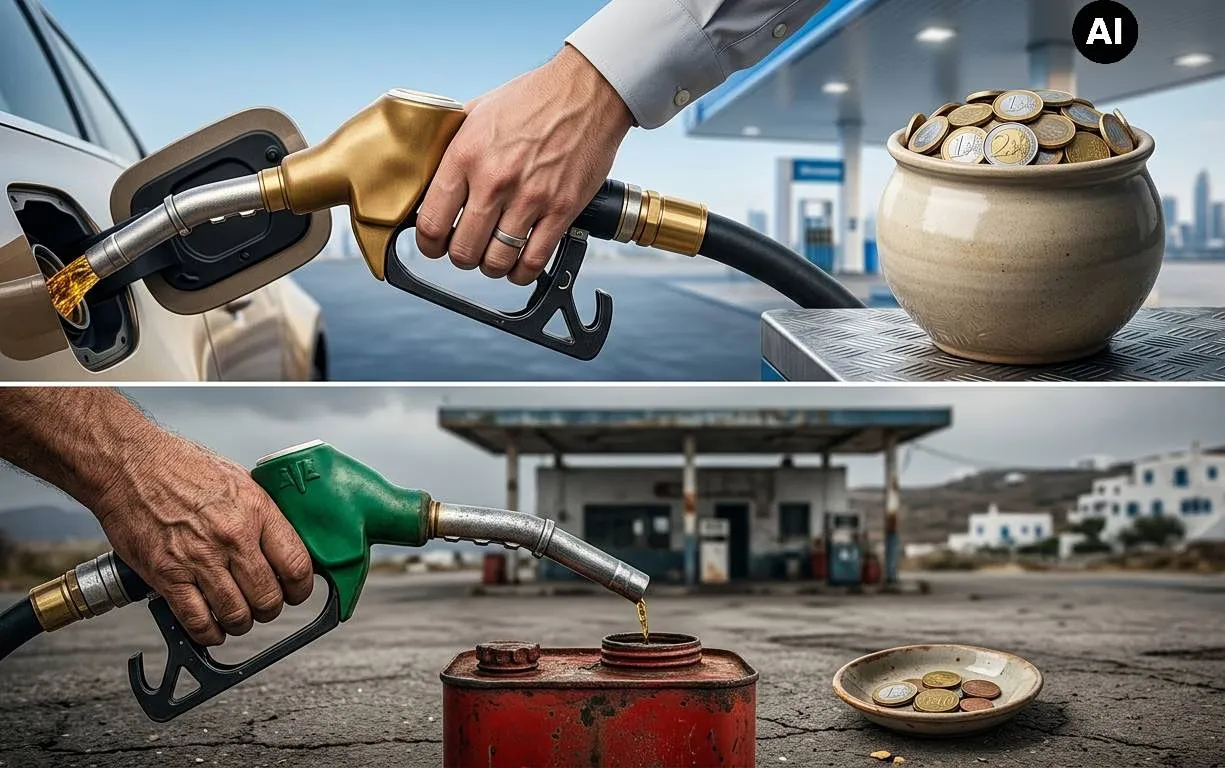
How does fuel purchasing power vary across Europe?
Fuel purchasing power in Europe is characterized by a 'three-speed' economic reality where the ability to afford mobility is dictated by the ratio between local wages and fuel costs. Although the price displayed on a gas station pump might look consistent from one EU member state to another, the actual impact on a citizen's wallet is profoundly different depending on their national income levels.
The disparity creates a hierarchy of mobility across the continent. In high-income regions, fuel is a manageable utility, while in lower-income regions, it becomes a significant portion of the monthly household budget. This gap is not merely a matter of price fluctuations but a structural issue of economic divergence within the European Union, where the cost of movement becomes a barrier to participation in the economy.
The Three Tiers of European Mobility
Based on recent economic data, Europe can be divided into three distinct categories of fuel affordability, illustrating the massive gap in living standards:
- The High-Affordability Tier: Located in Northern and Central Europe, including Luxembourg, Denmark, the Netherlands, and Austria. In these nations, the average monthly salary allows citizens to purchase between 1,800 and over 2,400 liters of gasoline. For these workers, fuel is a minor expense relative to their total earnings.
- The Middle Tier: Comprising major economies such as Germany, France, Italy, and Spain. Here, the average income translates to a capacity of 1,200 to 1,600 liters of fuel per month. While mobility is more expensive here than in the north, it remains within the standard reach of the average worker.
- The Low-Affordability Tier: Found in Greece and parts of Eastern Europe, such as Bulgaria and Romania. In these countries, the average salary only covers between 500 and 800 liters of fuel. This tier faces the most significant pressure, as fuel costs consume a much larger slice of their monthly income.
What is the specific impact on the Greek economy and households?
The economic pressure on Greek households is particularly acute due to the severe mismatch between national wages and energy costs. While a worker in Germany or France can purchase significantly more fuel with their monthly earnings, the Greek reality is much tighter, creating a sense of economic stagnation compared to their northern neighbors.
According to current economic indicators, an average net monthly salary in Greece stands at approximately €1,150. At prevailing prices for 95-octane unleaded gasoline, this salary allows for the purchase of roughly 525 liters of fuel per month. To put this in perspective, a worker in Germany or France can buy more than double that amount—ranging from 1,350 to 1,400 liters—with their respective average earnings. This means the Greek worker is effectively paying a much higher "mobility tax" in terms of labor hours required to fill a tank.
This discrepancy means that even a routine task, such as filling a standard 40-liter tank, consumes a disproportionately large percentage of a Greek worker's monthly income. This financial strain is comparable to levels seen in countries with significantly lower GDPs, forcing many citizens to make difficult choices regarding their daily lives. The data suggests that for many in Greece, the cost of getting to work is one of the most significant individual financial burdens.
Socioeconomic shifts in response to fuel costs
The rising cost of mobility is not just a statistical concern; it is driving fundamental changes in social behavior. As fuel consumes a larger share of disposable income, households are forced to adapt in several ways to survive the monthly budget cycle:
- Reduction in essential spending: Many families are cutting back on other basic living expenses, such as food or household goods, to ensure they can afford the commute to work.
- Alteration of daily habits: There is an increasing trend toward changing transportation methods or reducing non-essential travel to mitigate costs.
- Increased economic vulnerability: The high cost of fuel acts as a regressive tax, hitting lower-income earners hardest and widening the gap in living standards between different socioeconomic groups.
Why does the gap in fuel affordability exist?
Three primary structural factors drive the significant divergence in fuel purchasing power across the European Union. While the global oil market sets a baseline, local economic and fiscal policies create the wide gaps seen in the data.
The first and most significant factor is the wage gap. While gasoline prices are somewhat synchronized across the EU due to the global nature of oil commodities, nominal wages in Western and Northern Europe remain two to three times higher than in Southern and Eastern Europe. This means that even if a liter of fuel costs the same in Athens as it does in Berlin, the relative cost to the consumer is vastly different. The "price" of a liter is not just the number on the pump, but the amount of work required to earn it.
The role of taxation and logistics
Beyond the wage disparity, two other critical factors exacerbate the situation and contribute to the uneven landscape of European mobility:
- High Taxation Levels: Excise duties and Value Added Tax (VAT) represent a massive portion of the price at the pump. In countries like Greece, Italy, and the Netherlands, taxes often account for more than 50% to 55% of the total cost per liter. While taxes are high across the EU, their impact is felt more heavily where wages are lower, as the tax burden represents a larger proportion of the consumer's total purchasing power.
- Supply Chain and Logistics: The cost of transporting fuel to remote or island regions adds an additional layer of expense. This creates regional inequalities within even a single country, making mobility even more expensive for those living outside major metropolitan hubs or in geographically isolated areas.
FAQ: Fuel Purchasing Power in Europe
How much gasoline can an average Greek salary buy?
An average net monthly salary in Greece, estimated at €1,150, allows for the purchase of approximately 525 liters of 95-octane gasoline. This is significantly lower than the capacity of workers in Northern or Western Europe, who can often purchase double or triple that amount.
Why are fuel prices similar across the EU if purchasing power is different?
Fuel prices appear similar because they are heavily influenced by global oil market prices and standardized EU taxation structures. However, because nominal wages vary significantly between member states, the relative cost of fuel—its impact on the individual budget—varies drastically.
Which European countries have the highest fuel purchasing power?
The highest purchasing power is found in Northern and Central European countries. Specifically, citizens in Luxembourg, Denmark, the Netherlands, and Austria can purchase between 1,800 and more than 2,400 liters of gasoline per month with an average salary.
What are the main causes of the fuel affordability gap?
The gap is driven by three main factors: the significant difference in nominal wages between Northern and Southern/Eastern Europe, high taxation (often exceeding 50% of the pump price), and the logistical costs of transporting fuel to specific regions.
How does high fuel cost affect daily life in Southern Europe?
High fuel costs force households to reduce spending on other essential living expenses to cover transportation costs. This leads to a change in daily habits, such as reduced mobility or seeking alternative ways to commute, to protect the monthly budget.
Key takeaways
- Northern European salaries allow for 1,800 to 2,400+ liters of fuel monthly.
- Greek average salaries afford only about 525 liters of gasoline per month.
- Taxation often accounts for over 50% of the total price per liter.
- Wage disparities are the primary driver of the European mobility gap.
The future of European mobility and economic equity
The data reveals a continent deeply divided by the ability to afford basic mobility. While the European Union strives for economic cohesion, the disparity in fuel purchasing power highlights a persistent structural inequality. As long as the gap between nominal wages and energy costs remains wide, the "three-speed Europe" will continue to experience different realities of living standards. Addressing this requires more than just monitoring oil prices; it necessitates a broader look at wage growth, taxation structures, and the socioeconomic impact of energy costs on the most vulnerable populations.







