What does the Eurostat report reveal about Greek households?
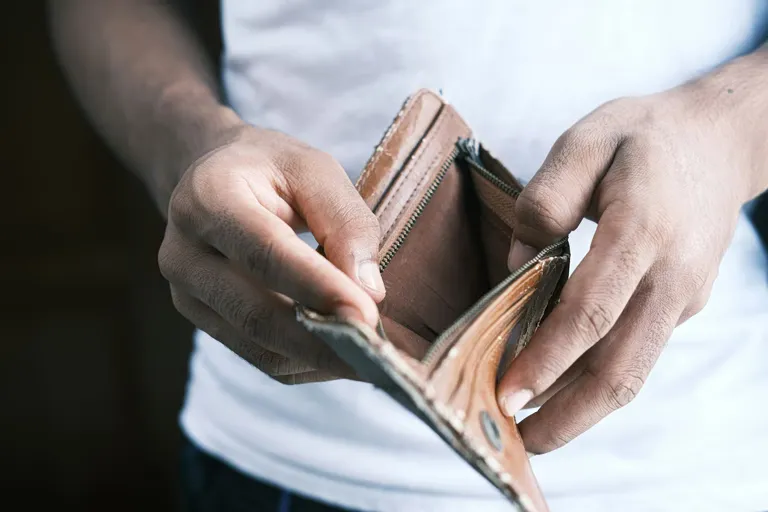
The latest Eurostat report paints a concerning picture of financial fragility across Greece. According to the data, 50.5% of Greek households are unable to cover unexpected but necessary expenses of €500. This figure represents a massive leap in vulnerability, rising from 43.9% in 2024. For more than half of the nation's households, a minor unforeseen event—such as a car repair, a broken boiler, or a pet falling ill—can trigger a complete financial derailment.
The implications of this inability to manage small shocks are profound. When these unexpected costs involve more serious matters, such as accidents or family illnesses, they can lead to over-indebtedness and even household bankruptcy. In medical contexts, these are often referred to as "catastrophic health expenditures," which have the power to push households that were previously managing to fall below the poverty line, or to plunge those already in poverty even deeper into financial ruin.
How does Greece compare to other EU countries?
Greece stands out in the European Union for its high levels of economic vulnerability. While the EU-wide average for households unable to cover unexpected expenses is 29.2%—a figure that actually saw a slight decrease of 0.8 percentage points compared to 2024—Greece remains at the top of the list with a massive disparity. The gap between the Greek experience and the EU average is nearly 21 percentage points.
This vulnerability is part of a broader pattern of negative indicators for Greece in Eurostat's infographics. The country consistently ranks at the top for issues such as high housing costs, excessive housing burden, poverty, social exclusion, and unmet health needs. Greece is also the second country in the EU, following Bulgaria, regarding the risk of poverty or social exclusion, which stands at 27.5%.
The reality of material deprivation and energy poverty
The inability to cover emergency expenses is a key indicator of material and social deprivation, a metric tracked by both ELSTAT and Eurostat in their annual living conditions surveys. Beyond the €500 threshold, the indicators of deprivation in Greece are widespread. These include the inability to afford a week of holidays, the inability to keep a home warm in winter or cool in summer (a clear sign of energy poverty), and difficulties in making timely payments for bills, rent, or mortgage installments.
The threshold for these unexpected expenses, set at approximately €500, is adjusted based on median income and the poverty line. For those earning the minimum wage, a €500 expense is not just devastating; it is humanly impossible to cover using only their own resources without resorting to debt. Even for those earning the median salary—roughly €1,000 to €1,100 gross—a €500 expense represents 50% of their monthly income.
Why are Greek households struggling to save?
A primary reason for this lack of resilience is the absence of savings. Most Greek households cannot turn to savings to buffer against shocks because those savings simply do not exist. In fact, many Greek households exhibit negative savings, meaning they spend more than they earn. The data suggests a population living on the edge: while 60% to 65% of the population manages to just make ends meet, only about 12-13% can draw from savings, and 7% are actually in debt.
According to IOBE research, only about 20% of Greeks are able to save even small amounts each month. This lack of liquidity is further evidenced by banking data, which shows that seven out of ten people with a bank account hold deposits of less than €1,000. This lack of a financial cushion leaves the majority of the population highly exposed to any fluctuation in their economic circumstances.
Economic paradoxes: Employment vs. Purchasing Power
The economic landscape in Greece presents a series of contradictions. On one hand, there has been progress in reducing unemployment and increasing overall employment. There has also been progress in raising the minimum wage and bringing it closer to the median wage. However, these improvements come with caveats. The rise in the minimum wage has led to a "crowding" of the workforce into lower wage brackets.
While the minimum wage is rising, the median wage remains stagnant because nominal increases are being eroded by inflation. Furthermore, while Greece performs poorly in indicators of poverty and deprivation, it also sits at the bottom of the EU regarding purchasing power, wages, collective bargaining, and the employment of young graduates. Greece also ranks among the lowest in terms of life satisfaction. Notably, the country remains at the top for weekly working hours, weekend work, and overwork, with a high percentage of employees working 49 hours or more per week.
Frequently asked questions
What percentage of Greek households struggle with emergency expenses?
According to Eurostat, 50.5% of Greek households are unable to cover unexpected but necessary expenses of €500.
How does Greece's financial situation compare to the EU average?
Greece has the highest percentage of households unable to cover emergency expenses in the EU. The Greek rate is 50.5%, whereas the EU average is 29.2%.
What are the main indicators of material deprivation in Greece?
Key indicators include the inability to afford a week of holidays, energy poverty (difficulty heating/cooling a home), and difficulty paying rent, bills, or mortgage installments.
What is the impact of a €500 expense on different income levels?
For minimum wage earners, it is considered humanly impossible to cover without debt. For median earners (€1,000-€1,100), it represents roughly 50% of their monthly income.
What is the current state of savings in Greek households?
Most households lack savings; many have negative savings. Only about 20% of Greeks can save small amounts, and 7% are in debt. Seven out of ten account holders have less than €1,000 in their accounts.
Key takeaways
- 50.5% of Greek households cannot cover €500 emergency expenses, a significant increase from 43.9% in 2024.
- Greece ranks highest in the EU for inability to meet unexpected costs.
- The risk of poverty or social exclusion in Greece is 27.5%, the second highest in the EU after Bulgaria.
- Low savings and high inflation are eroding the purchasing power of the Greek workforce.
- Energy poverty and housing costs are major drivers of material deprivation.