A subversive reimagining of Emma Bovary's temptations
Female Perversions functions as a non-fictional study adaptation based on the work of psychoanalyst Louise J. Kaplan. While the source material, 'Female Perversions: The Temptations of Emma Bovary,' suggests that the pursuit of deviation is a rational search for pleasure and an unconventional choreography to escape gender constraints, the film pivots the narrative focus. Rather than a direct retelling of the literary classic, the film introduces a new protagonist to navigate these psychological landscapes.
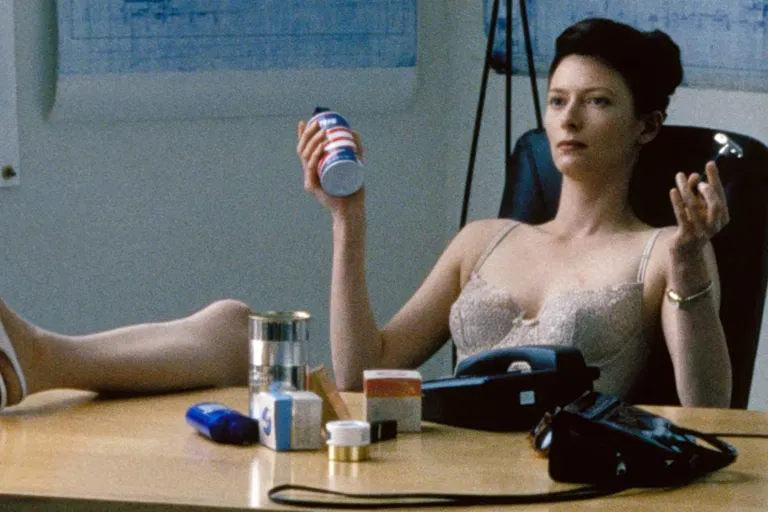
According to Peter Bradshaw in The Guardian, the film does not focus on Emma Bovary herself. Instead, it centers on Eva, a character portrayed by Tilda Swinton. Eva is described as a brilliant, beautiful, and unmarried lawyer with an elegant, sharp style. Bradshaw notes that Swinton’s performance captures a character who can be as charming and occasionally as comedically awkward as a "baby giraffe."
The thematic shift from pathology to liberation
The core of the film lies in its reinterpretation of psychological 'perversion.' In the context of Streifeld's direction, these impulses are framed as a method of escapism from restrictive societal roles. By treating these deviations as a "creative and liberating strategy," the film moves away from traditional clinical interpretations of neurosis, opting instead for an exploration of how individuals use desire to reclaim agency.
The film posits that these behaviors are not merely clinical pathologies, but rather an organized, albeit unconventional, way to navigate the pressures of identity. This approach allows the narrative to treat the character's intense internal life not as a sickness to be cured, but as a complex response to the world around her.
The character of Eva and her psychological landscape
Eva’s journey is defined by a tension between her professional success and her internal struggles with memory and identity. As a lawyer on the verge of being appointed as a judge, she maintains a high-functioning exterior that masks significant psychological complexities. Her life is characterized by a duality of intense passion and deep-seated trauma.
The narrative explores several key psychological elements affecting Eva:
- Impostor Syndrome: A phenomenon where individuals doubt their abilities or achievements, fearing they will be exposed as frauds despite objective success.
- Traumatic Memories: The character is haunted by past experiences involving abuse, loss, and self-harm.
- Guilt and Fear: Intense emotional crises that disrupt her sense of stability.
Her personal life includes a passionate relationship with John (played by Clancy Brown), a charming seismologist. The film utilizes the profession of seismology as a metaphor for their sexual connection, describing their intimacy as being "as intense as an earthquake."
Navigating desert landscapes and domestic realities
The plot is set in motion when Eva is forced to travel to a remote desert town to bail out her sister, Mandy (played by Amy Madigan), who has been imprisoned for shoplifting. This journey acts as a catalyst, pushing Eva into environments that trigger her compulsive and sensory deviations.
In this setting, Eva encounters a variety of women whose lives offer different perspectives on femininity and sexuality:
| Character | Actor | Role/Context |
|---|---|---|
| Eva | Tilda Swinton | A lawyer navigating trauma and desire. |
| Mandy | Amy Madigan | Eva's sister, involved in a melancholic domestic life. |
| Annunziata | Frances Fisher | Mandy's friend, who advocates for unapologetic sexuality. |
| Emma | Lyla Robbins | Mandy's roommate, a mother with a complex domestic life. |
Annunziata serves as a foil to the societal expectations Eva faces, declaring that one must "disappear" or become "typical" to fit in. This encounter forces Eva to confront the stark differences between her professional persona and the raw, often messy realities of the women she meets in the desert.
Cinematic influences and stylistic execution
The film's aesthetic and tone draw comparisons to several notable cinematic works. Peter Bradshaw of The Guardian suggests the film possesses qualities reminiscent of David Lynch's Lost Highway and John Huston's The Misfits. This stylistic lineage is evident in how the film handles its more intense, sensory moments.
Streifeld’s direction is noted for its ability to blend disparate genres. The film utilizes elements of black comedy to punctuate scenes of sexual longing, a combination that requires significant technical skill. Bradshaw describes the result as a type of "low-quality LA Law," playing with the eroticism inherent in professional attire, while highlighting Swinton's ability to maintain a "supernatural composure" even during moments of extreme sensory surrender.
A unique screen presence for Tilda Swinton
The film is highlighted as a pivotal moment in Swinton's career, marking her US debut nearly three decades ago. Her performance is described as being entirely different from the standard Hollywood leading lady, making her a presence that is nearly impossible to categorize within traditional cinematic stereotypes. Her ability to move through scenes of "sexual craving" and "black comedy" provides the film with its distinctive, experimental energy.