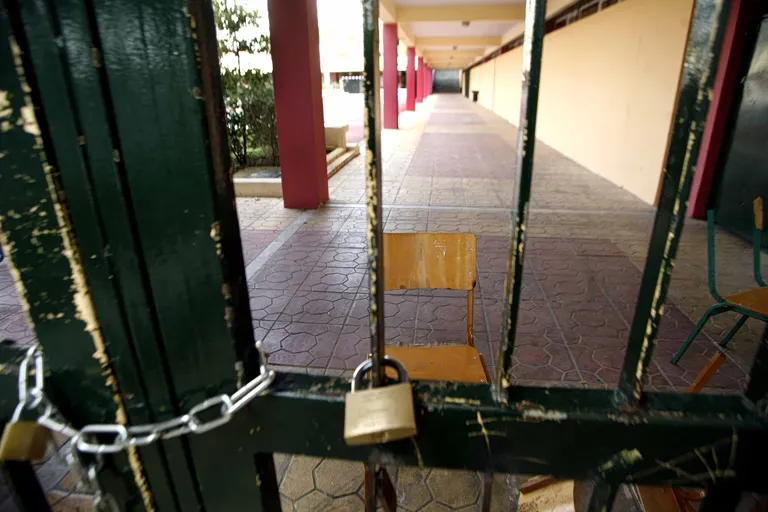
Why is the Grava school complex closed?
The Grava school complex has been closed for two weeks due to an unidentified odor that has caused significant distress among parents, students, and educators. Despite the passage of time, the authorities have not yet been able to provide the "green light" for the safe reopening of the schools because the exact cause of the smell remains a mystery. While various technical teams have been deployed to investigate, the absence of a clear explanation has left the community in a state of limbo. The primary goal of the ongoing investigations is to ensure that no safety hazards exist, but until the source is identified, the schools must remain inaccessible to prevent potential risks.
What are the concerns of OLME regarding the closure?
The Hellenic Federation of Secondary State School Teachers (OLME) has expressed significant concern over the prolonged nature of this uncertainty. Konstantinos Nikiforos, the vice president of OLME, highlighted the frustration of the situation, noting that after two weeks, no one knows what has actually occurred. He pointed out that the problem is not simply that an issue has been identified and is being repaired, but rather that the cause itself remains unknown. This lack of transparency and definitive answers is creating a vacuum of information that affects the entire educational community. Nikiforos emphasized that the failure to identify a leak or a specific cause has not yet led to a final solution, leaving the schools in a state of suspended operation.
What technical inspections have been conducted?
The investigation process has involved multiple layers of expertise. Initially, the Municipality of Athens hired a private company to conduct a preliminary investigation. Following these initial findings, more specialized technical teams from the Technical Chamber of Greece (TEE) were brought in to perform rigorous examinations of the school complex. These technical inspections have revealed critical details about the site's history: the installation in question dates back to 2003, and more importantly, there have been various interventions and modifications made to the system since its original design. This history of changes has raised serious questions regarding when these modifications were made, who held the responsibility for them, and whether the current state of the installation meets the necessary safety specifications required for a school environment.
The urgent need for updated certifications
The situation at Grava has prompted OLME to call for a much broader reform in how school infrastructure is managed. Nikiforos argued that the inability to provide a necessary certification for the correctness of the Grava installation proves that the current system is insufficient. He called for the implementation of systematic checks and updated certifications for all critical infrastructure within Greek schools. This includes, but is not limited to, electrical installations, fire safety systems, heating units, and natural gas systems. Furthermore, OLME is demanding that the structural and seismic adequacy of school buildings be regularly verified. The organization argues that safety should never be taken for granted and that a school cannot be considered safe without formal, up-to-date technical certifications.
How is the closure affecting students and teachers?
The scale of the impact is substantial. The Grava complex is a massive educational hub, comprising 18 different school units that serve approximately 4,000 students and 450 educators. The closure has forced a total shift to remote learning, which has disrupted the educational continuity for thousands. This transition to tele-education is not without its flaws. Specifically, the special education units within the complex face unique challenges, as distance learning cannot adequately meet the specialized needs of all their students. Additionally, families are facing practical difficulties; for younger children, the shift to remote learning necessitates the constant presence and care of an adult throughout the day, creating a logistical burden on households.
What steps are being proposed to resolve the issue?
To prevent such crises from recurring, OLME has proposed a multi-pronged approach involving different levels of government. First, they assert that municipalities, which bear the responsibility for the maintenance of school facilities, must take proactive steps to secure the necessary safety certificates. Second, they are calling on the Ministry of Education to intervene and establish an organized, nationwide framework for school inspections. Nikiforos also raised the issue of financial responsibility, arguing that the safety of children and teachers must be a priority that transcends the economic constraints of individual municipalities. He questioned how much a safety check should cost when the lives of students are at stake, suggesting that these essential inspections should not depend on the varying financial capacities of different local authorities.
What are the broader implications for school safety?
The Grava incident serves as a wake-up call regarding the necessity of proactive rather than reactive maintenance. The current situation highlights a systemic failure where inspections are often triggered only after a problem becomes apparent and causes public alarm. OLME is advocating for a shift toward a preventive strategy, where regular, scheduled maintenance and certification processes are part of the standard operating procedure for all educational institutions. Additionally, the organization has criticized the current management of school funds, noting that the abolition of school committees has changed how resources are handled. They are demanding greater transparency to ensure that funds intended for school needs actually reach the institutions to cover essential maintenance and safety requirements.
Frequently asked questions
What is the main reason for the Grava school closure?
The closure is due to an unidentified odor that has raised significant safety concerns, preventing the authorities from giving the "green light" for the safe reopening of the complex.
Who is responsible for the safety inspections?
Inspections have been conducted by a company hired by the Municipality of Athens and technical teams from the Technical Chamber of Greece (TEE).
How many students and teachers are affected by the closure?
The closure affects approximately 4,000 students and 450 educators across 18 school units.
What are OLME's main concerns?
OLME is concerned about the prolonged uncertainty, the lack of a clear cause for the odors, and the need for a systematic framework for school infrastructure certifications.
What solutions are being proposed?
Proposed solutions include systematic safety checks, updated certifications for all critical systems, and an organized inspection framework led by the Ministry of Education and municipalities.
Key takeaways
- The Grava school complex remains closed due to unresolved odors and safety uncertainties.
- Technical inspections revealed that the installation dates to 2003 and has undergone various modifications.
- Approximately 4,000 students and 450 educators are currently relying on remote learning.
- OLME is calling for mandatory, systematic certifications for electrical, fire, and gas systems in all schools.
- The incident highlights a need for proactive maintenance rather than reactive responses to emergencies.
Conclusion
The ongoing crisis at the Grava school complex is more than just a local technical issue; it is a symptom of a larger need for improved infrastructure management in the Greek education system. The two-week period of uncertainty has demonstrated the profound impact that unplanned school closures have on students, especially those in special education, and on their families. By calling for a centralized framework of inspections and prioritizing safety over municipal budget constraints, OLME aims to ensure that such an event—where the cause of a potential hazard remains unknown for weeks—does not happen again. The ultimate goal must be to move from a state of reactive crisis management to one of consistent, certified, and proactive school safety.